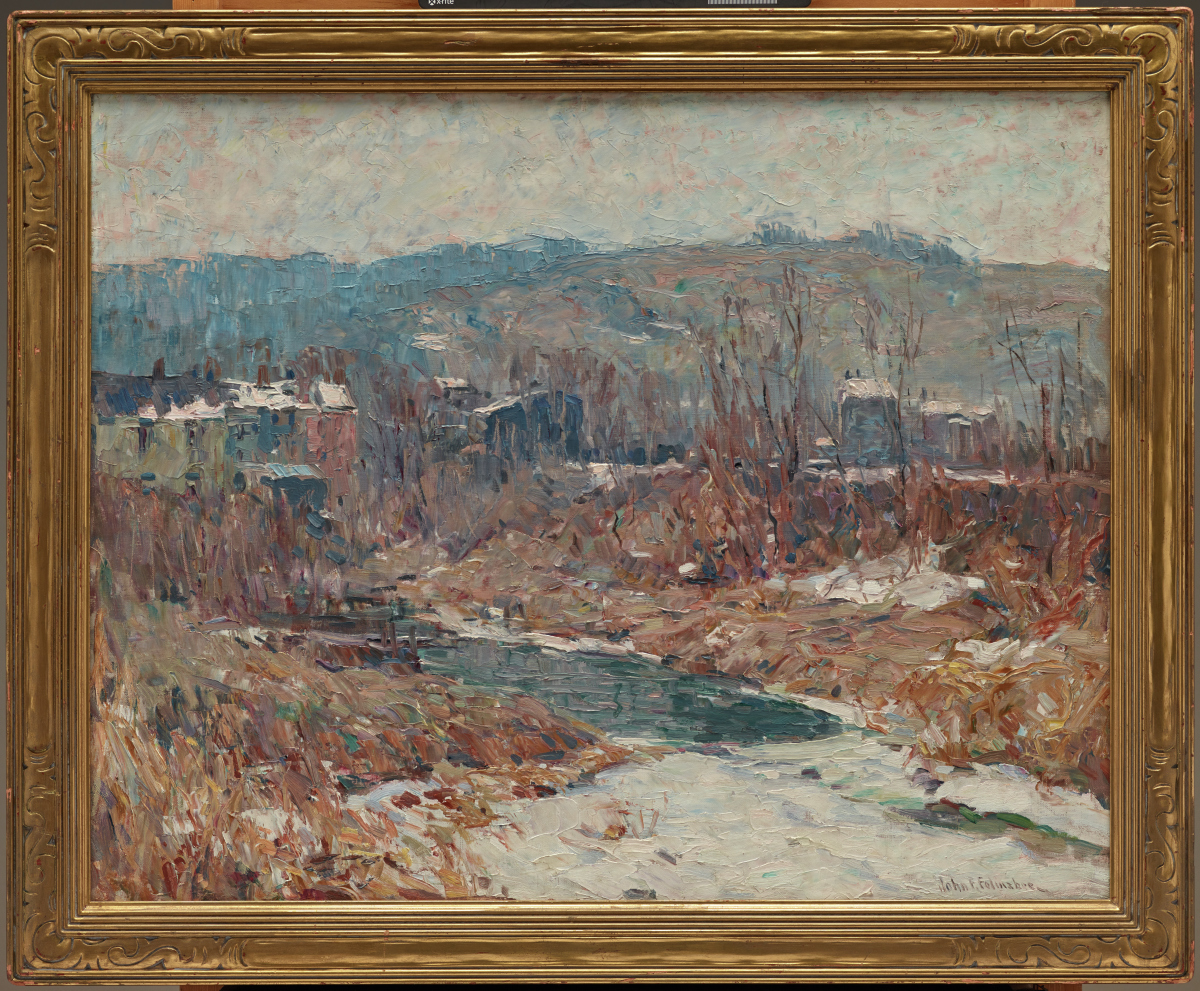




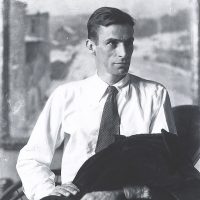
John Folinsbee is often associated with the New Hope School, also known as the Pennsylvania Impressionists, centered in the artists’ colony of New Hope, Pennsylvania, where he and his wife settled in 1916. Although French and American impressionists such as Claude Monet, Childe Hassam, and Paul Cézanne influenced his work, Folinsbee resisted being identified with a single style. Instead, he described himself as a realist, seeking to reveal the deeper truth through his work while drawing on a broad array of artistic traditions. As he encountered more artists and stylistic approaches, his painting evolved. Art historian Russell T. Lines noted that by the mid-1930s Folinsbee’s “brush became more flowing, bolder, surer, and more personal.”
Born in Buffalo, New York, Folinsbee began studying at the age of nine at the city’s Art Students’ League. He continued his art education at The Gunnery School in Washington, Connecticut, and later at the Art Students’ League in Woodstock, New York. Folinsbee’s work is held in the permanent collections of the Pennsylvania Academy of the Fine Arts, Philadelphia; the National Academy of Design, New York; and the Museum of Fine Arts, Houston, among others.
Website
http://www.johnfolinsbee.org/