



“My goal is to end up in painters’ heaven with Monet and Hawthorne and Velázquez, even if all I do is clean their brushes.” —Henry Hensche
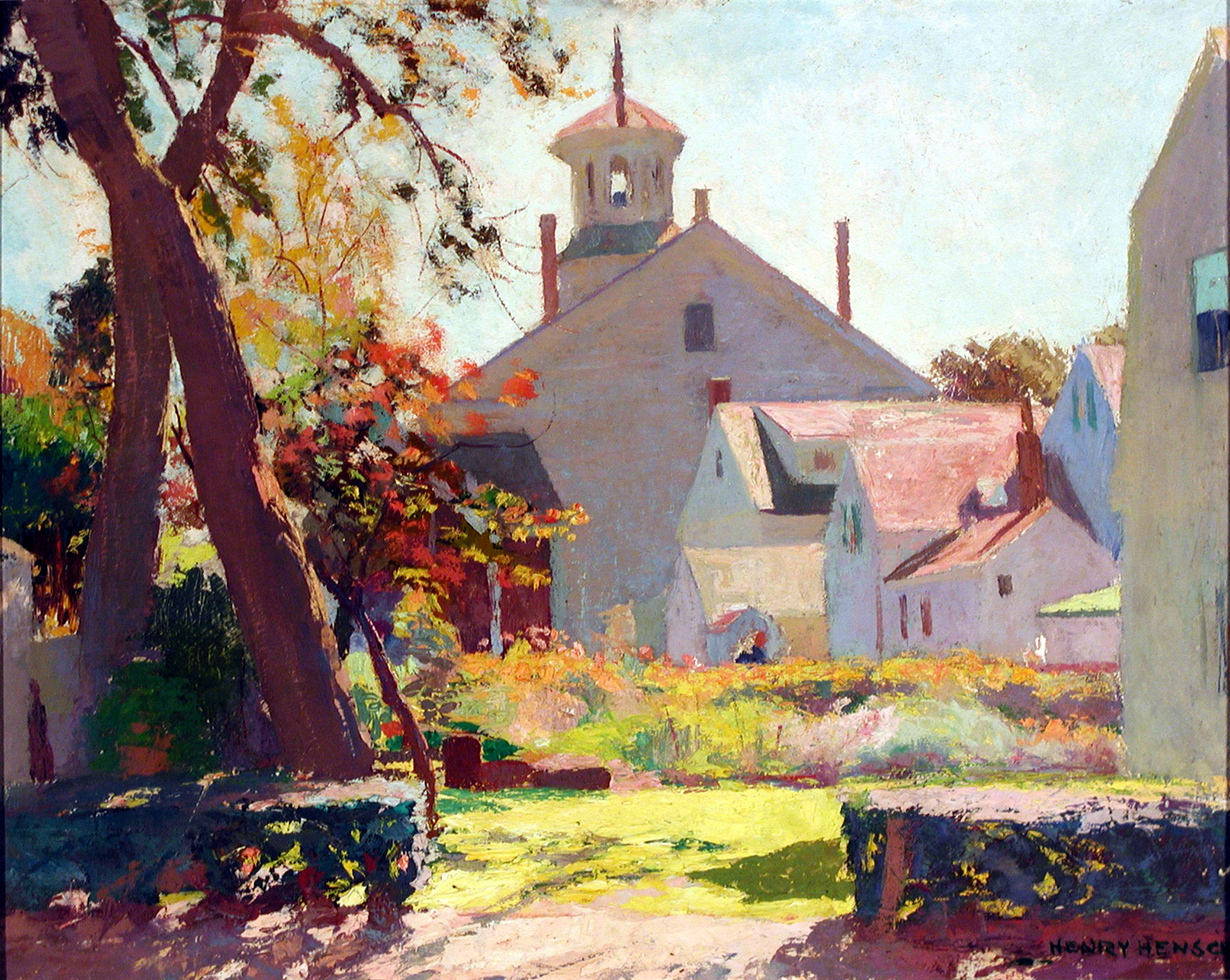
Henry Hensche passed on the teachings of Charles Webster Hawthorne to his own students, along with a profound appreciation for the effects of light and color in nature. Drawing on the example of Claude Monet, Hensche developed a painting practice in which color shifts in response to changing atmospheric conditions. Although he painted in a realistic style, Hensche was more concerned with color and shape than with specific subject matter. He is considered by many to be an unparalleled colorist.
Born in Germany, Hensche immigrated to the United States at the age of ten. He began his art education at the Art Institute of Chicago, Illinois, and later continued his training in New York, attending the National Academy School of Fine Arts, the Art Students League of New York, and the Beaux-Arts Institute of Design before studying at Charles Webster Hawthorne’s Cape Cod School of Art.