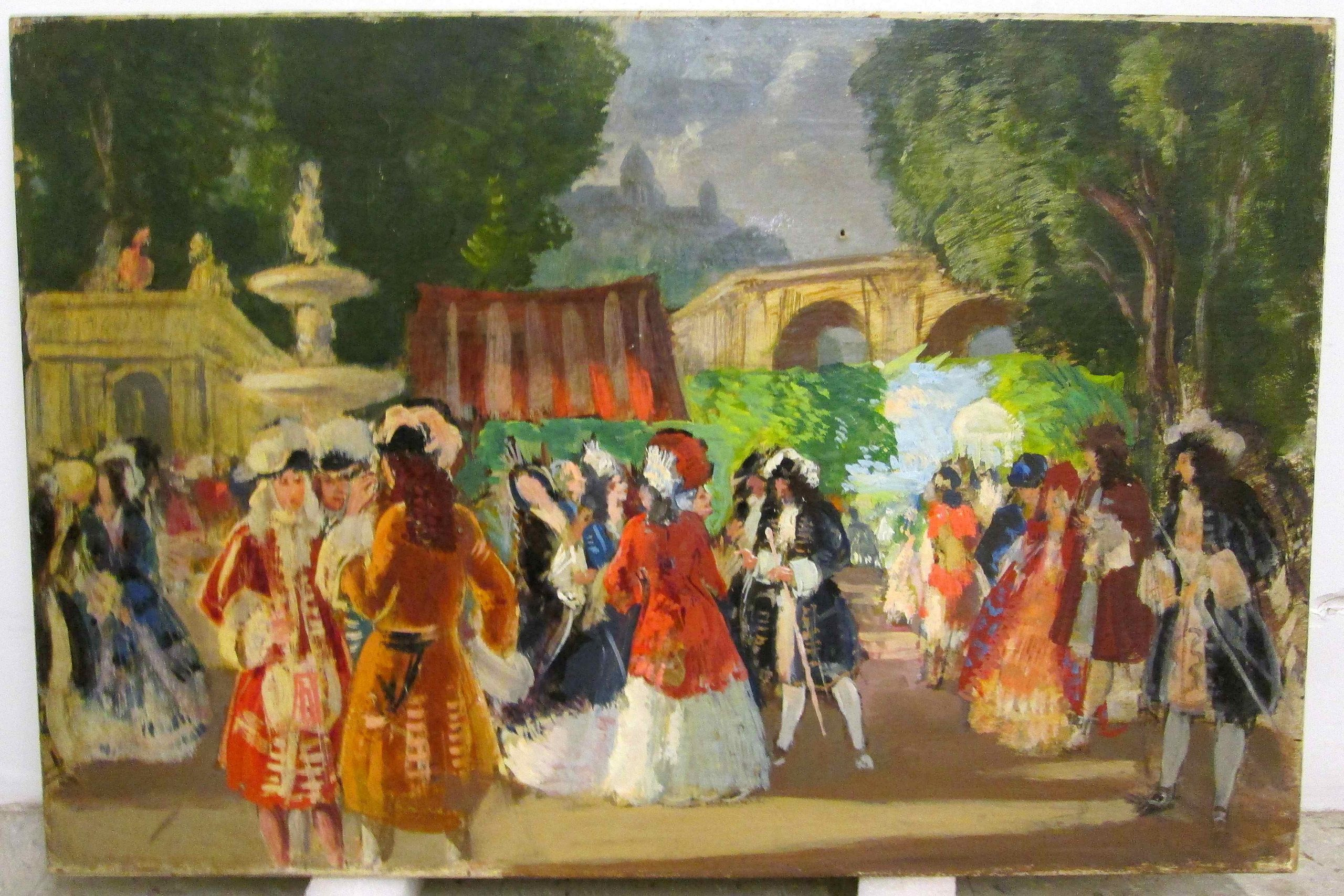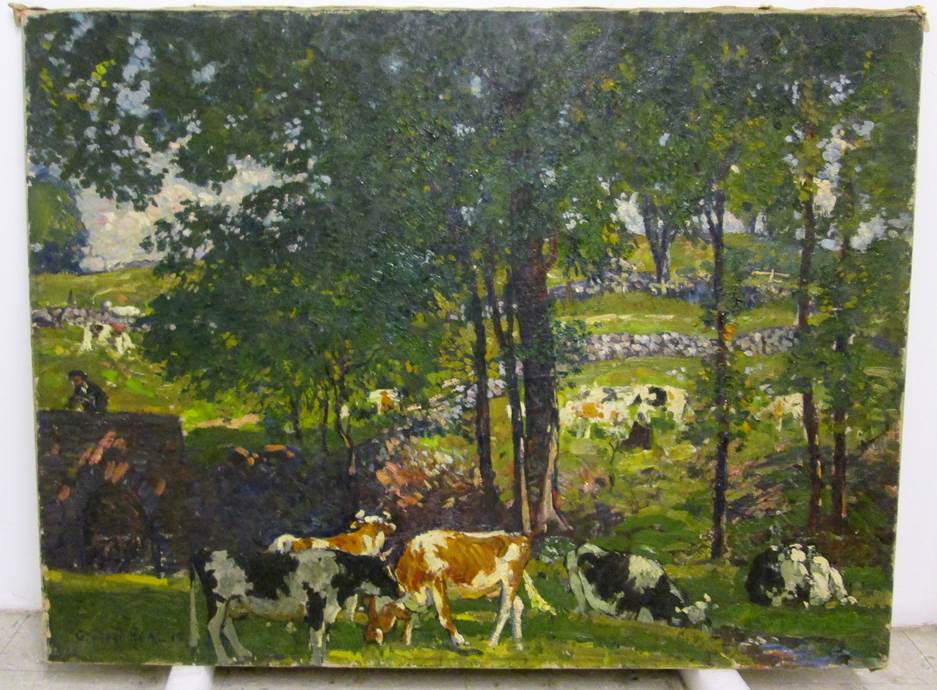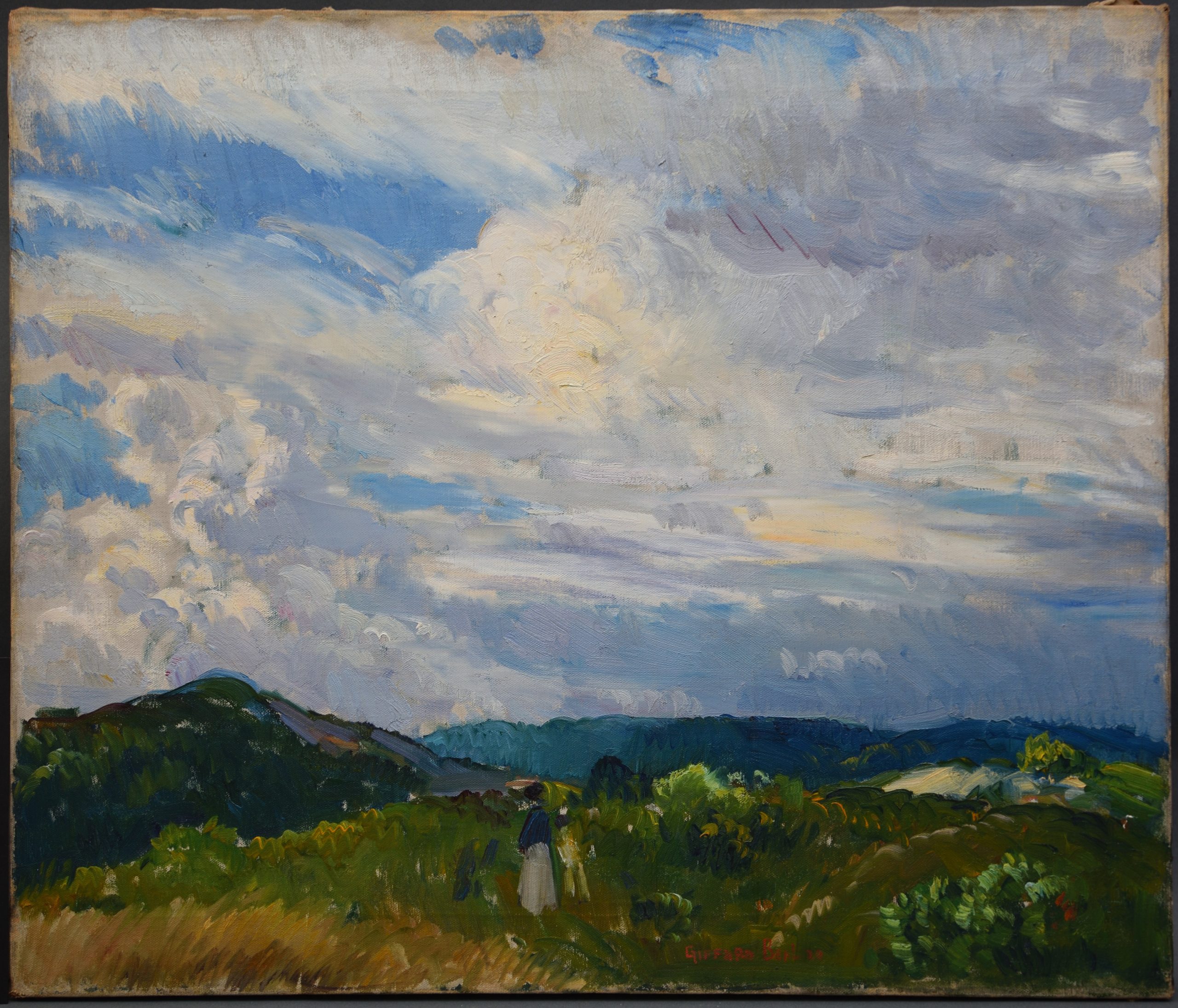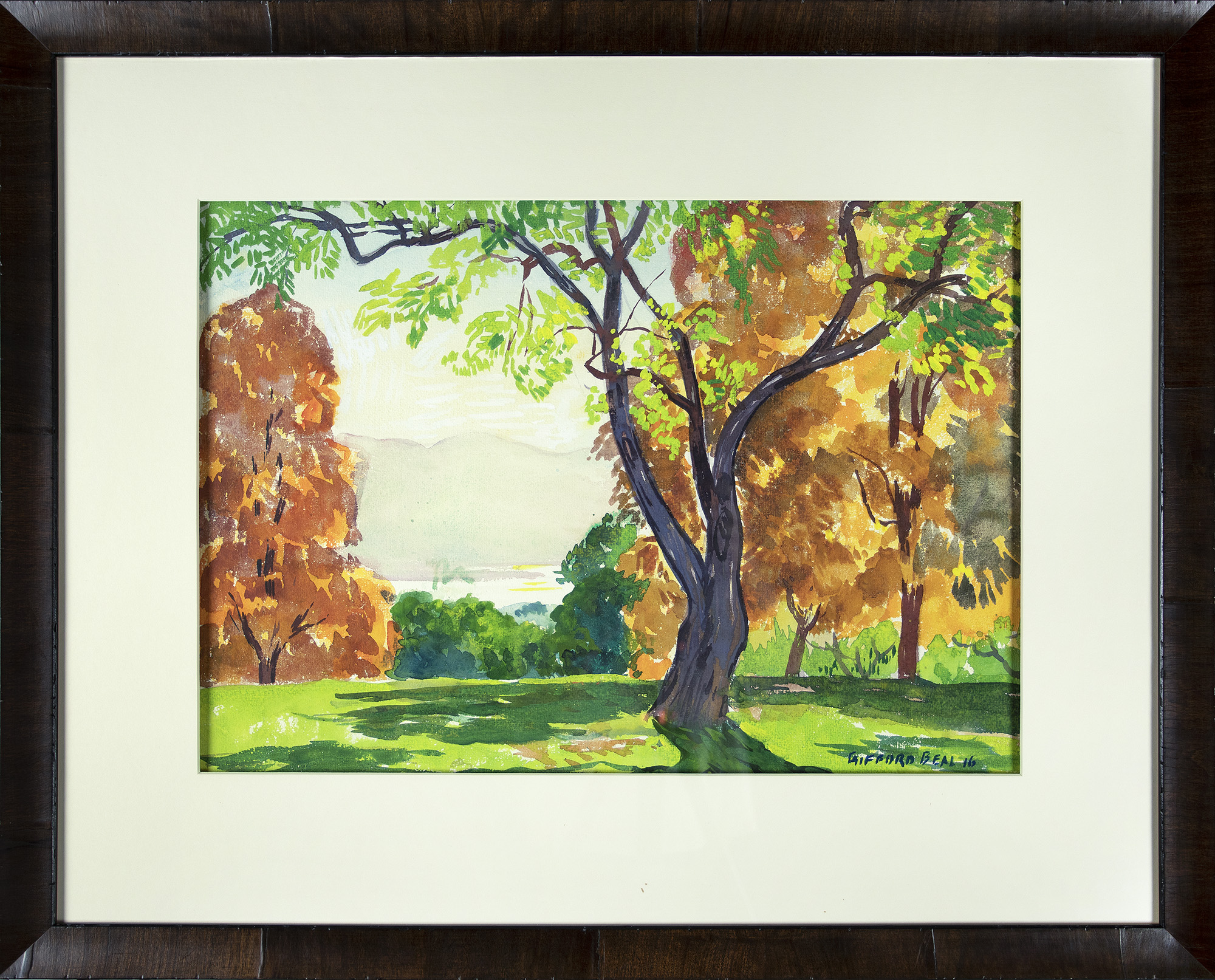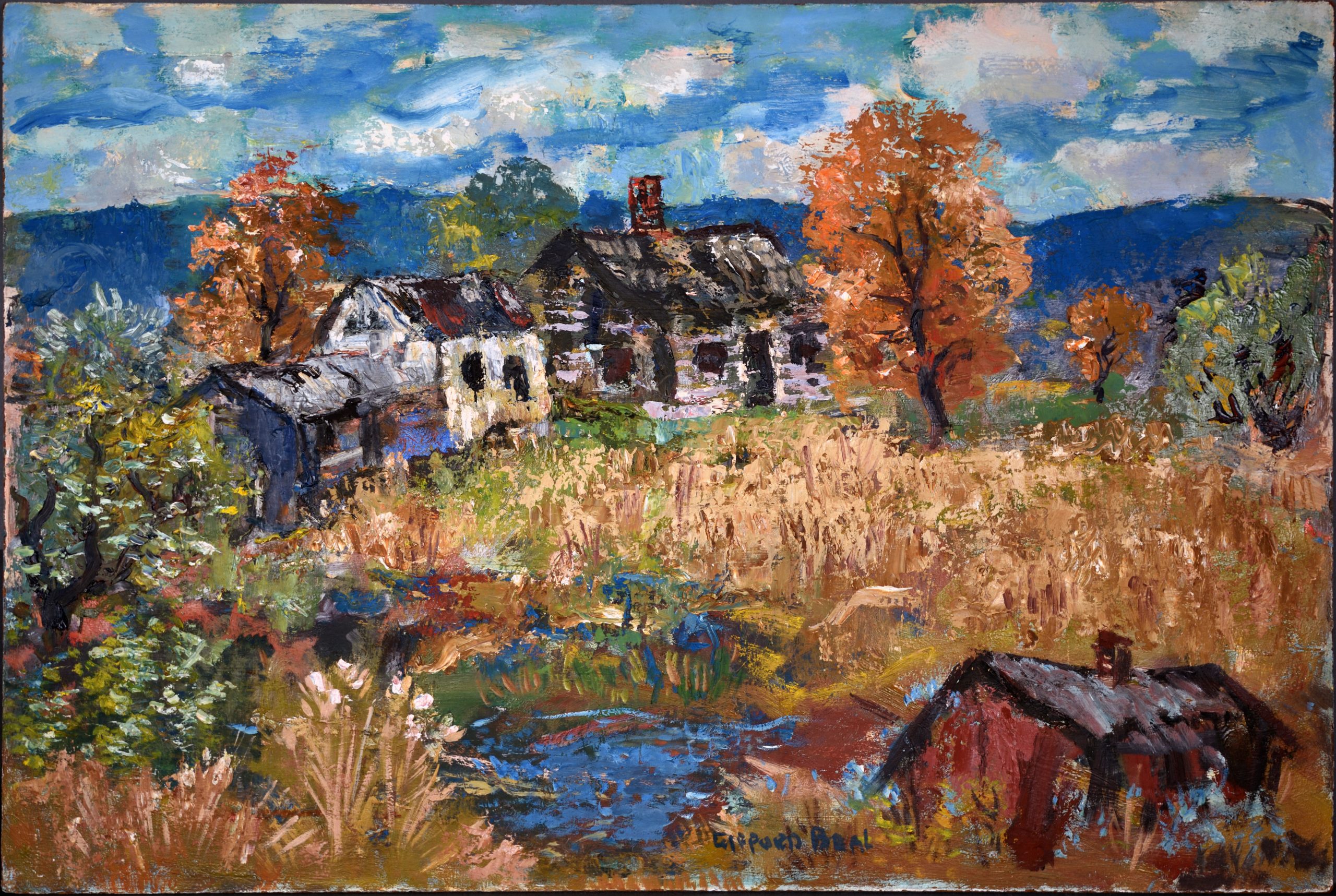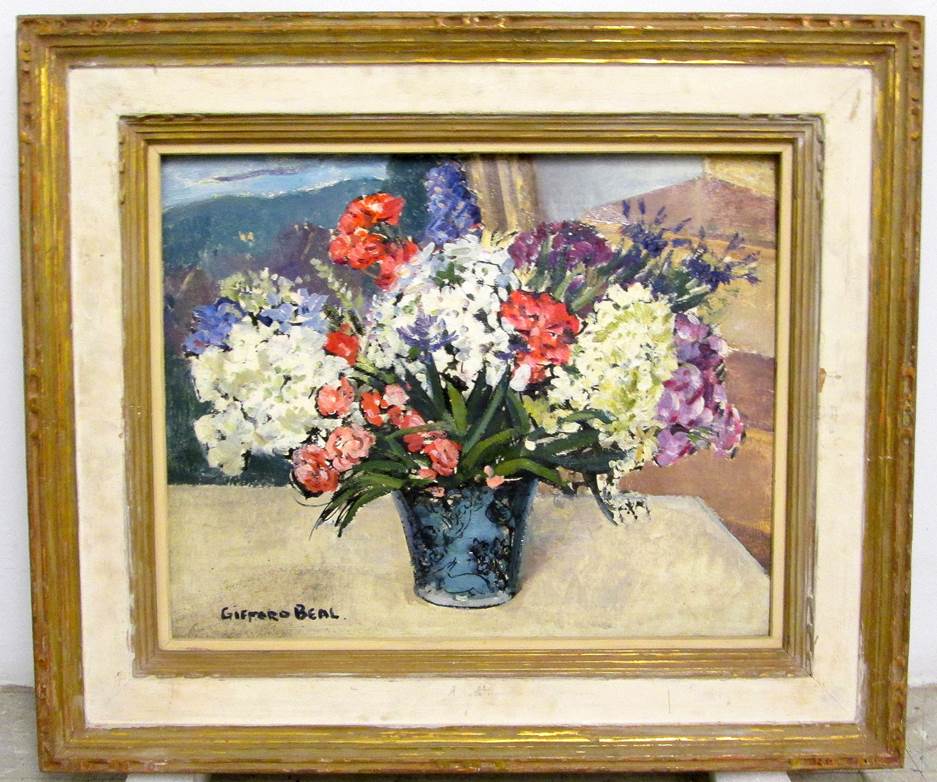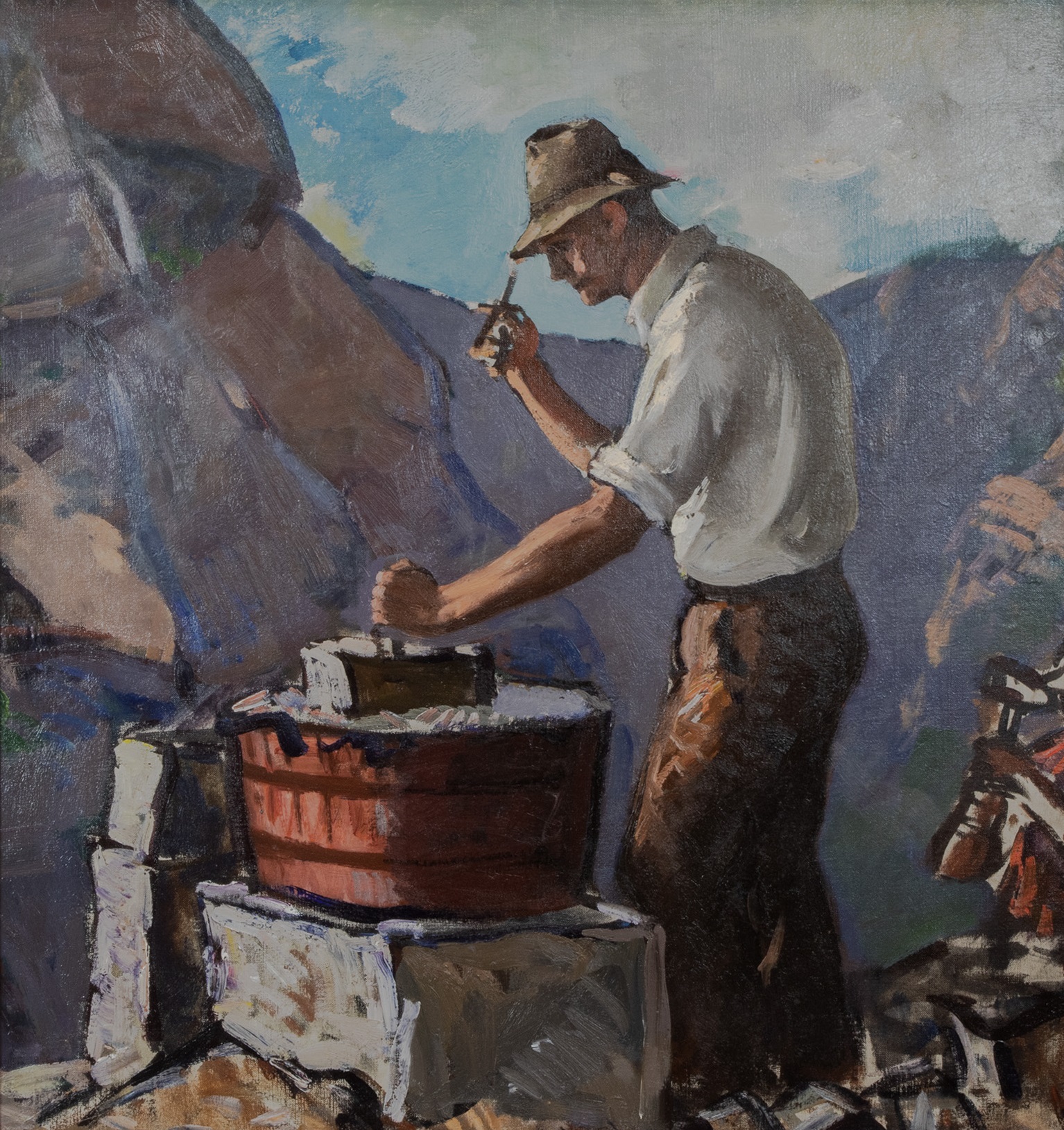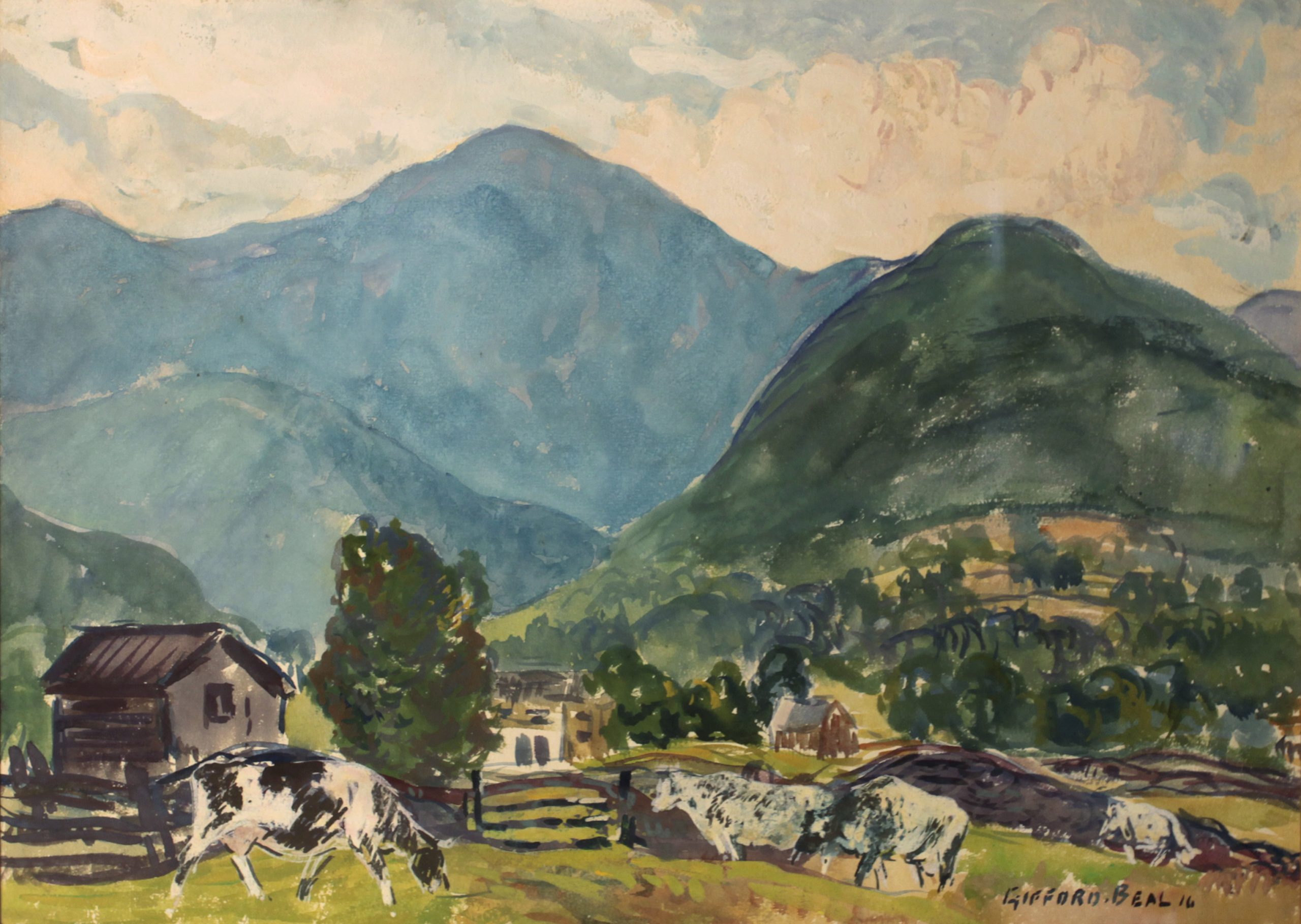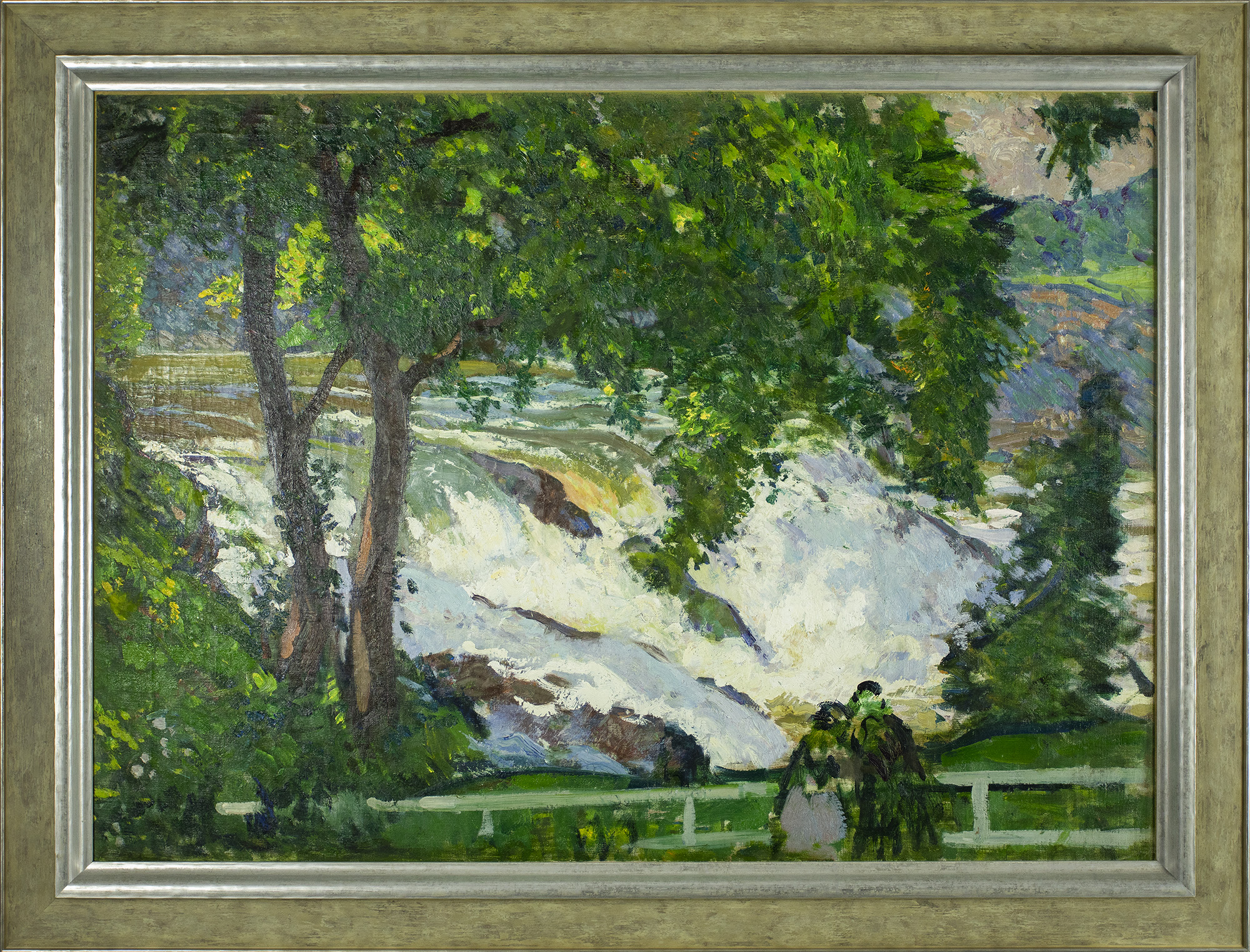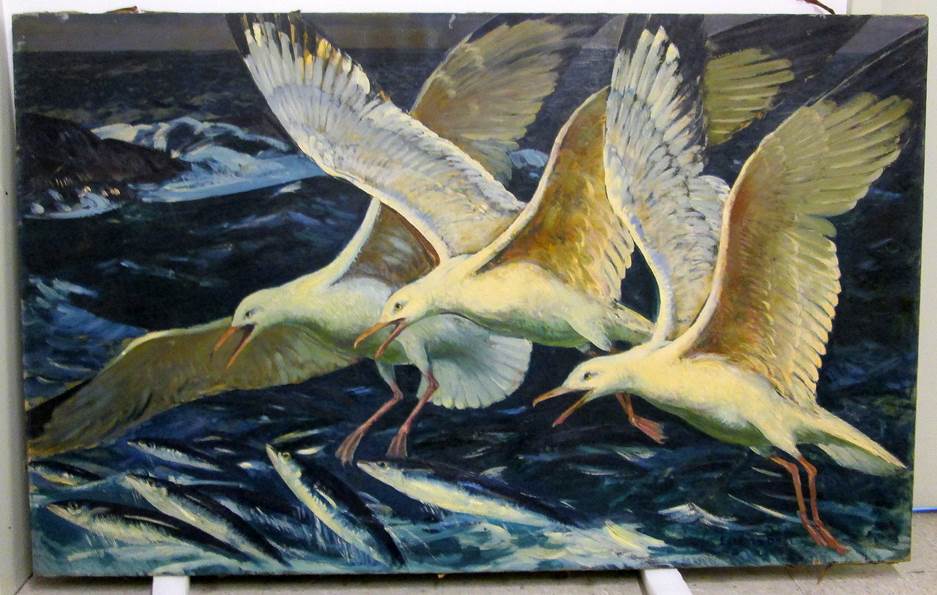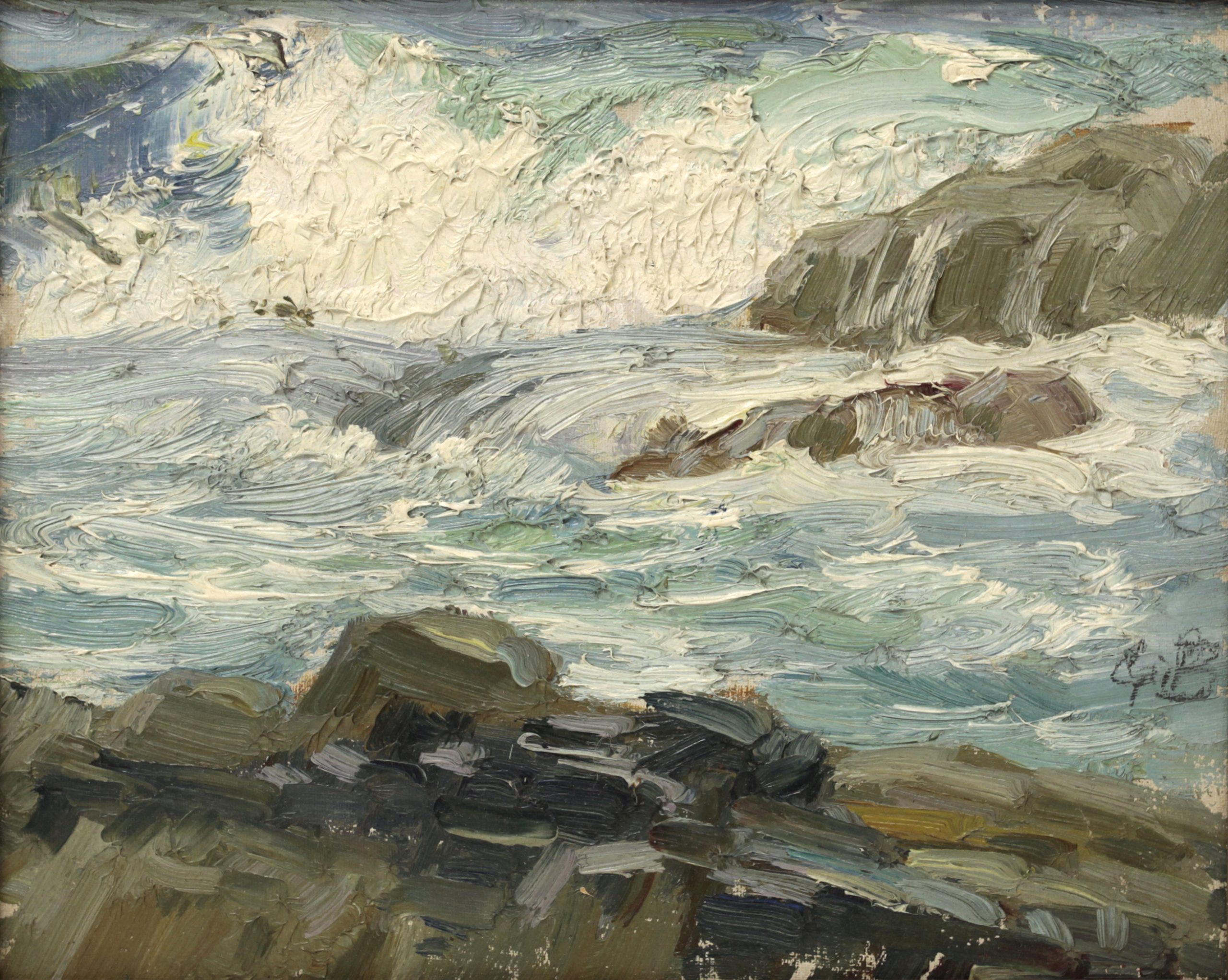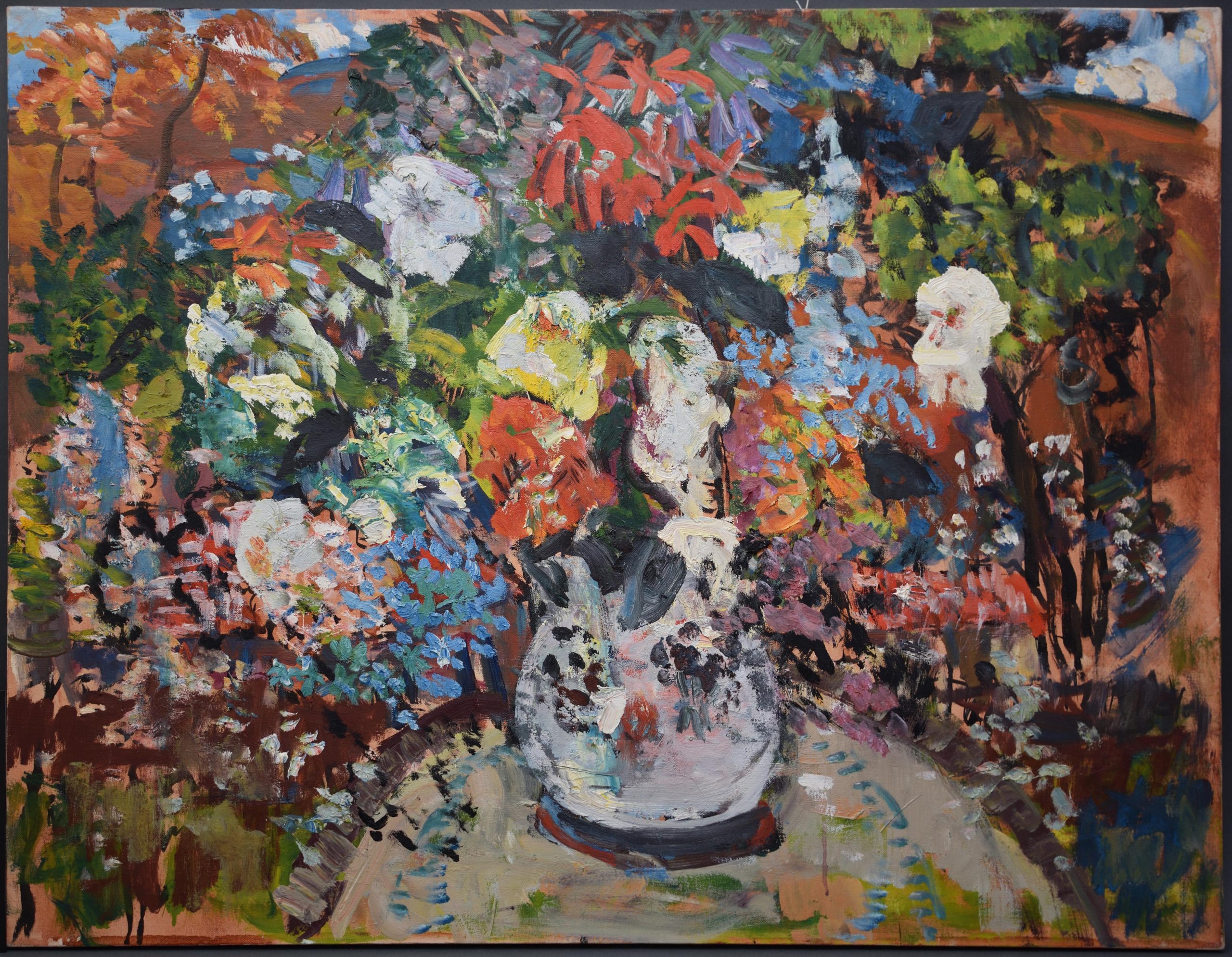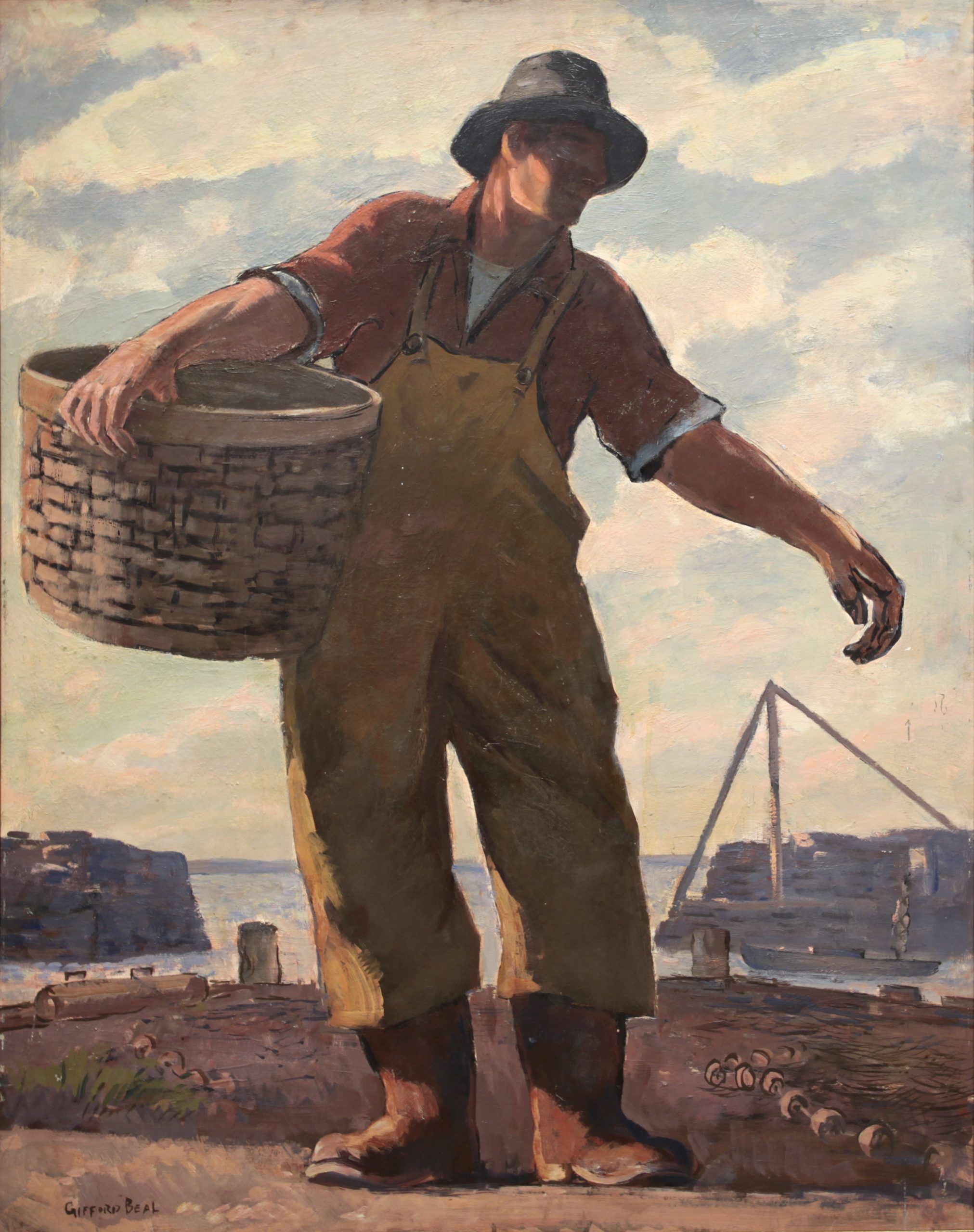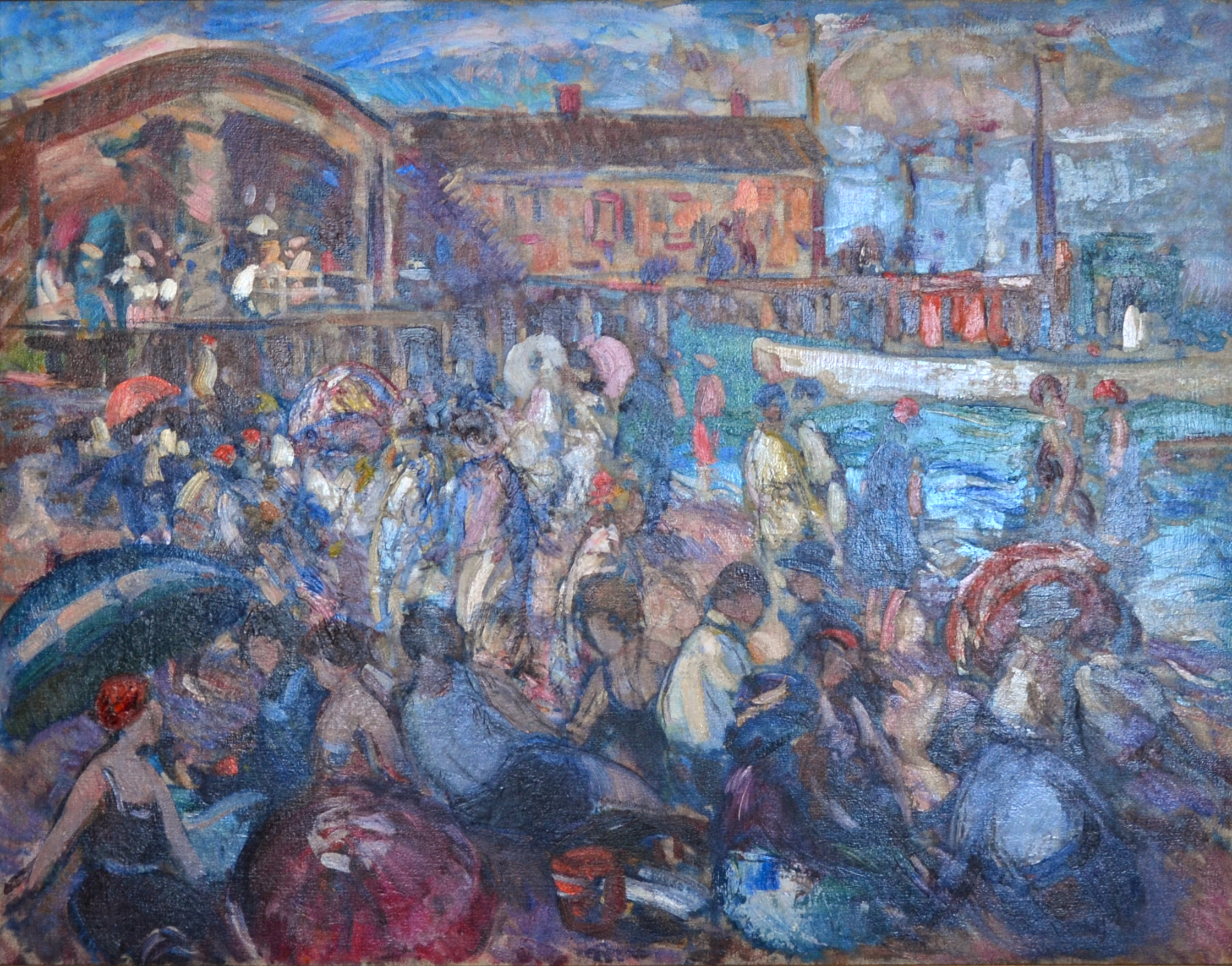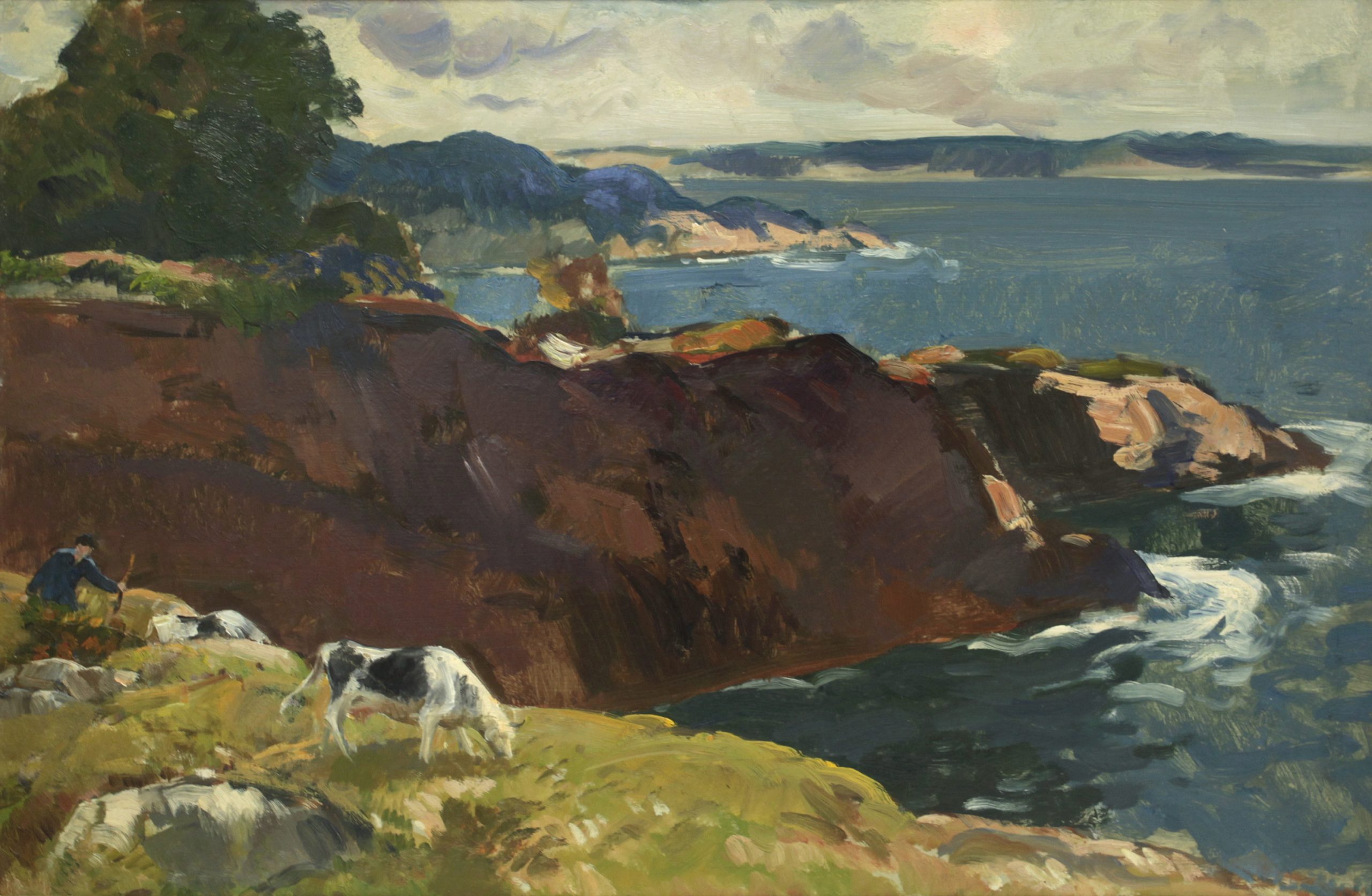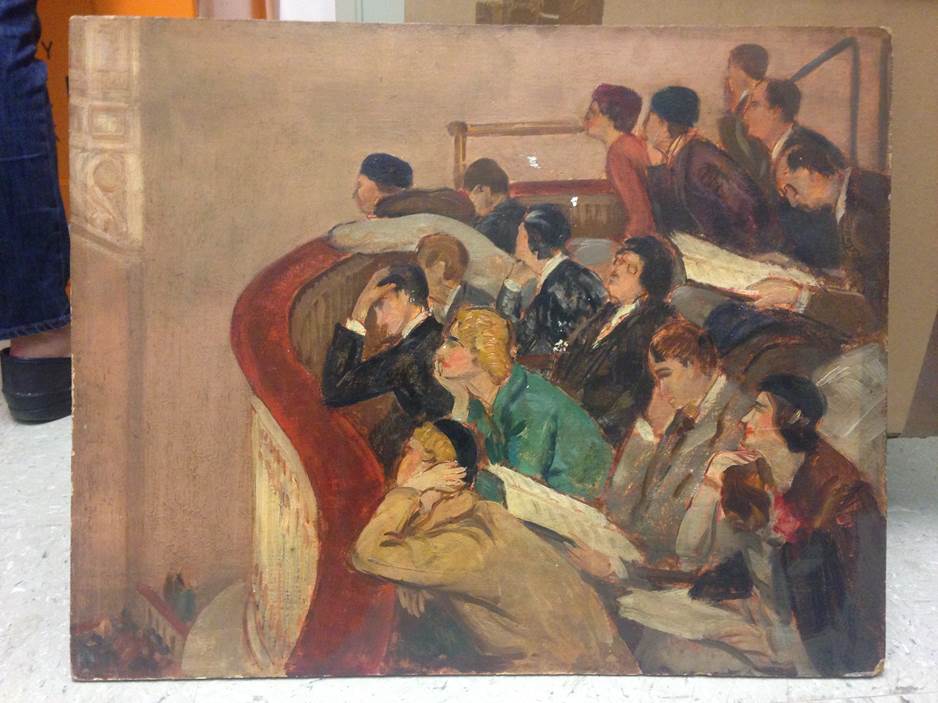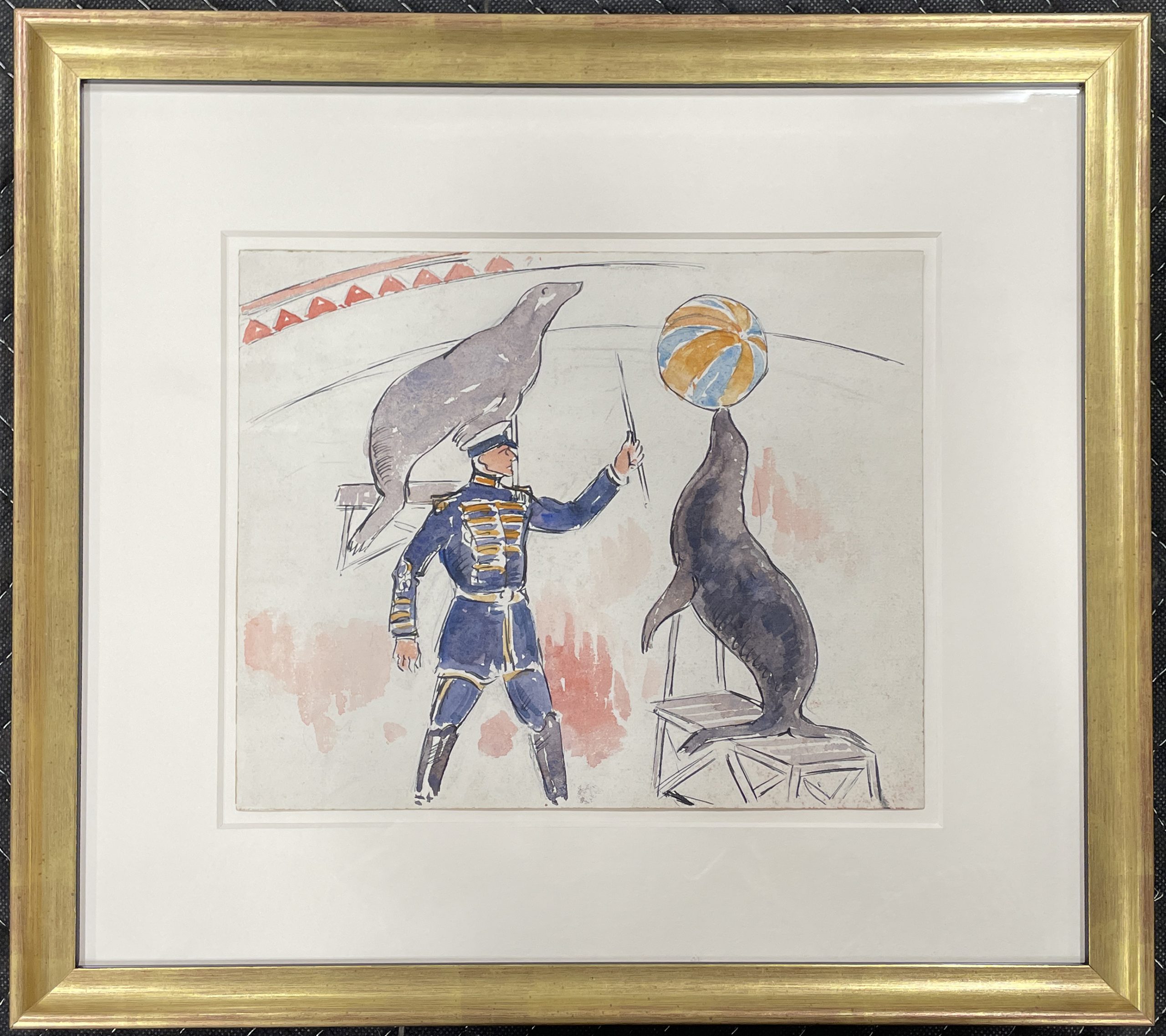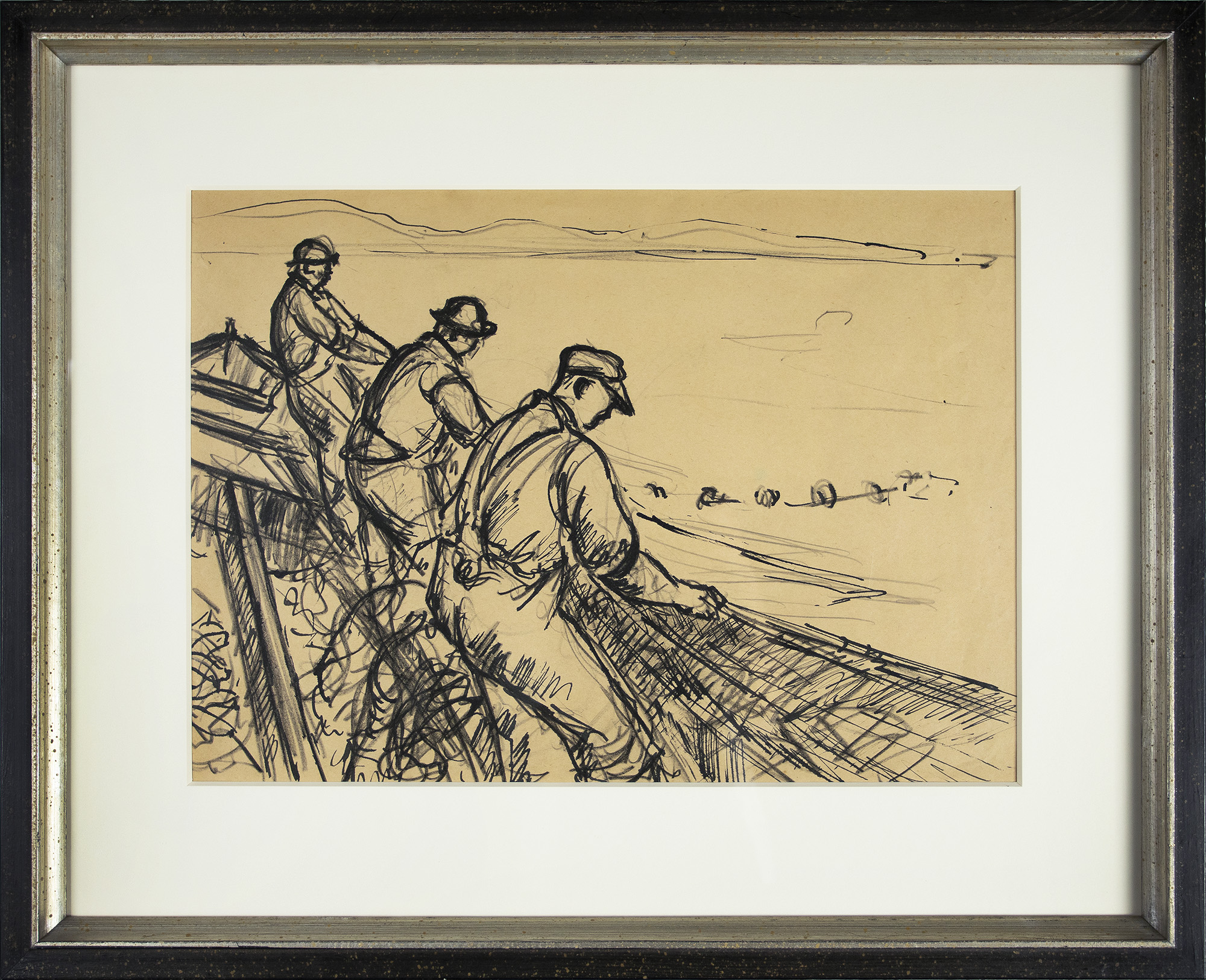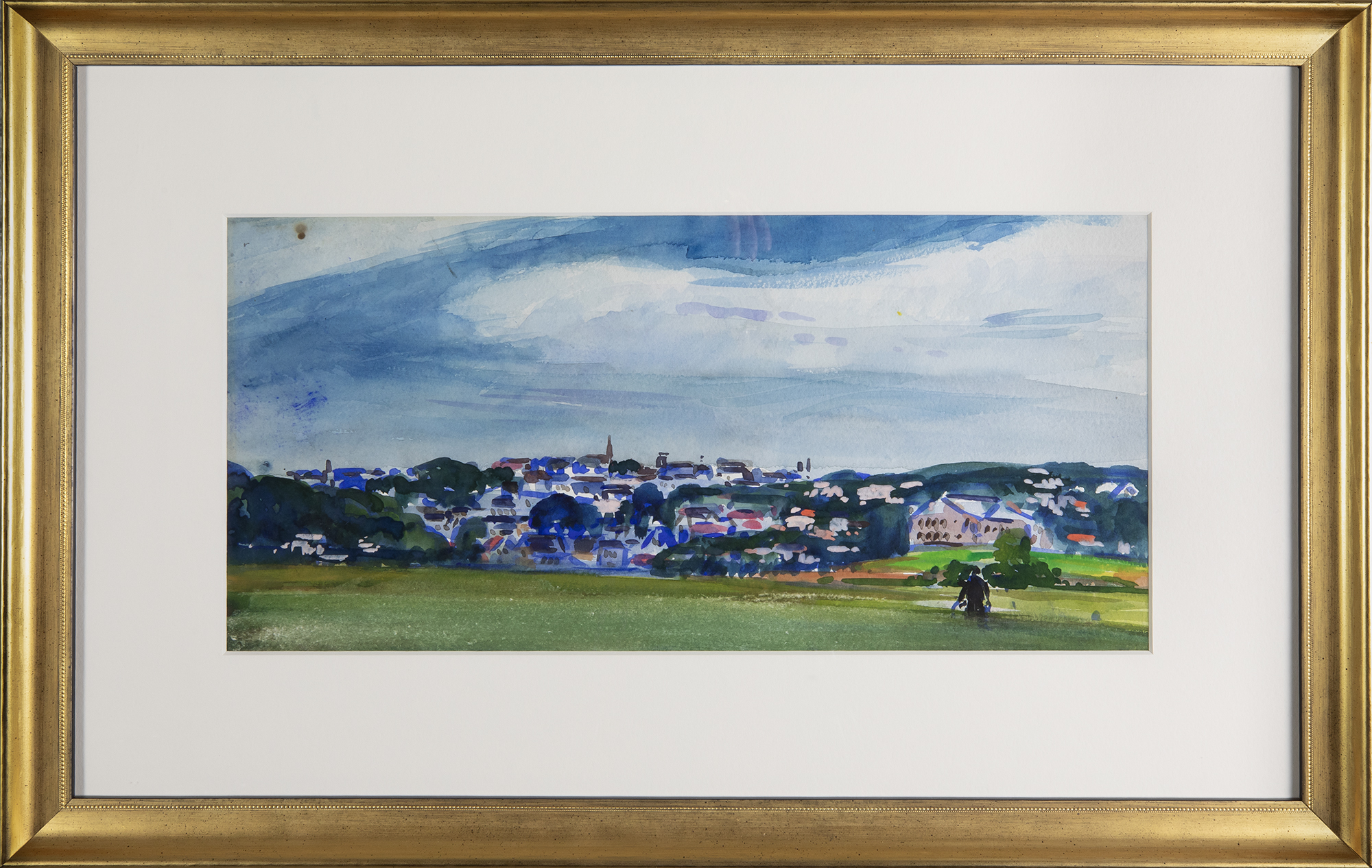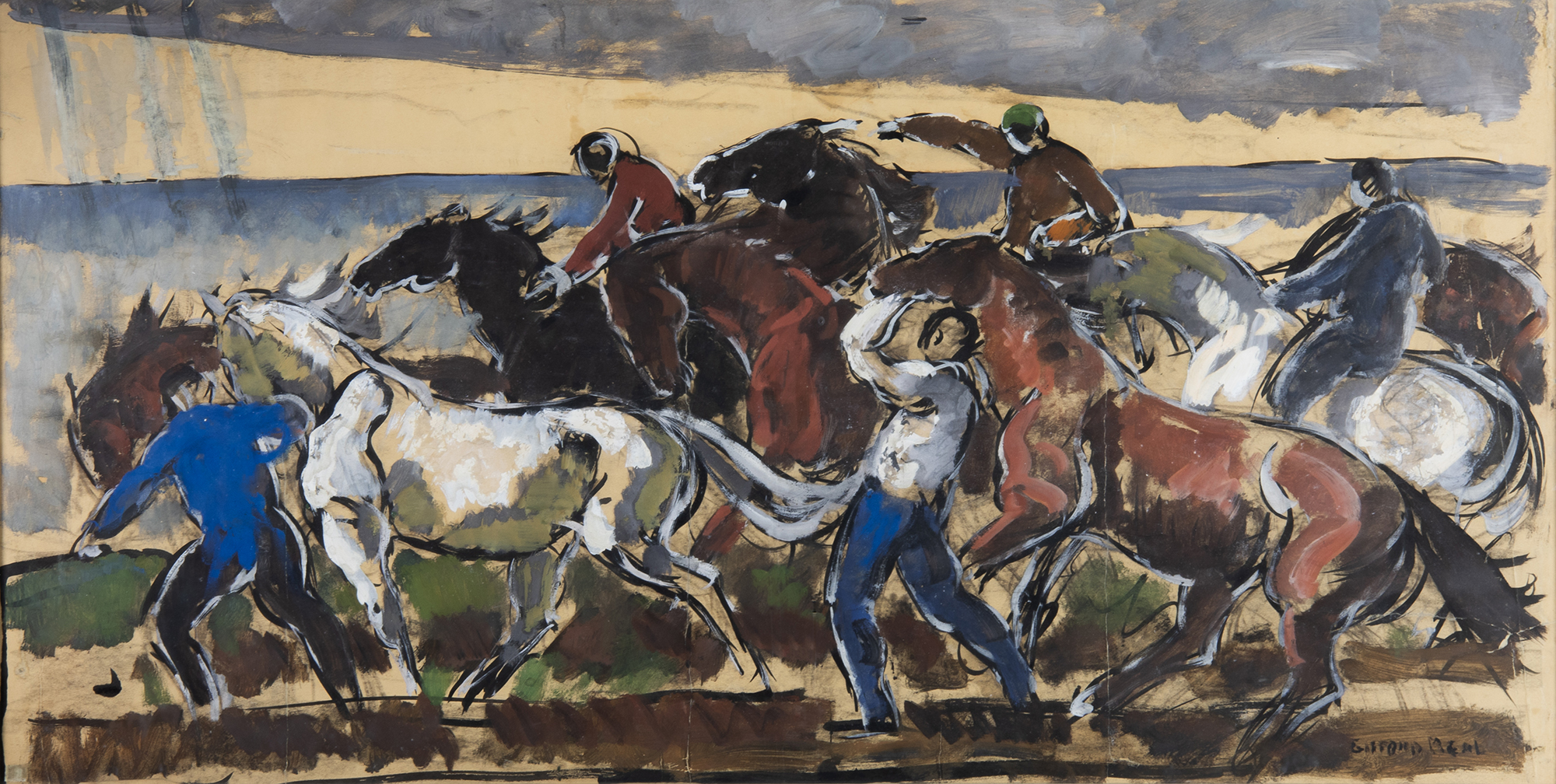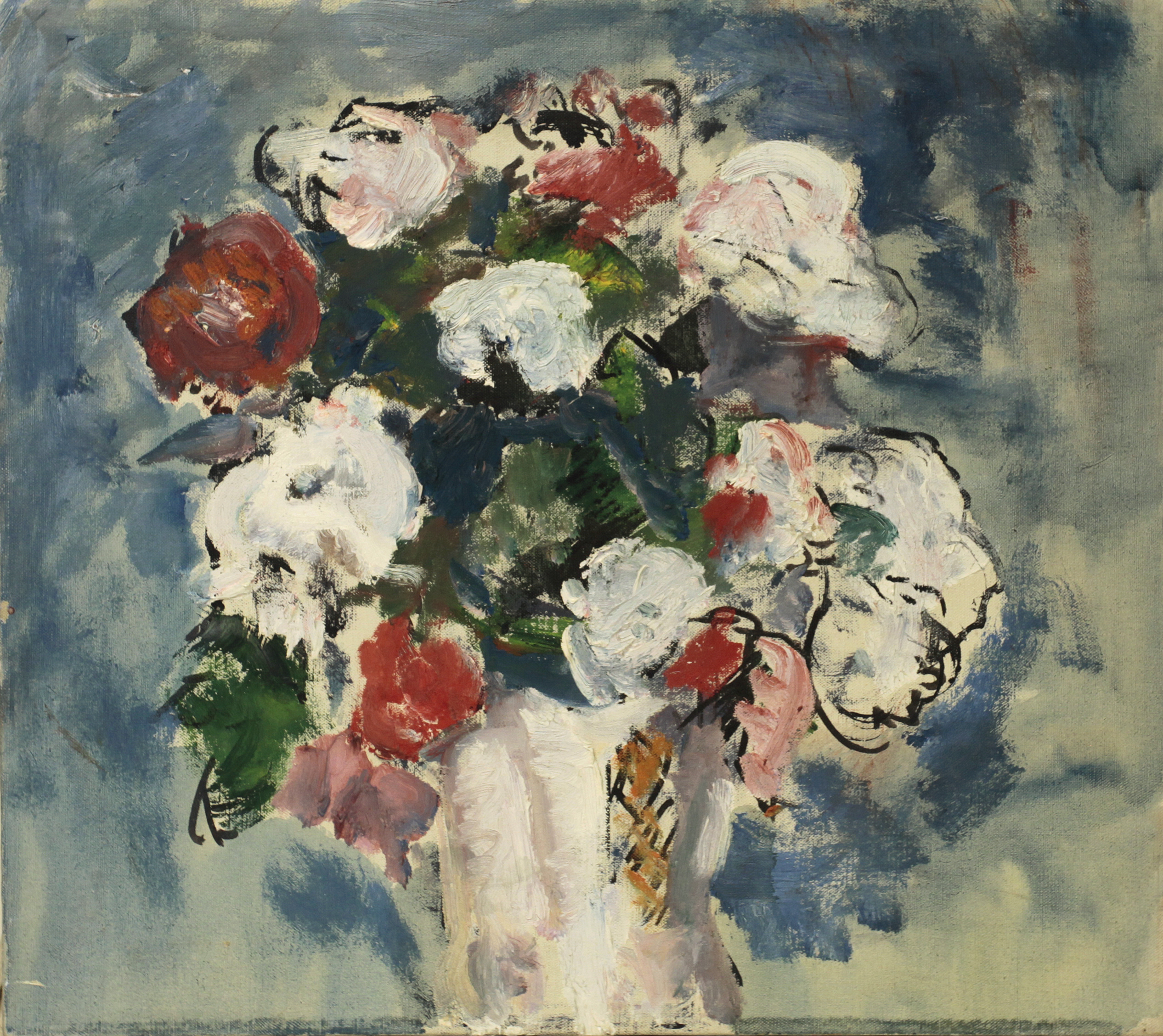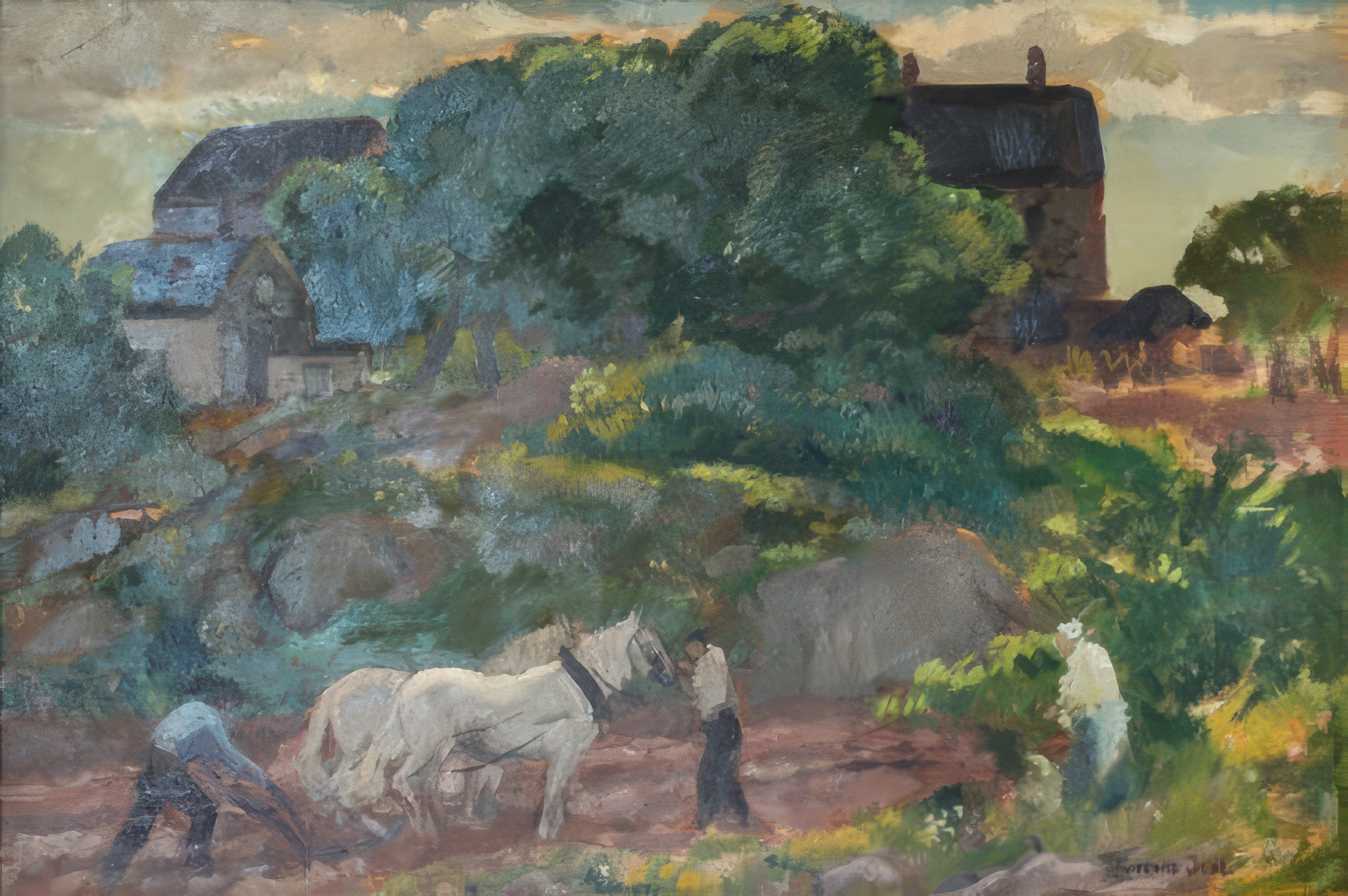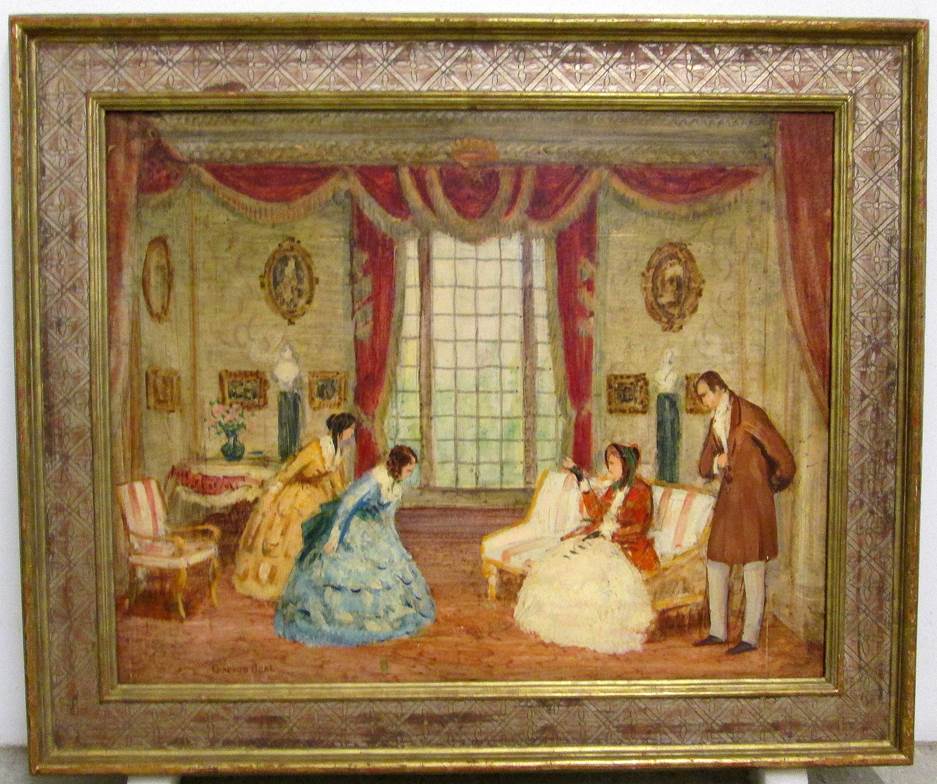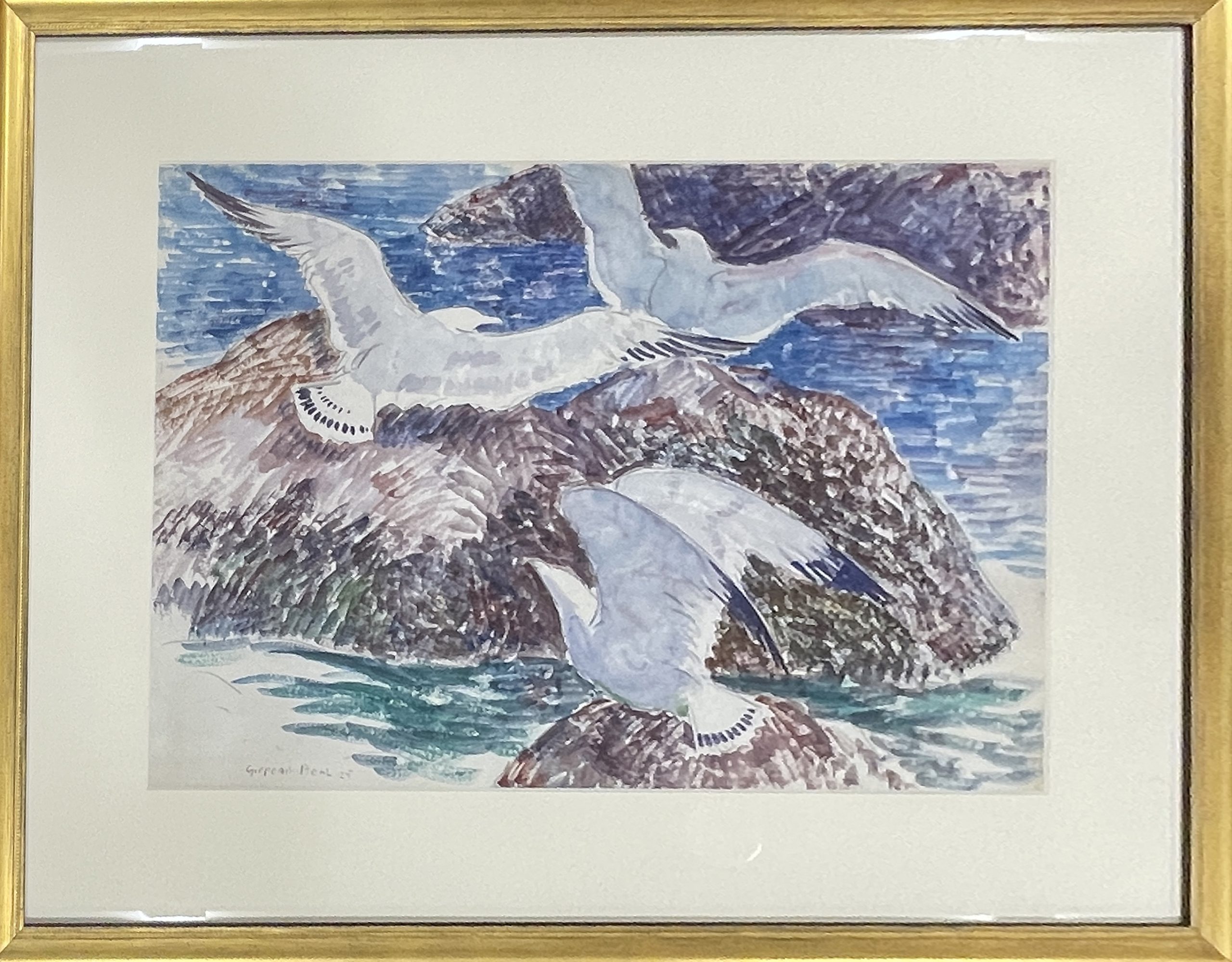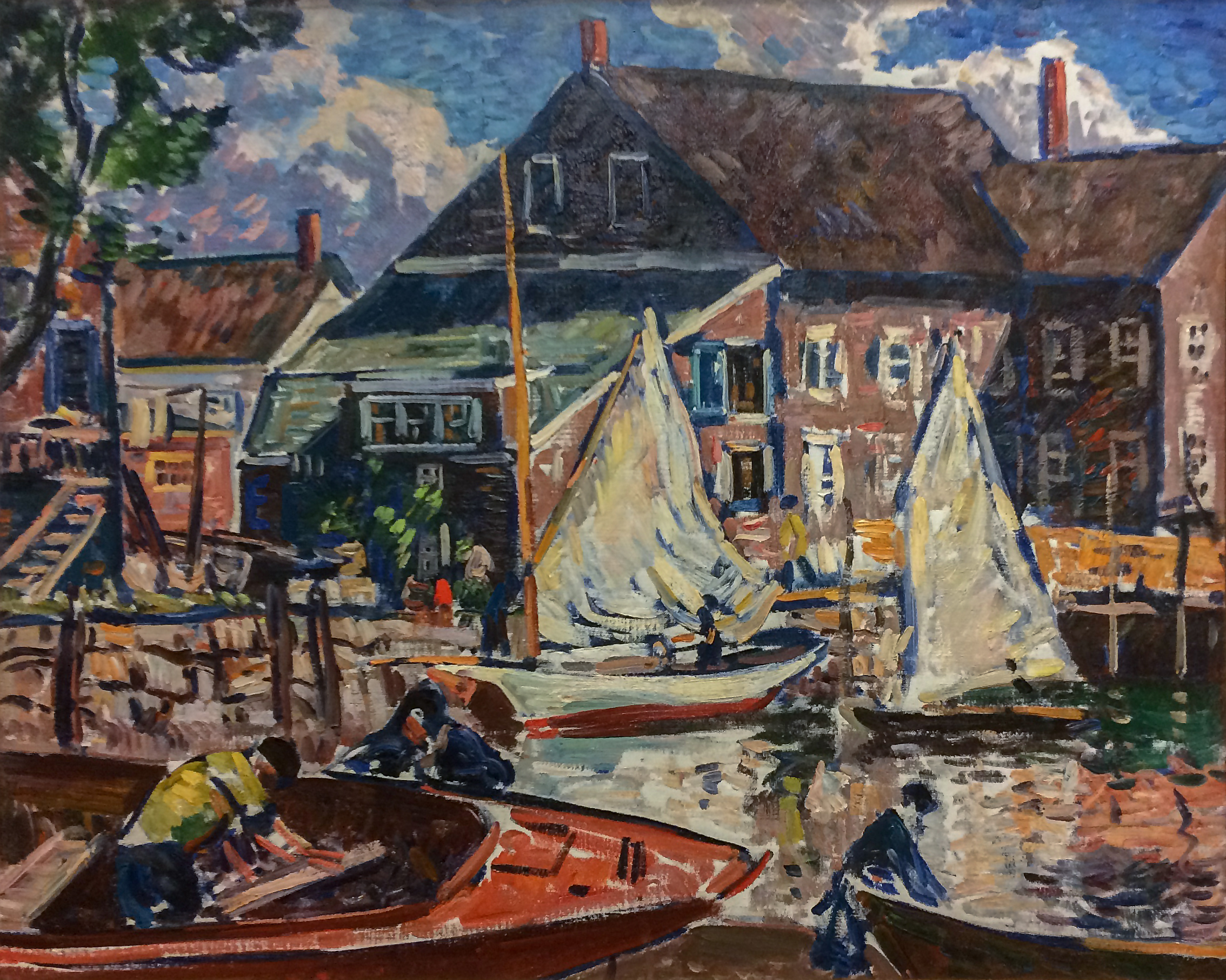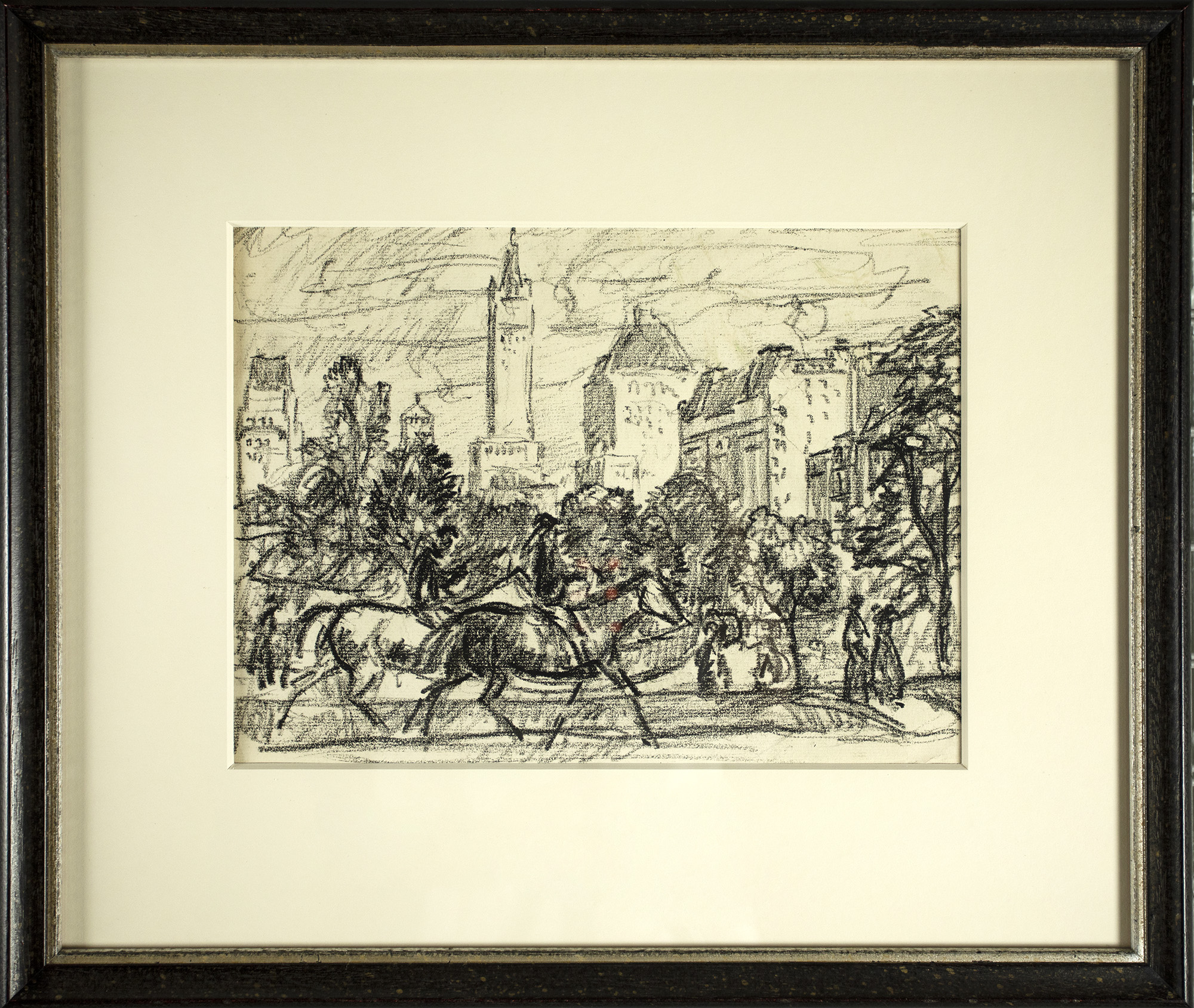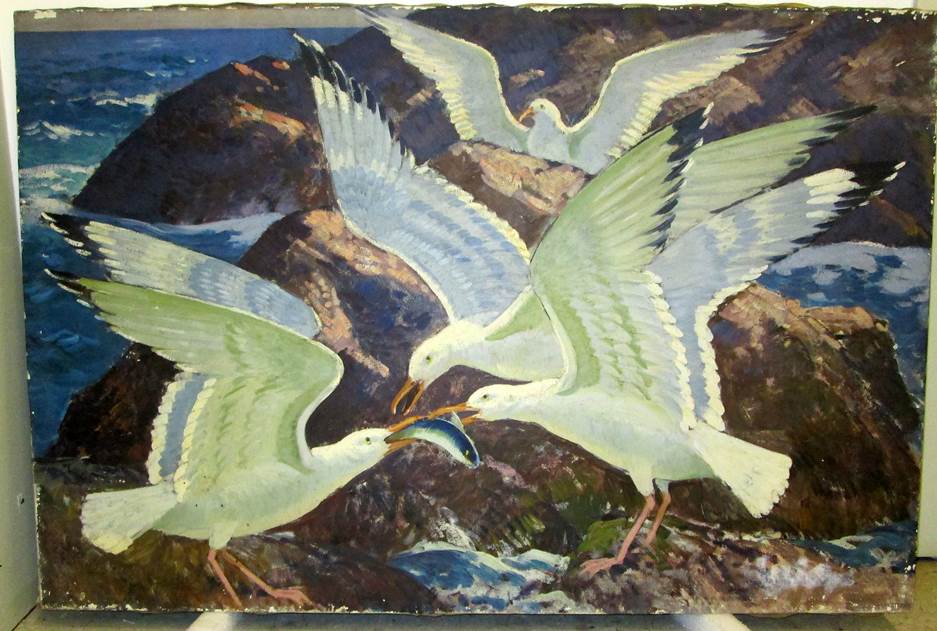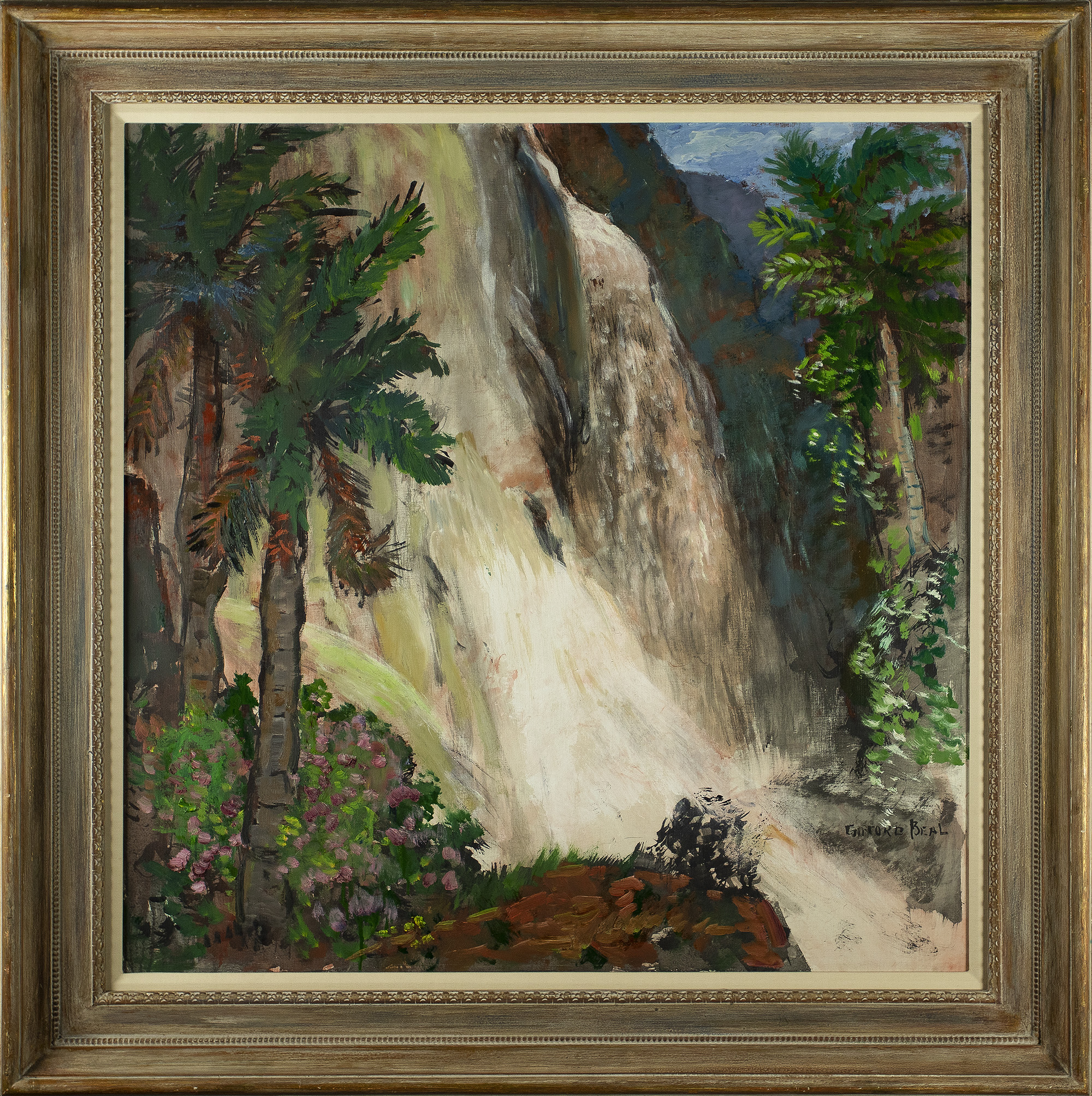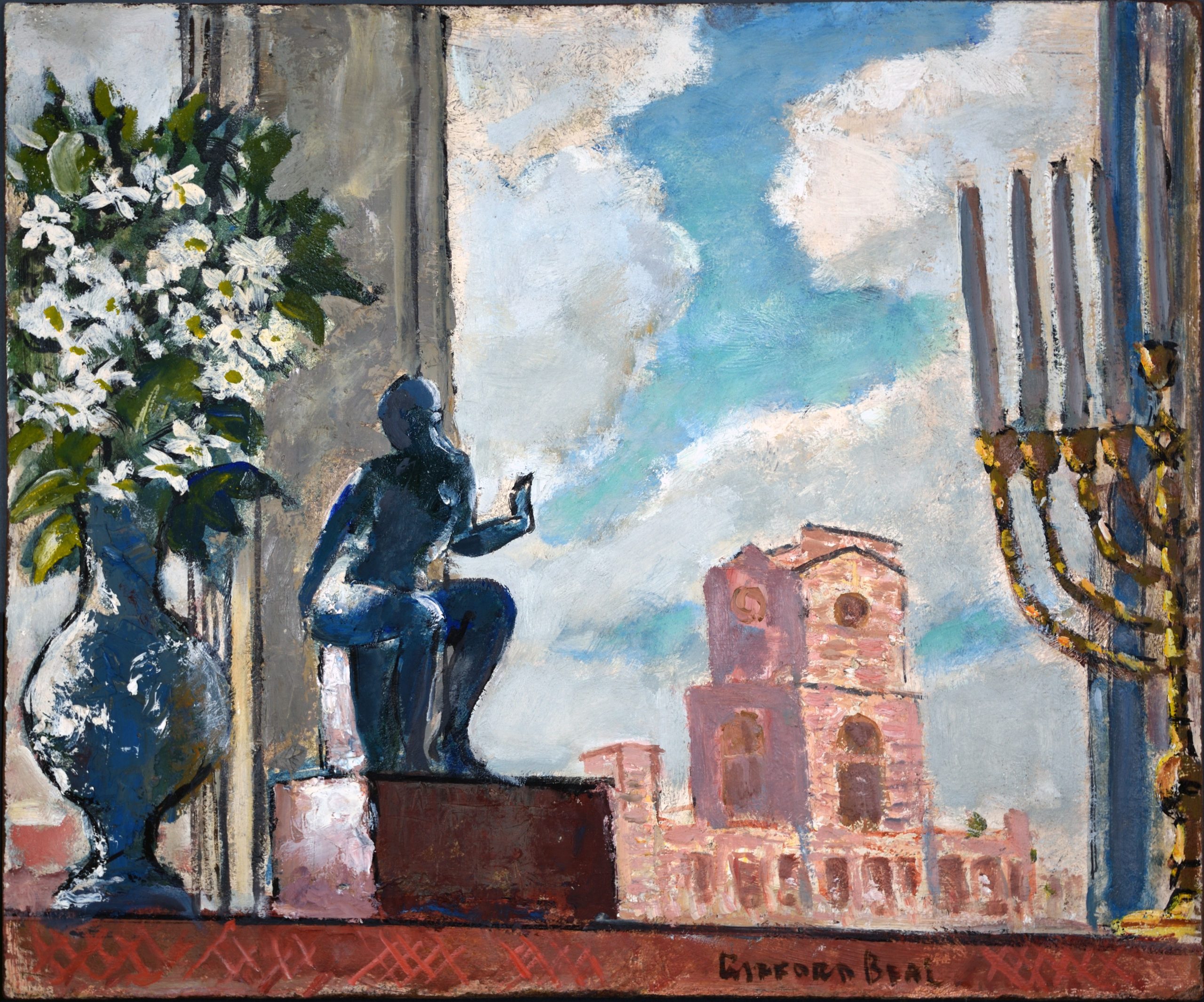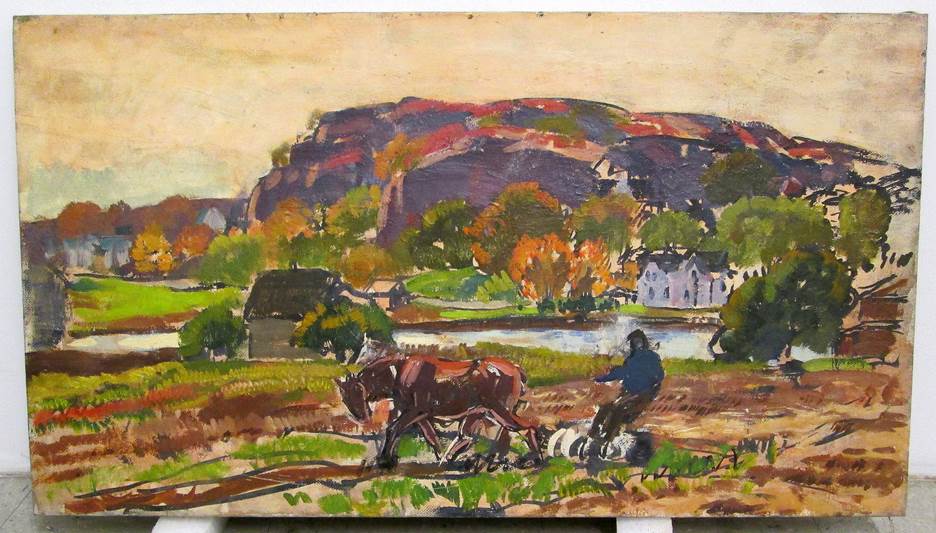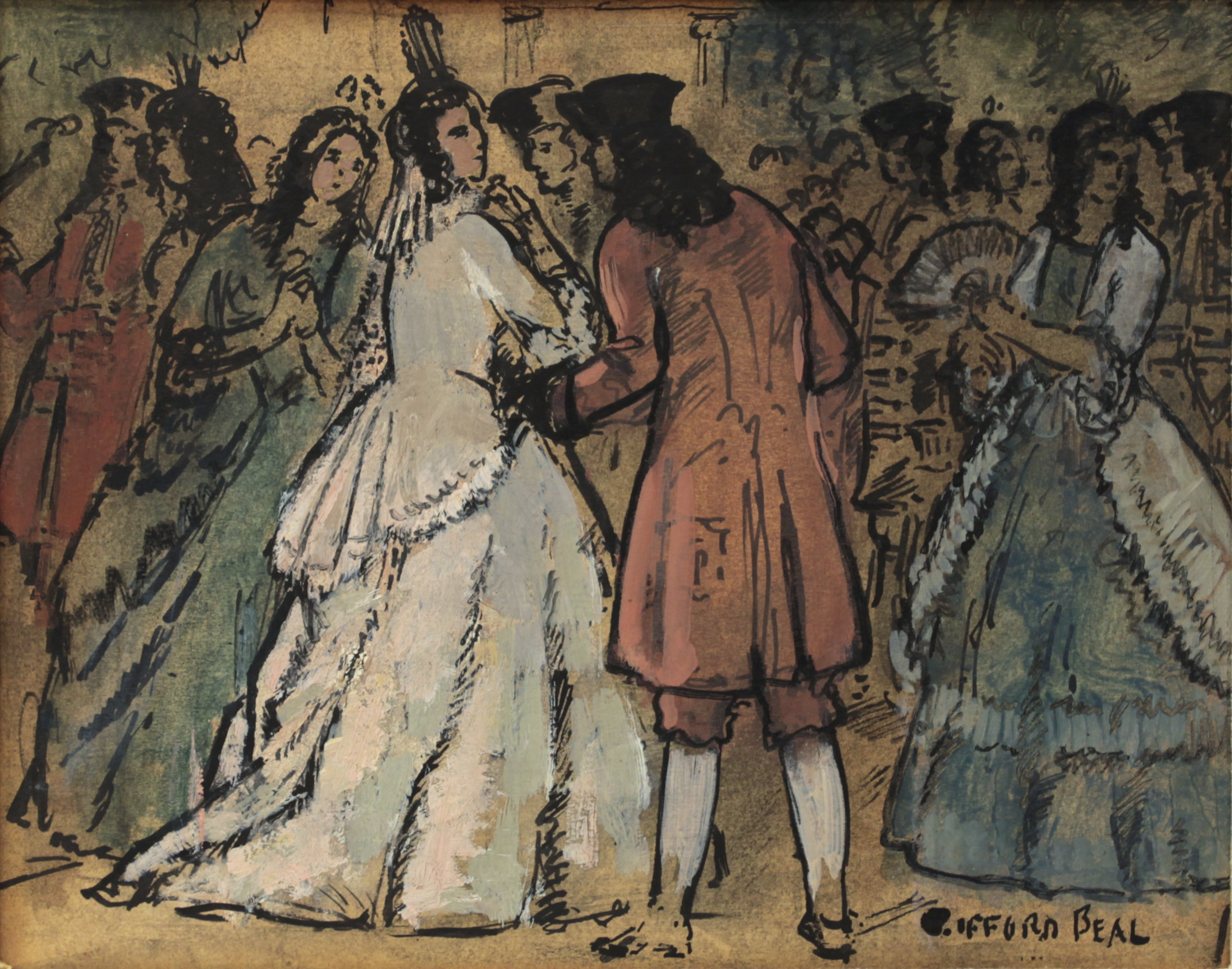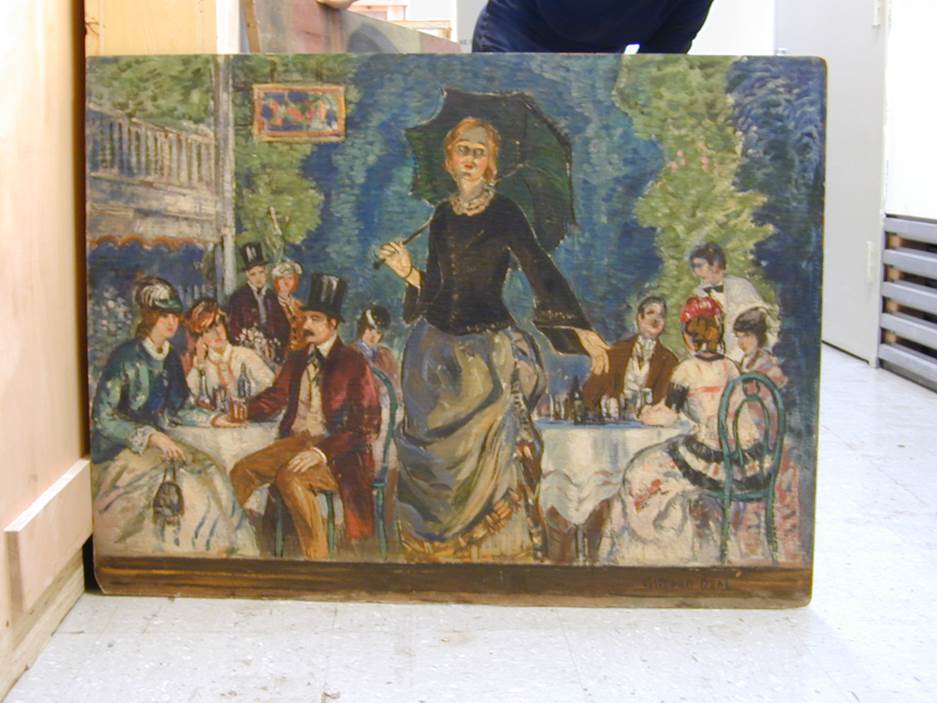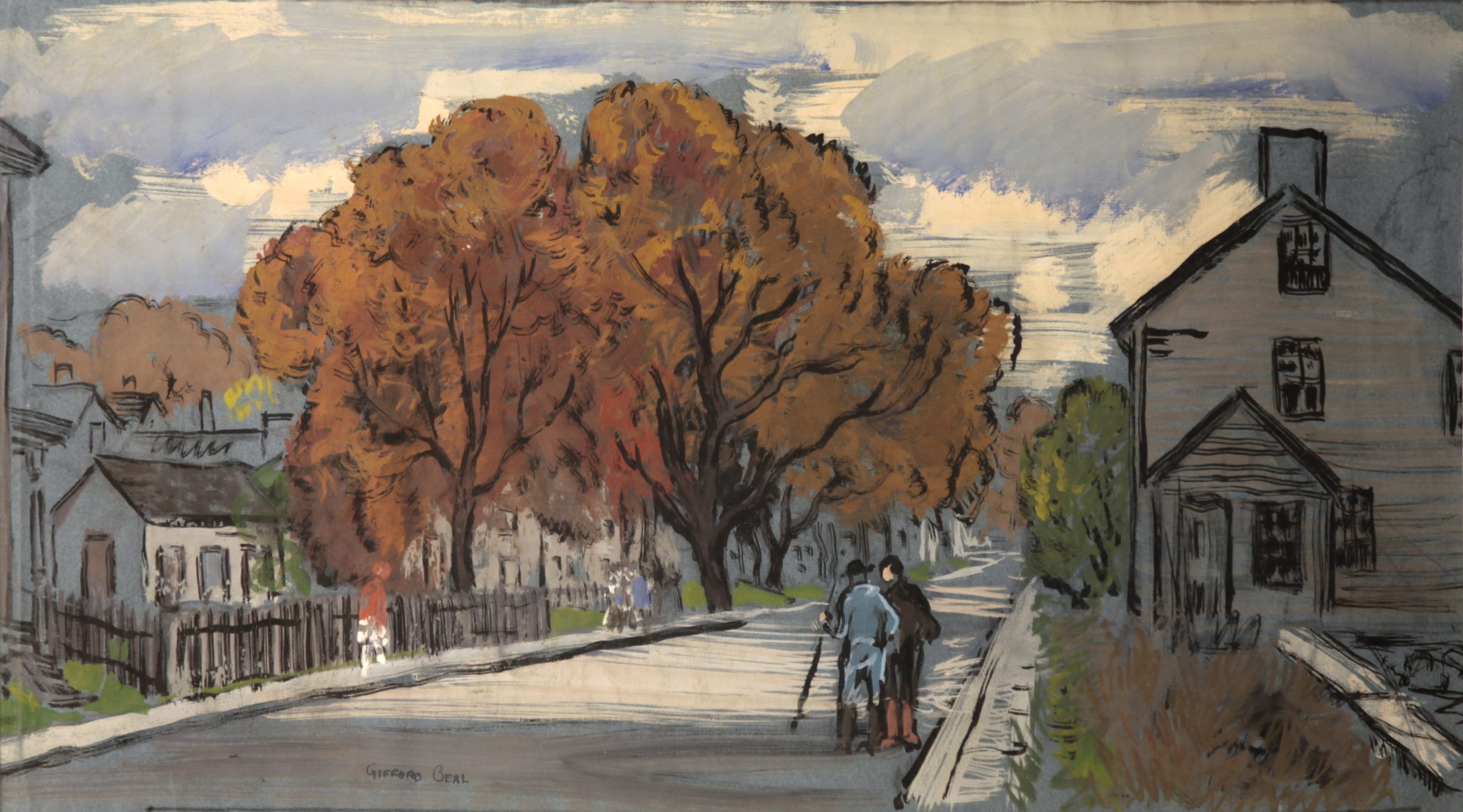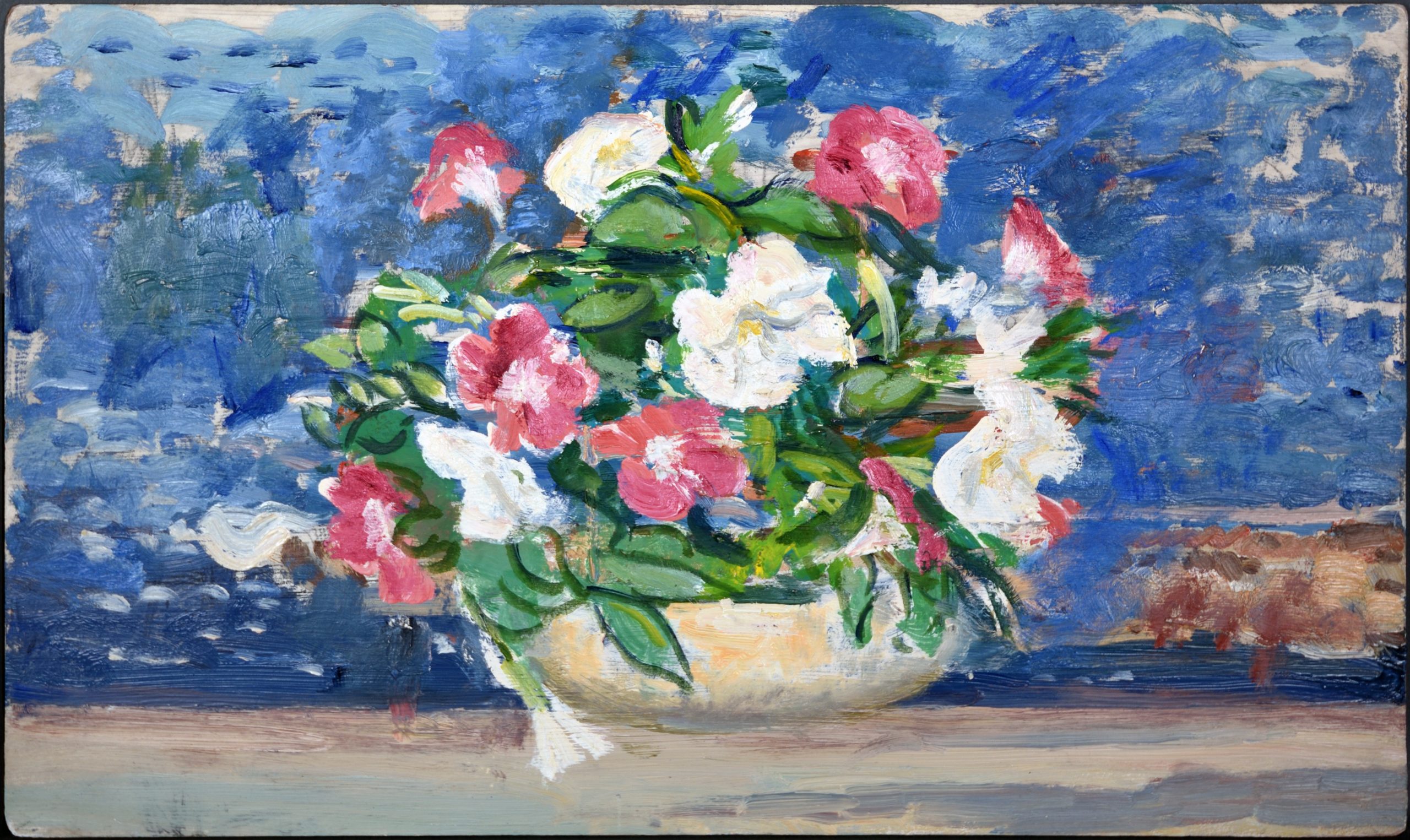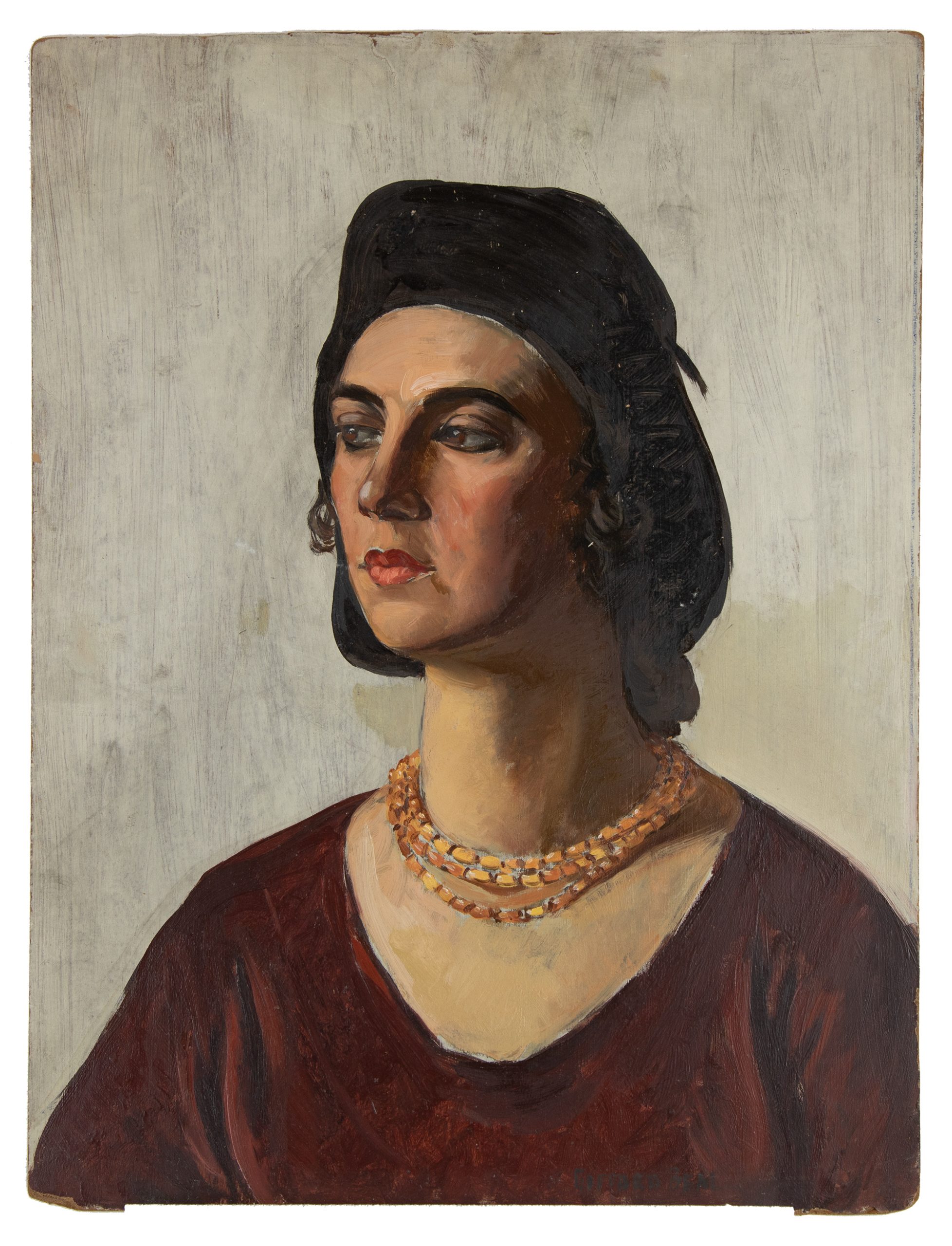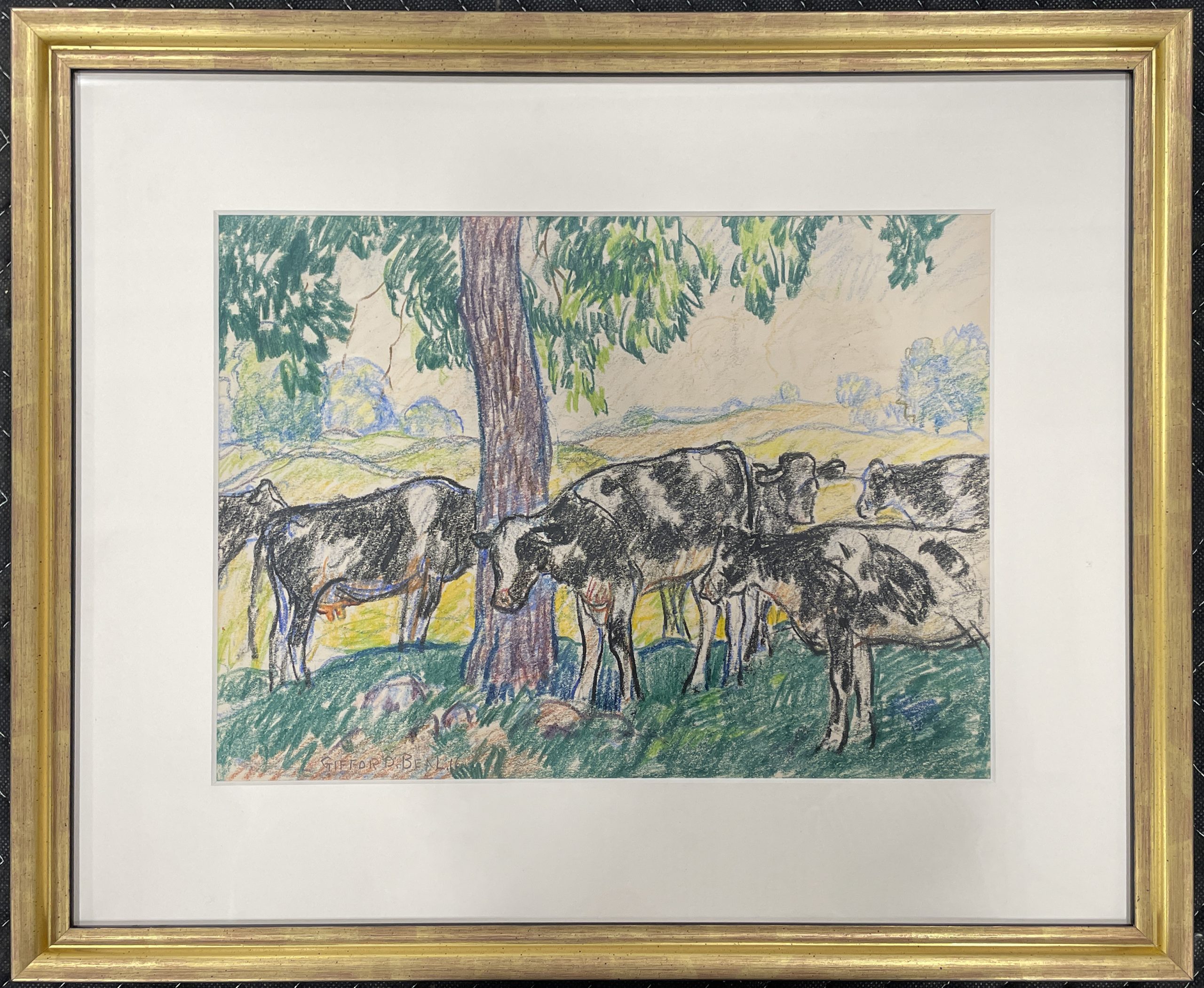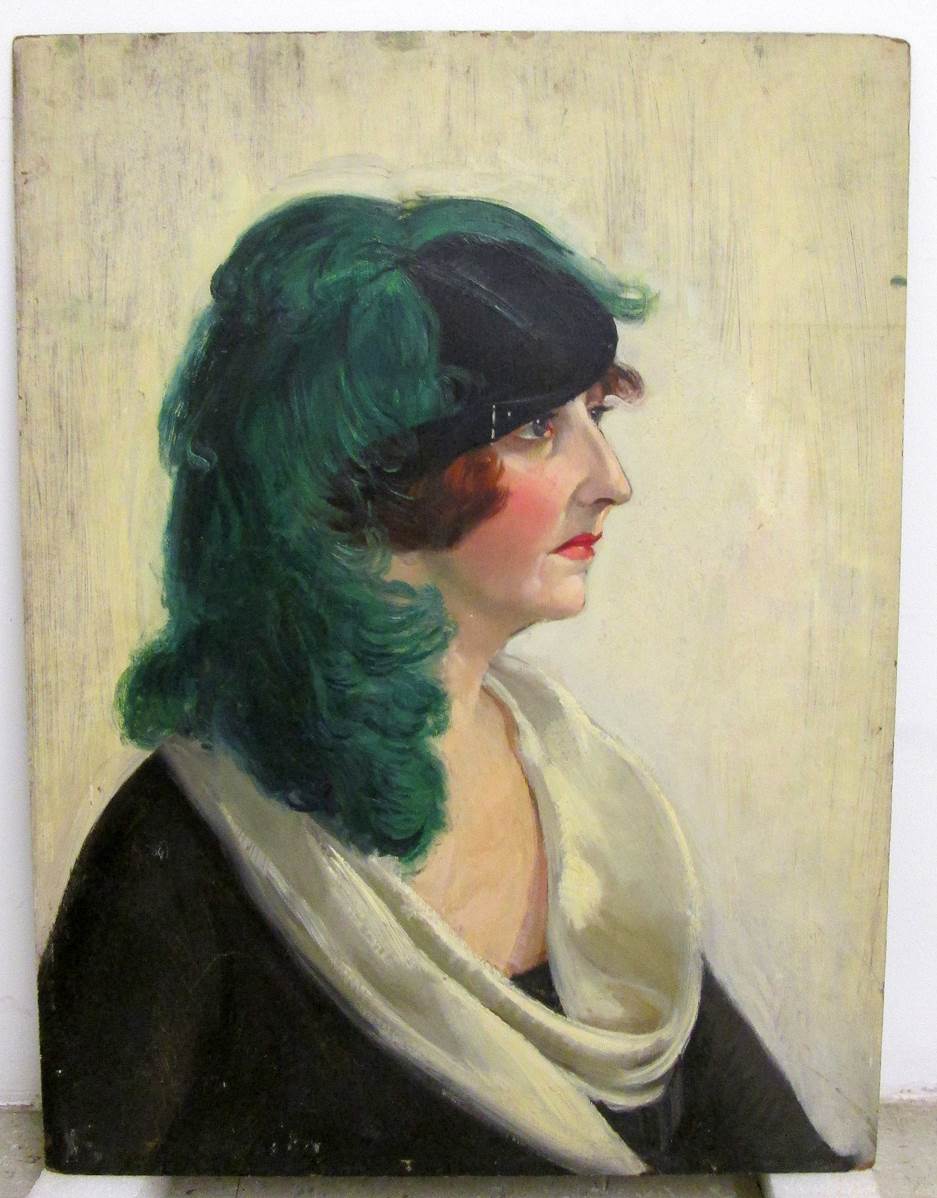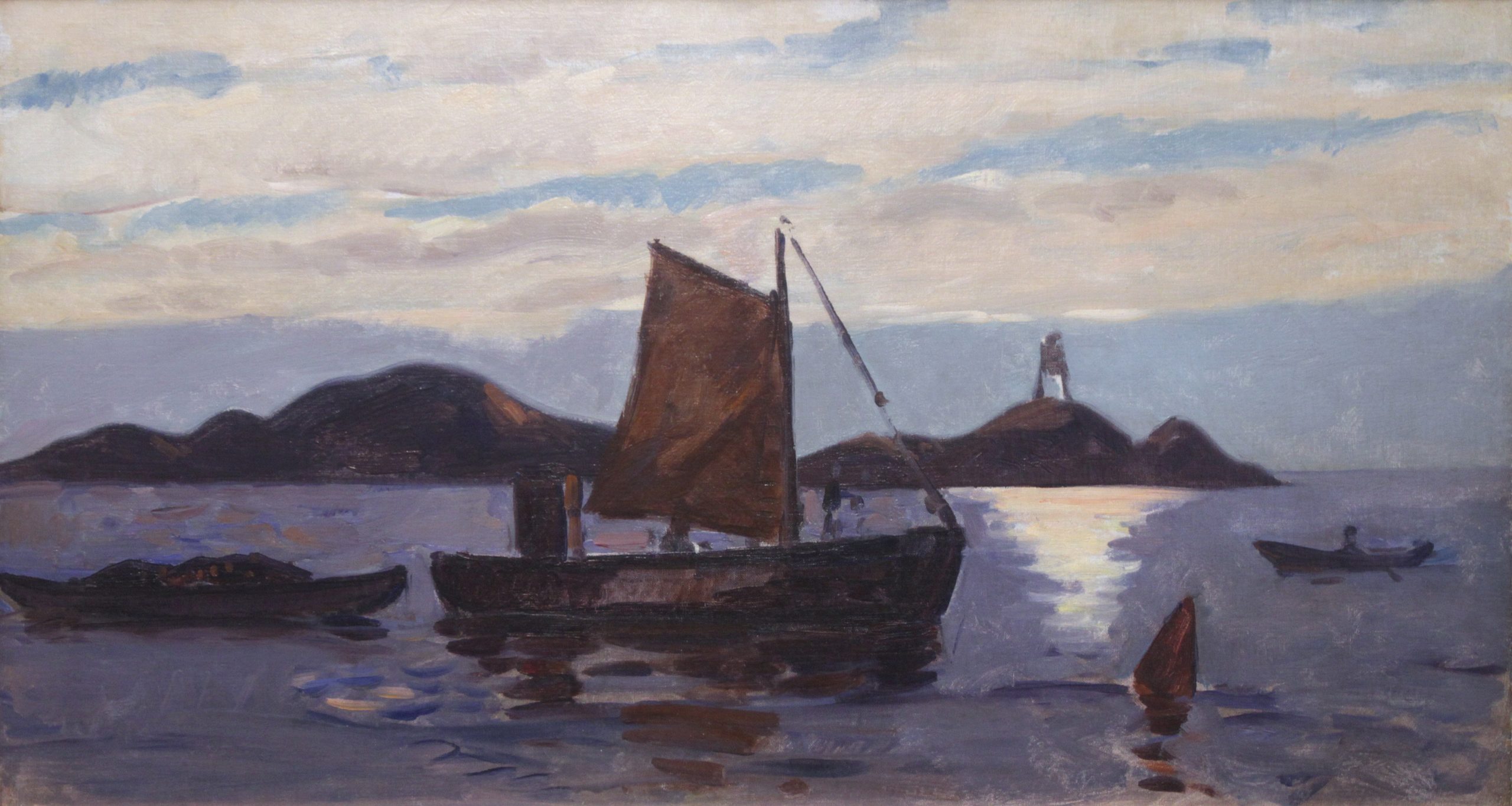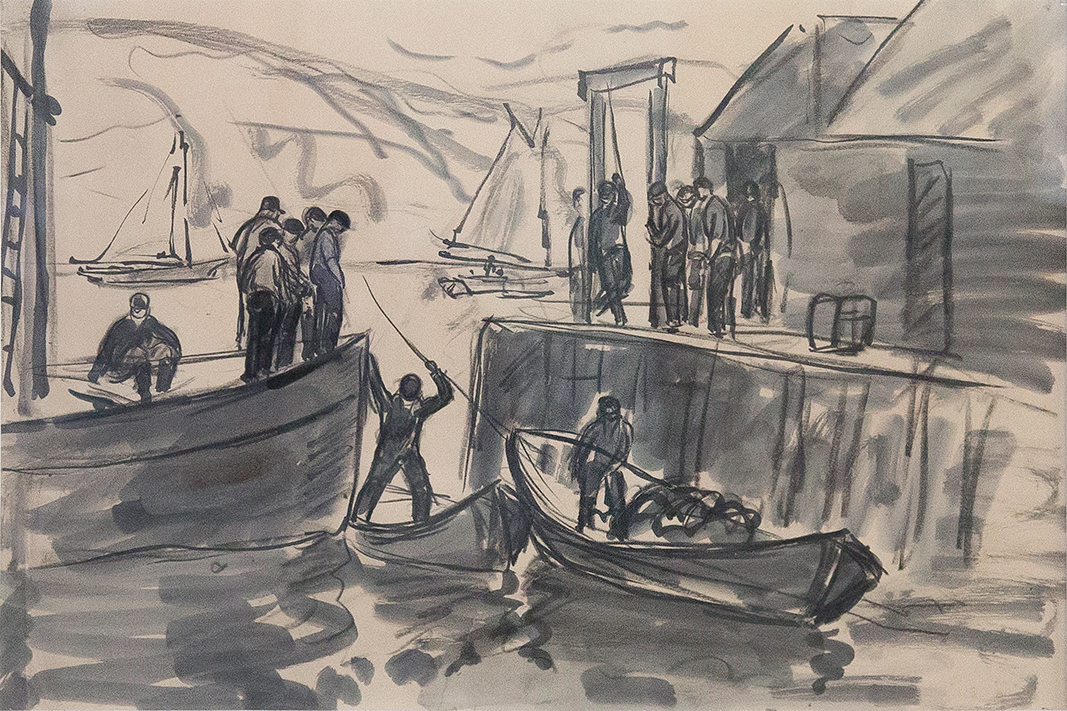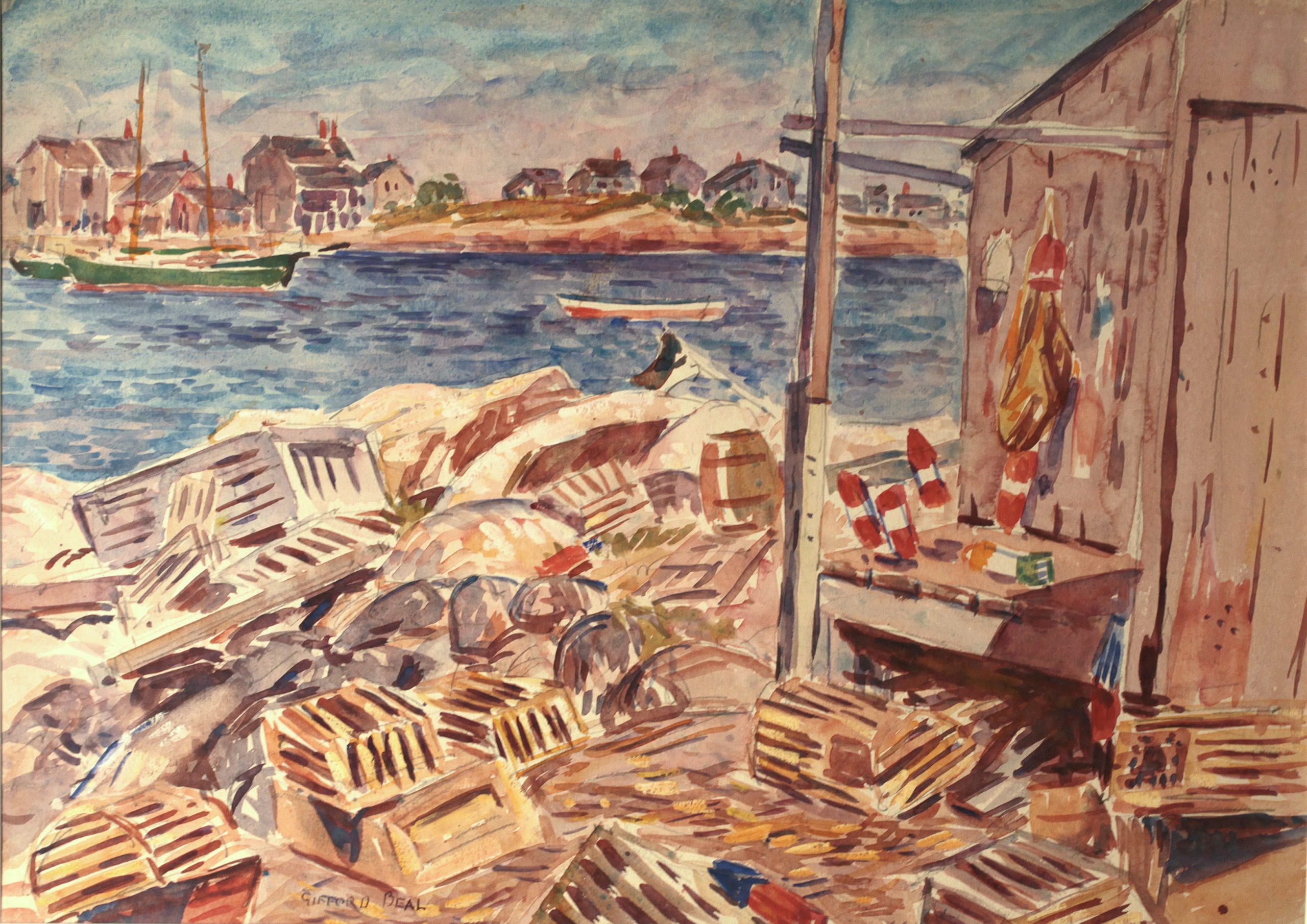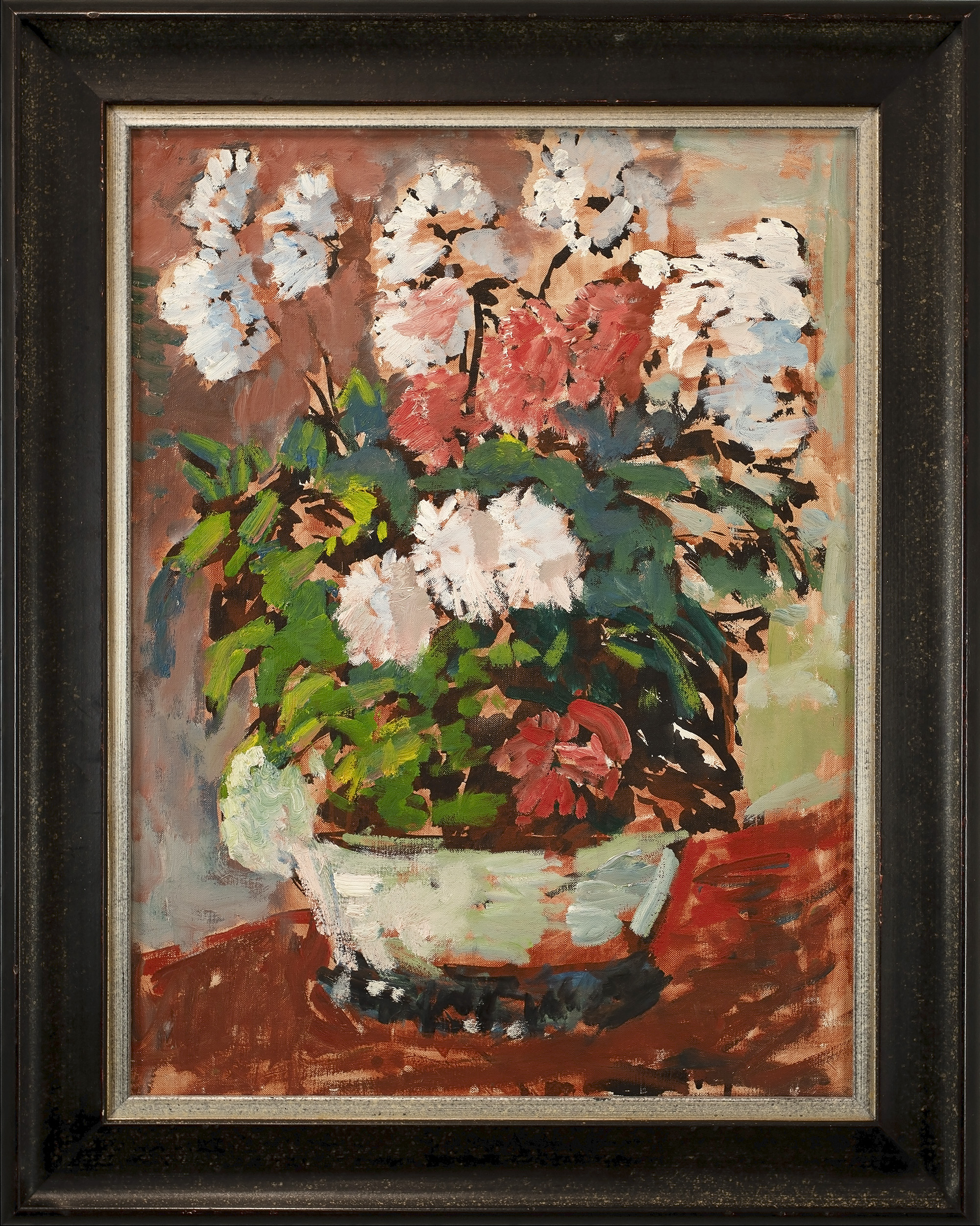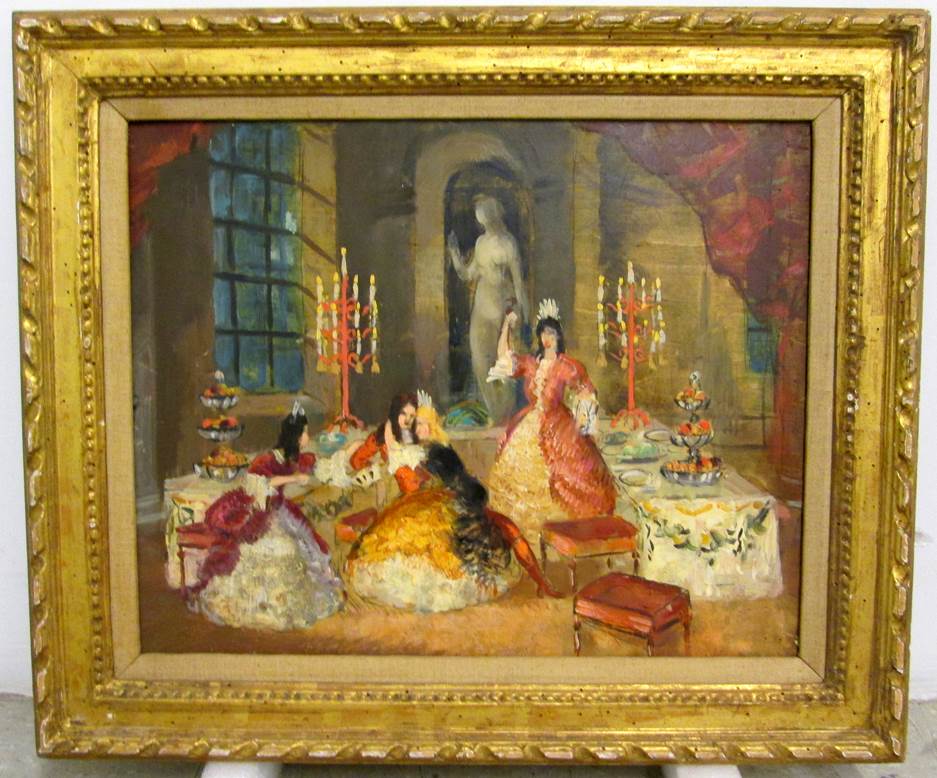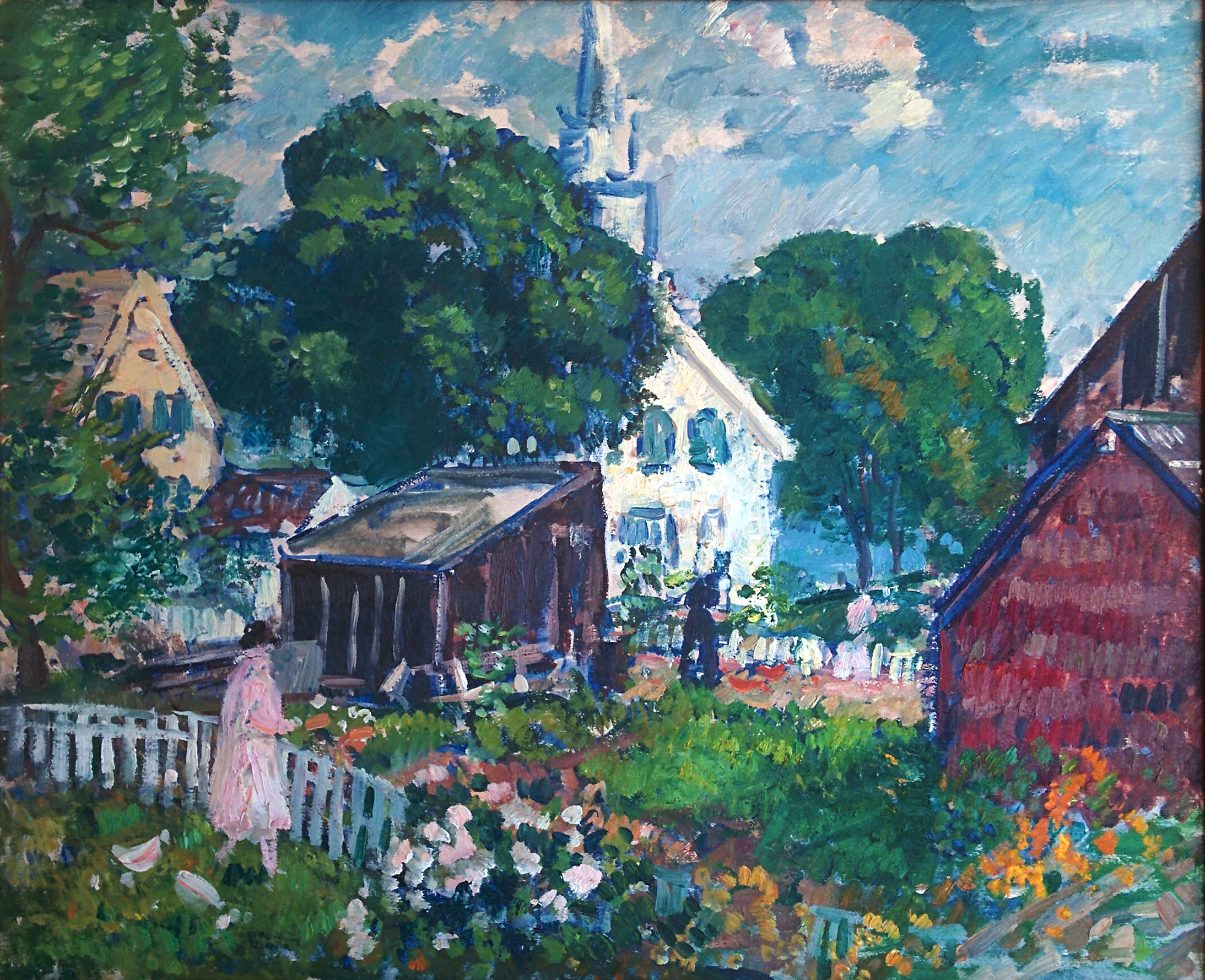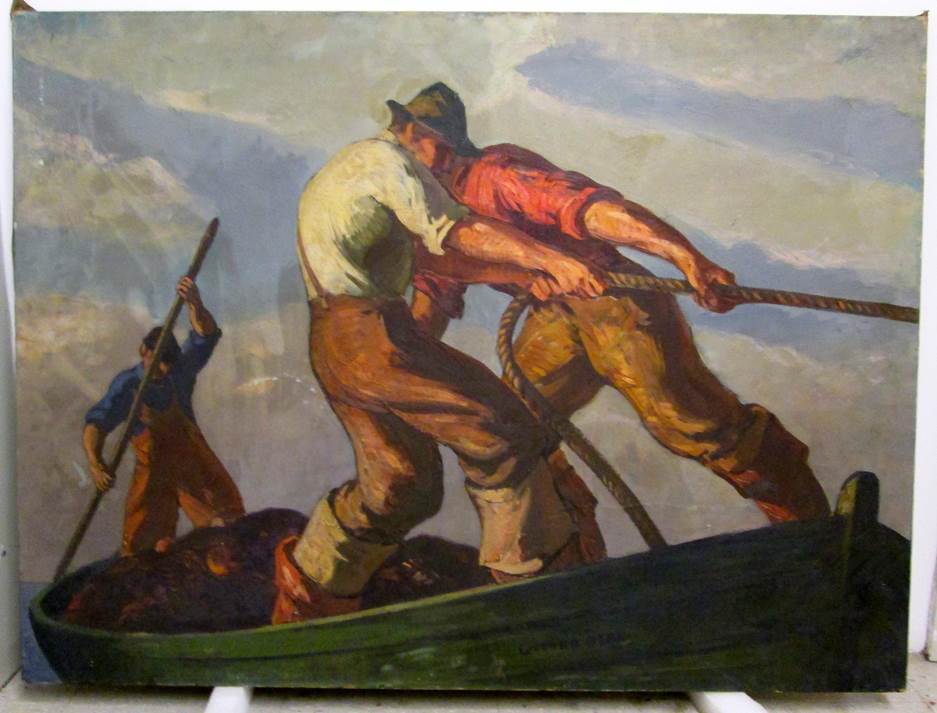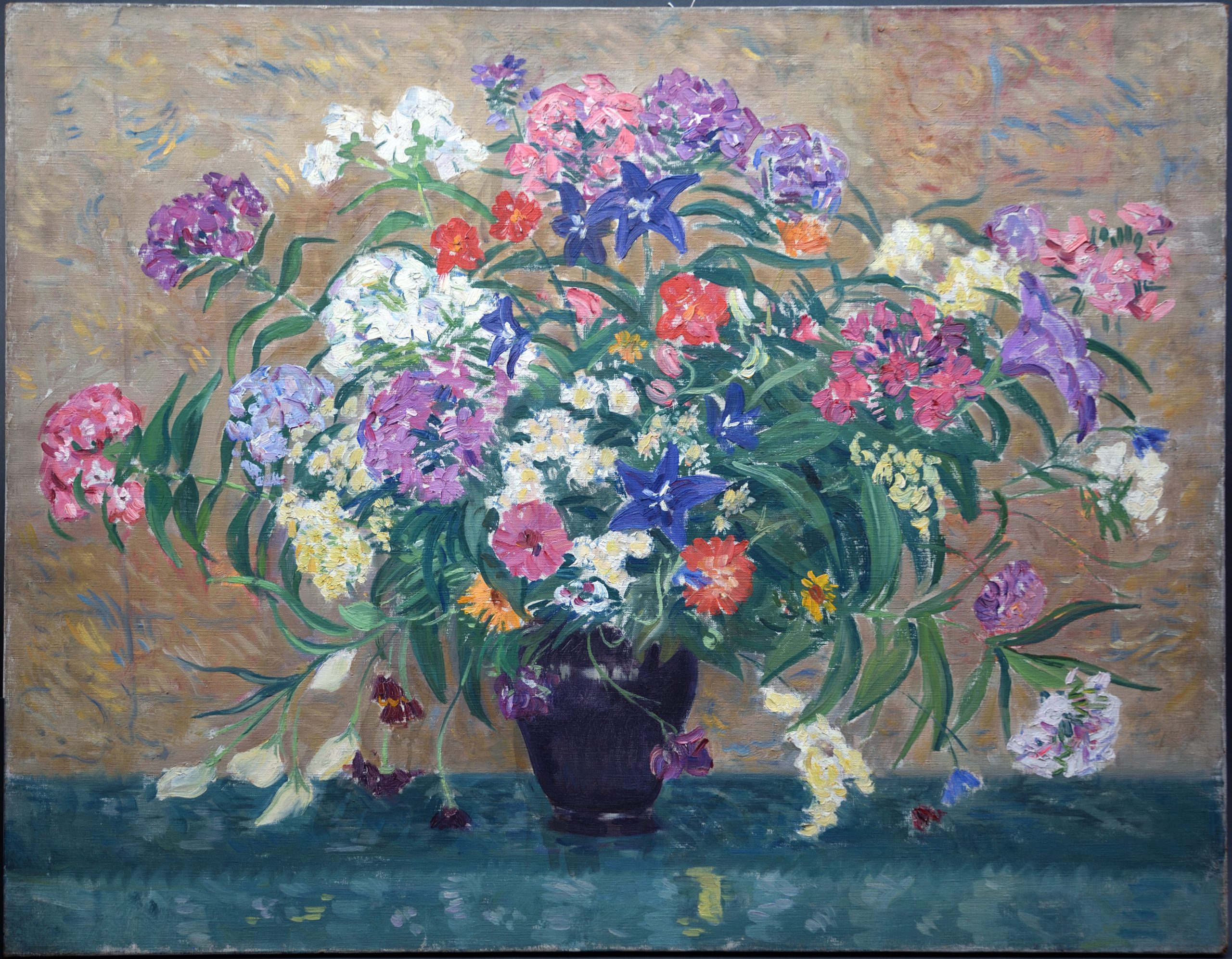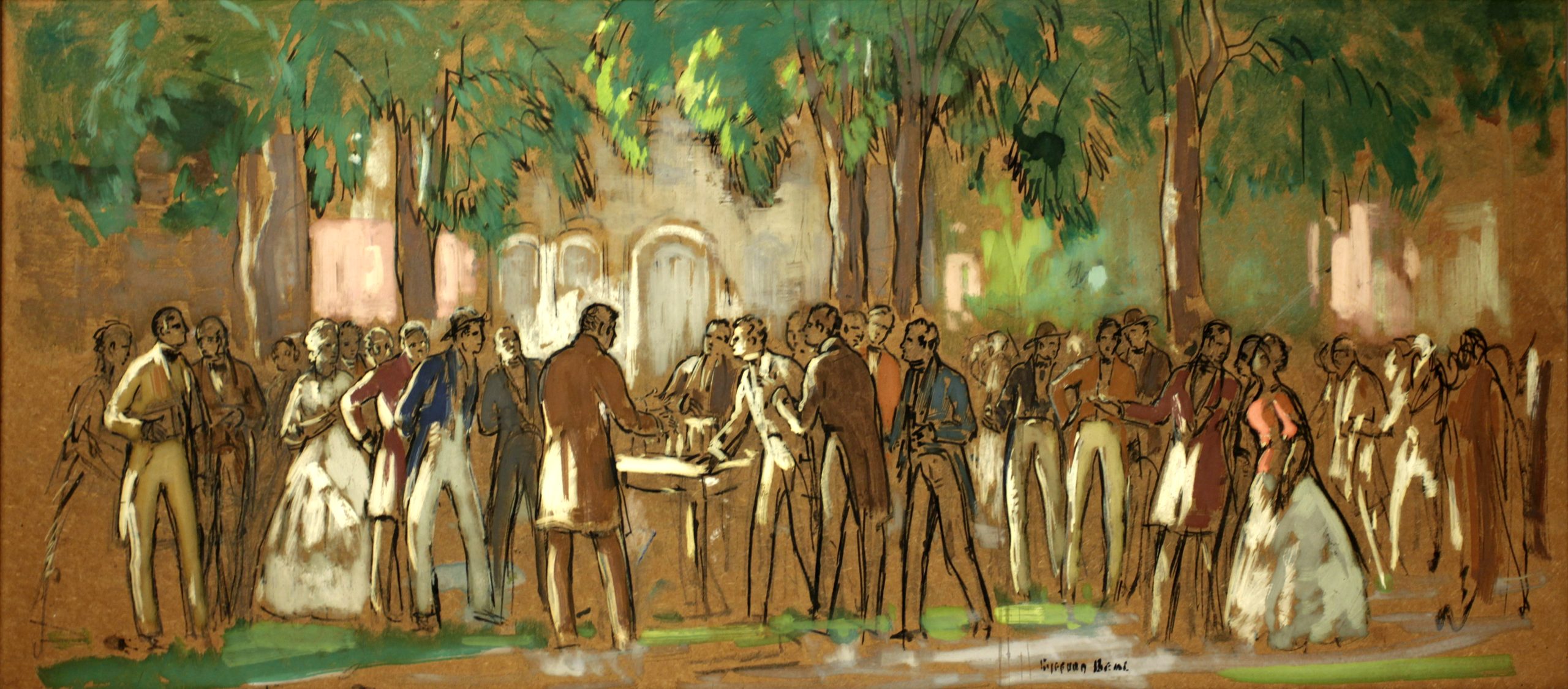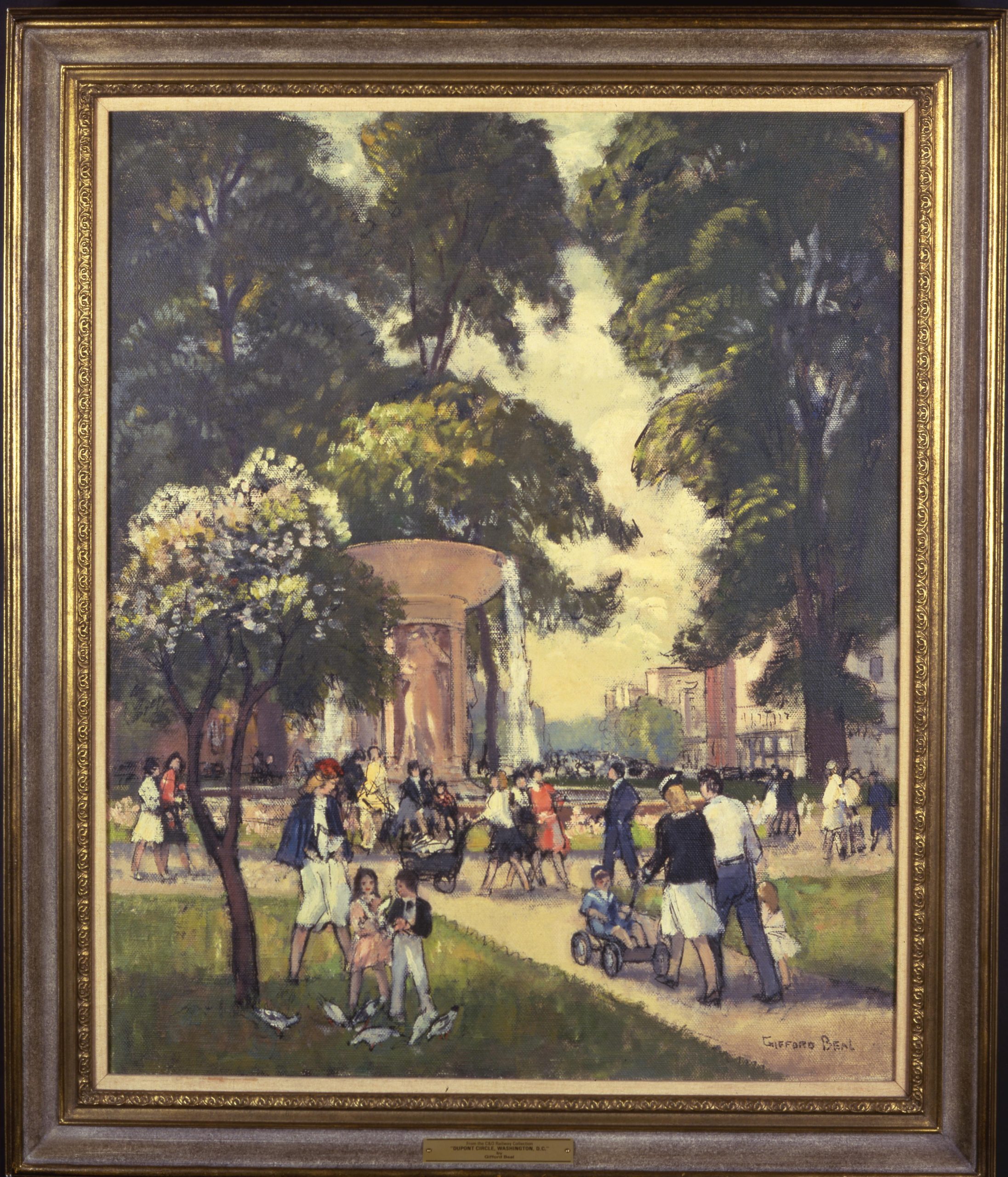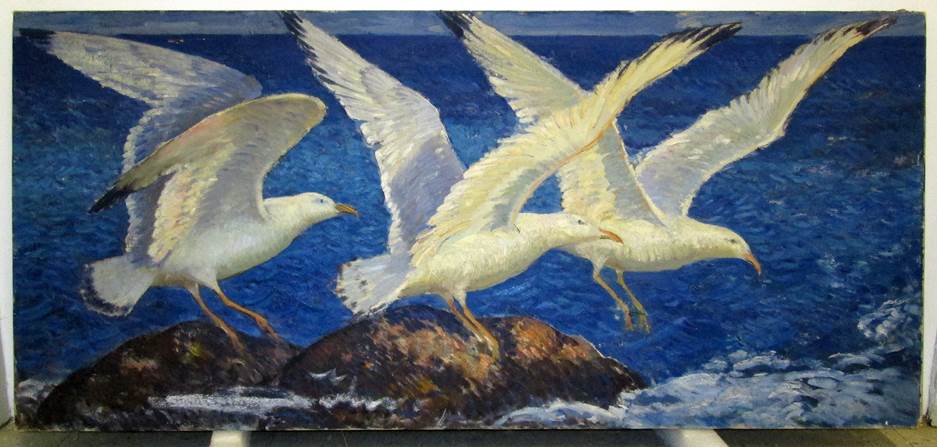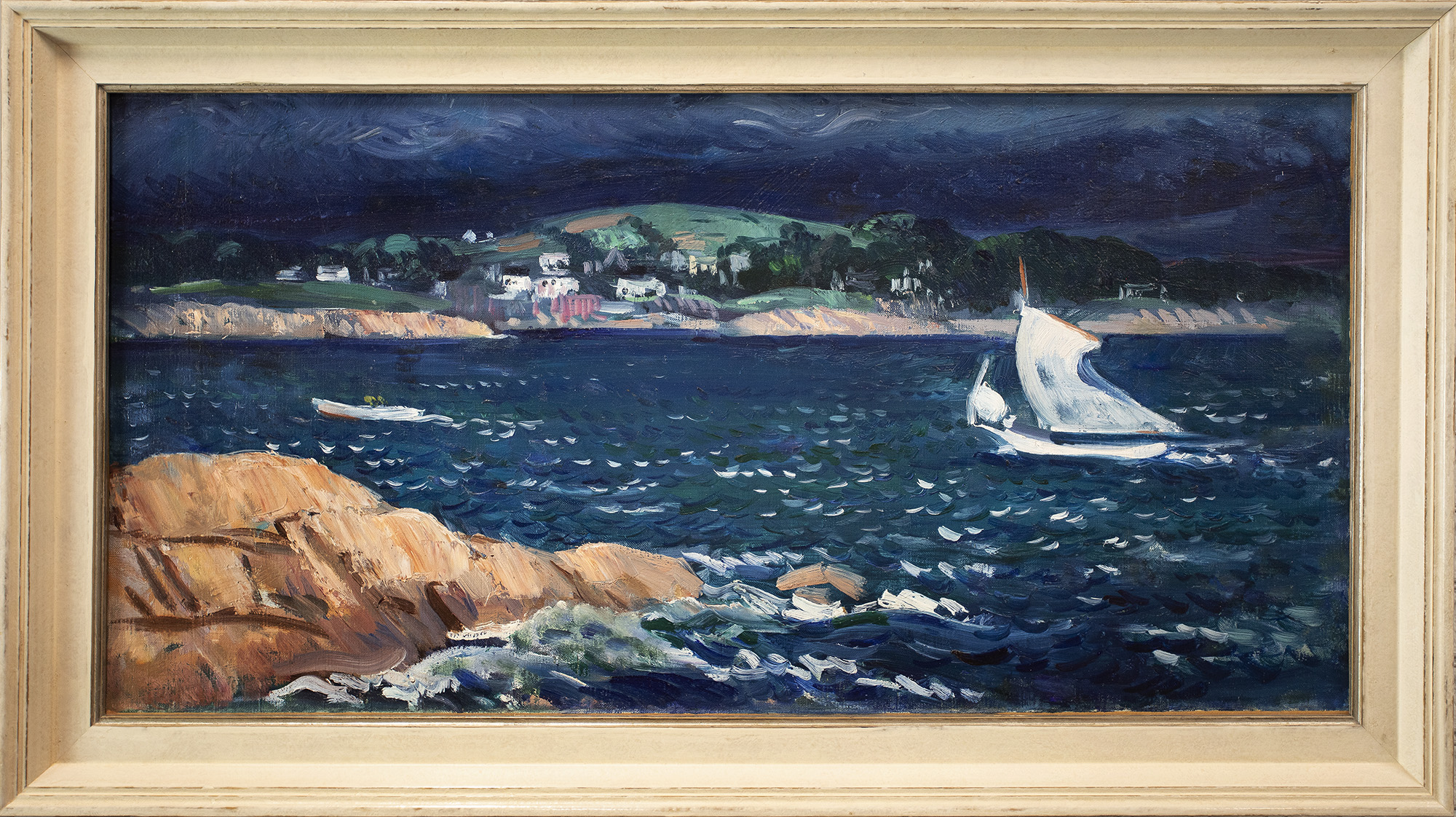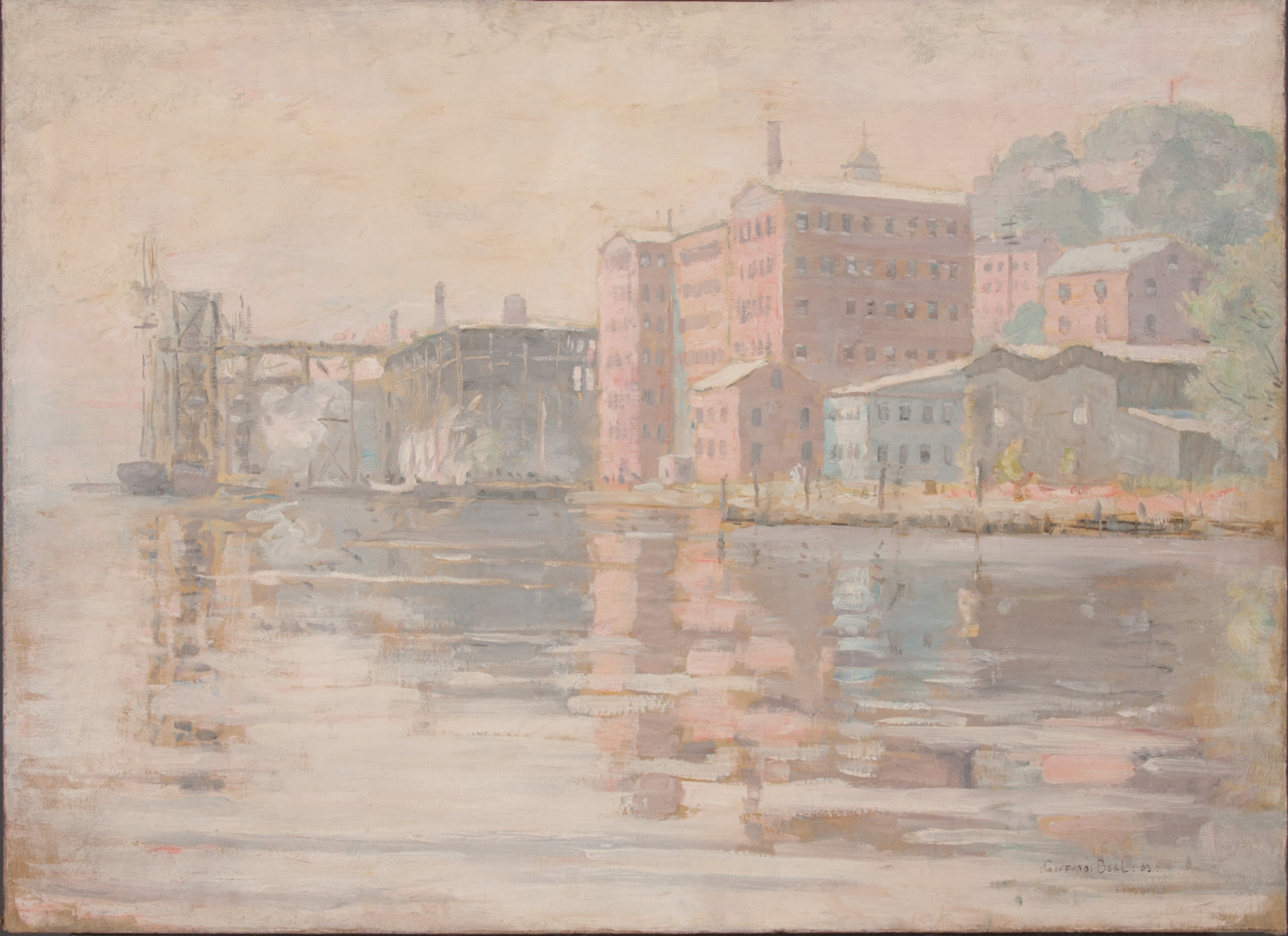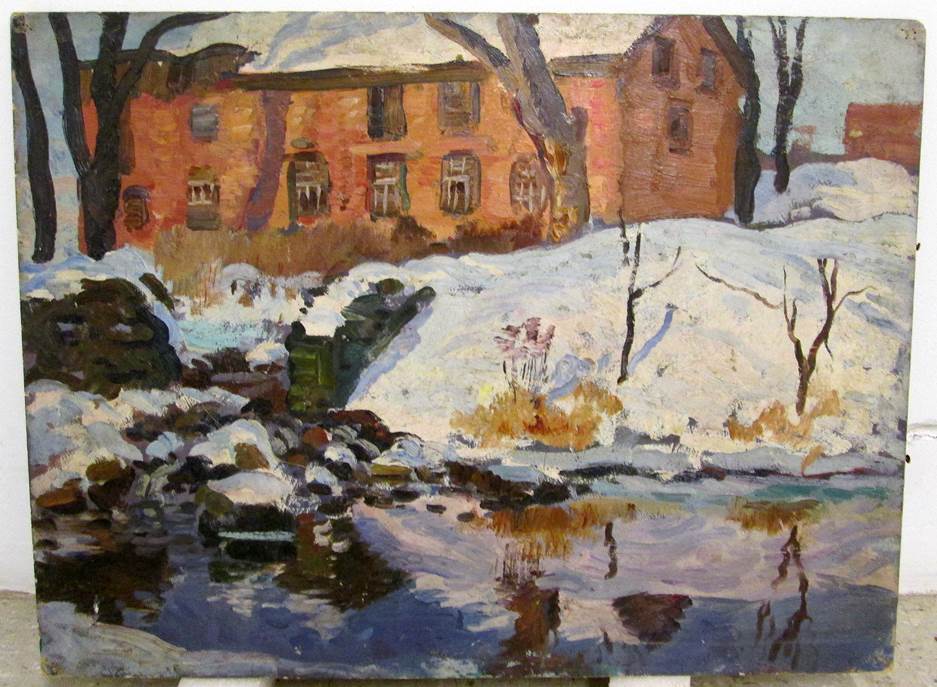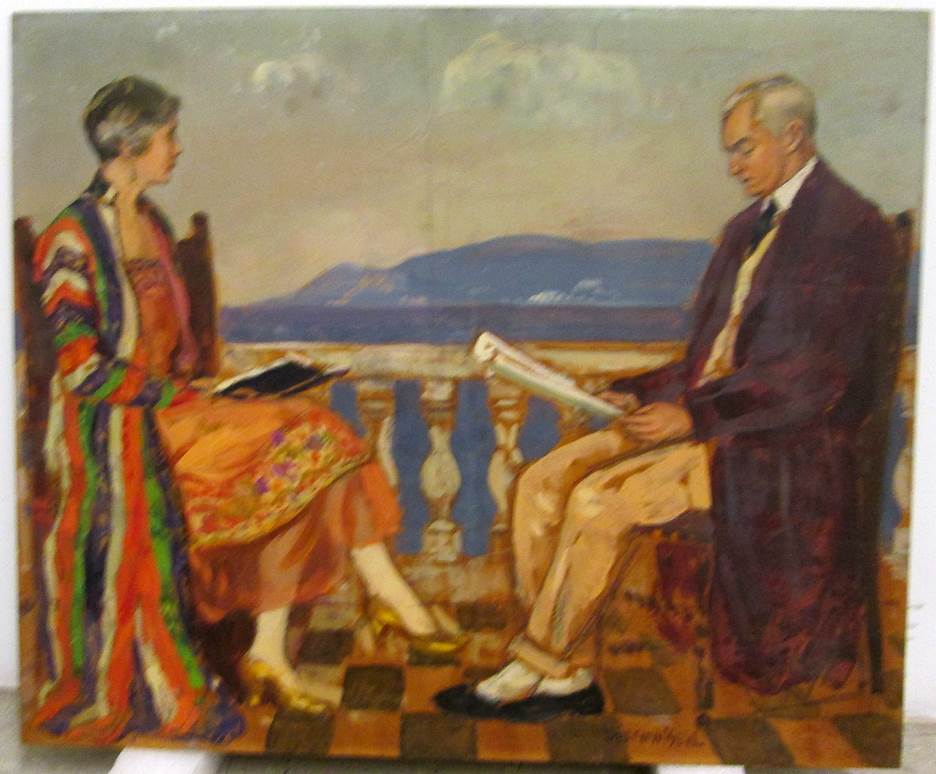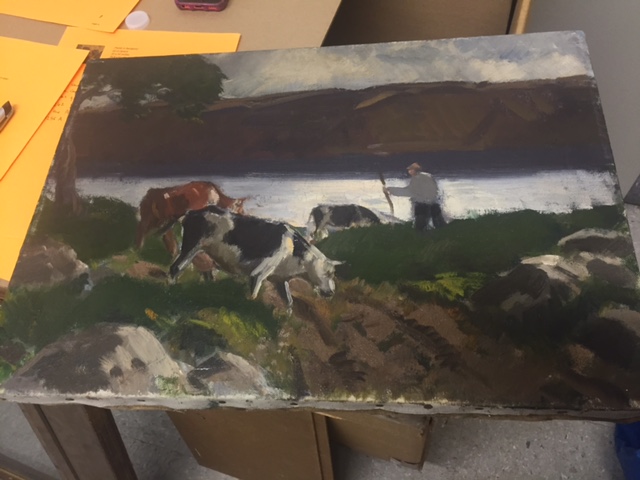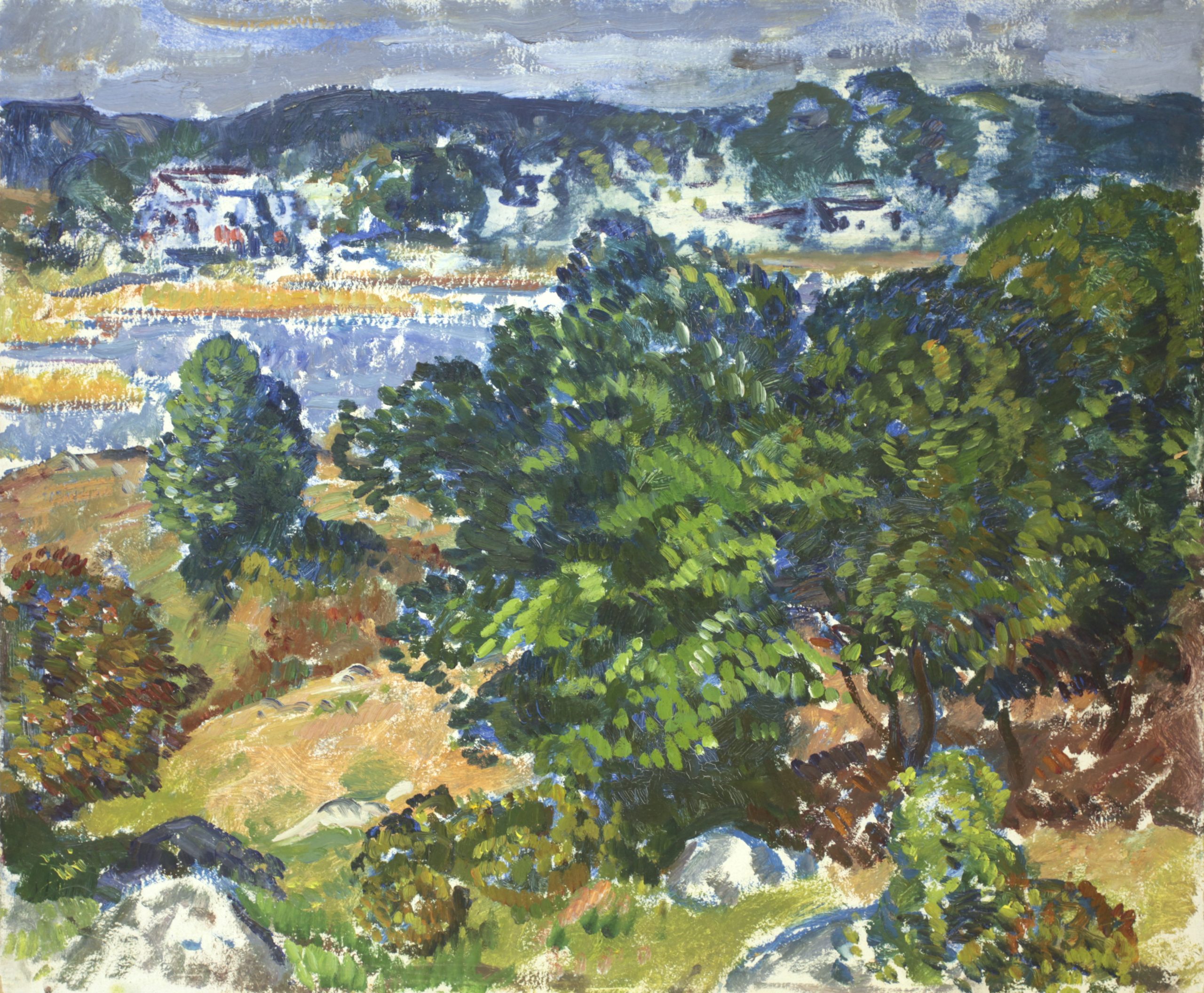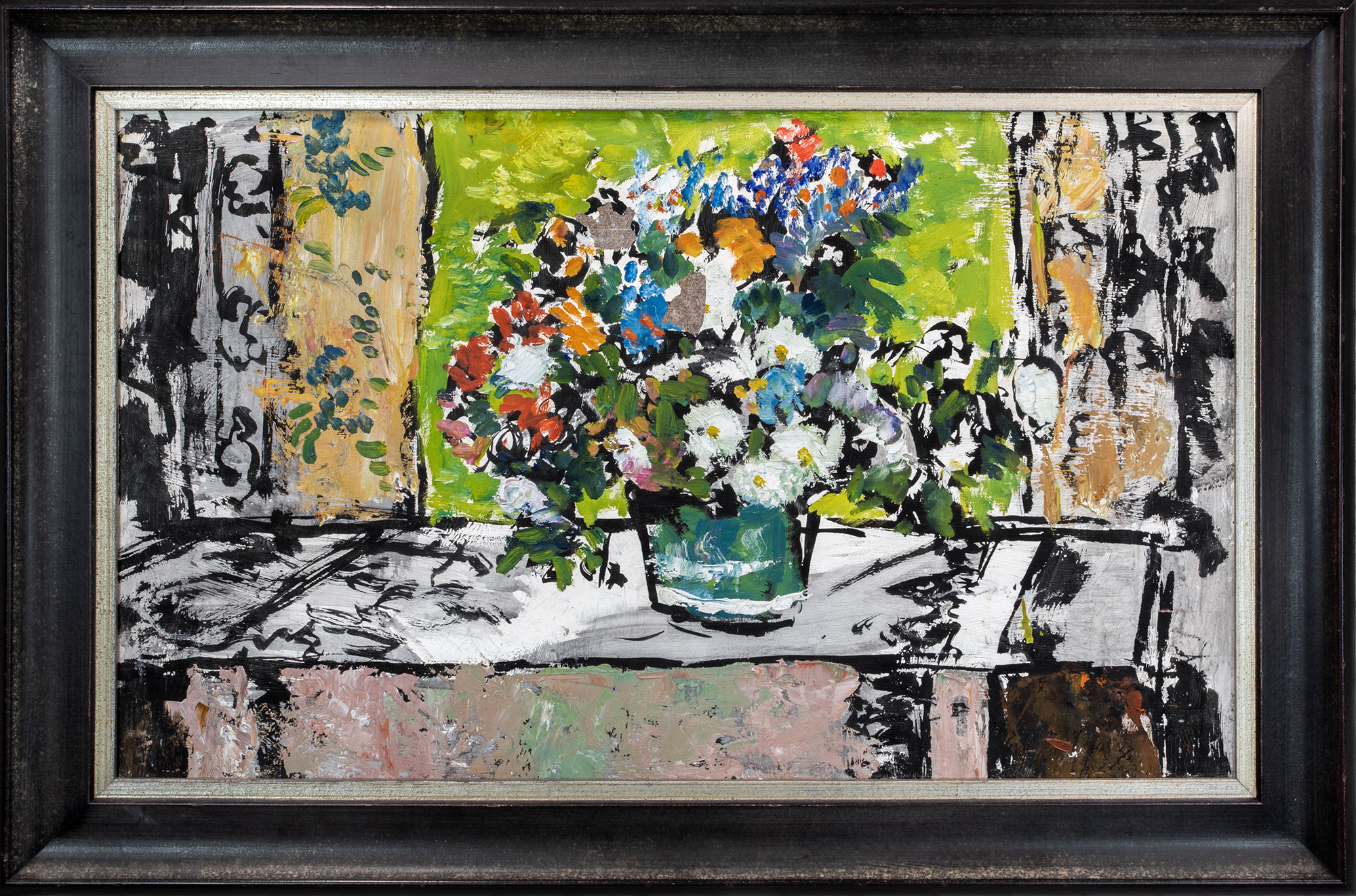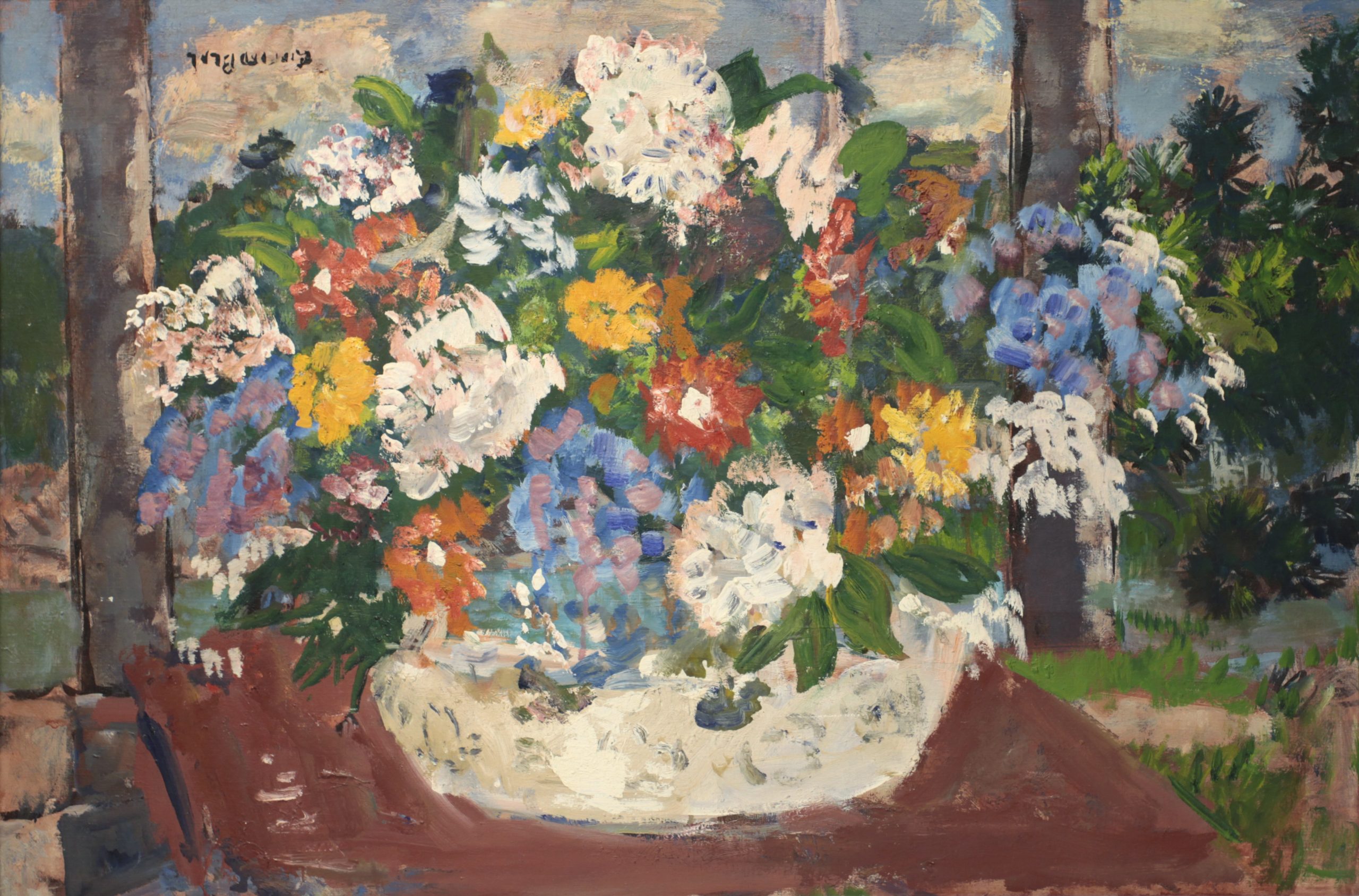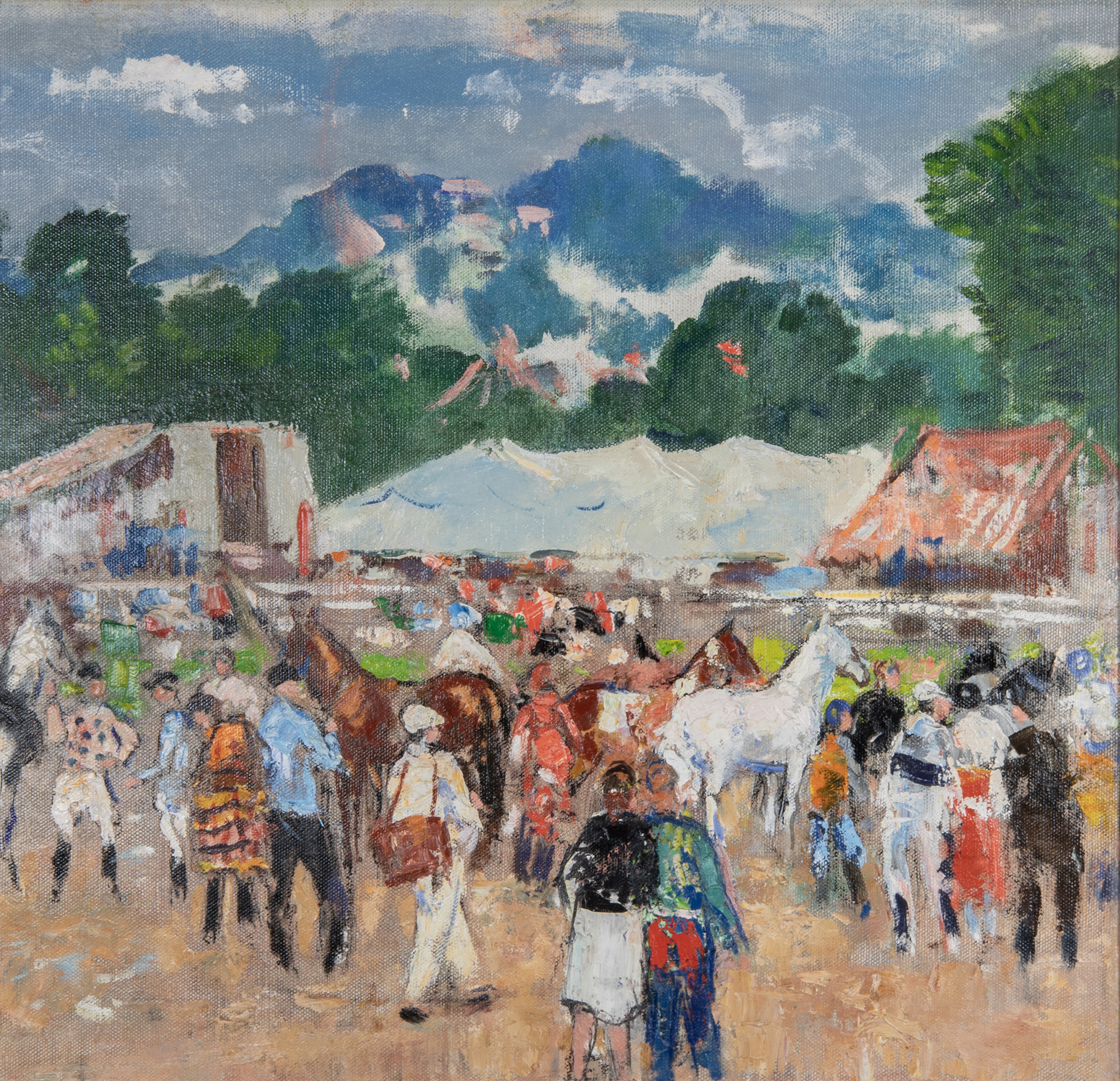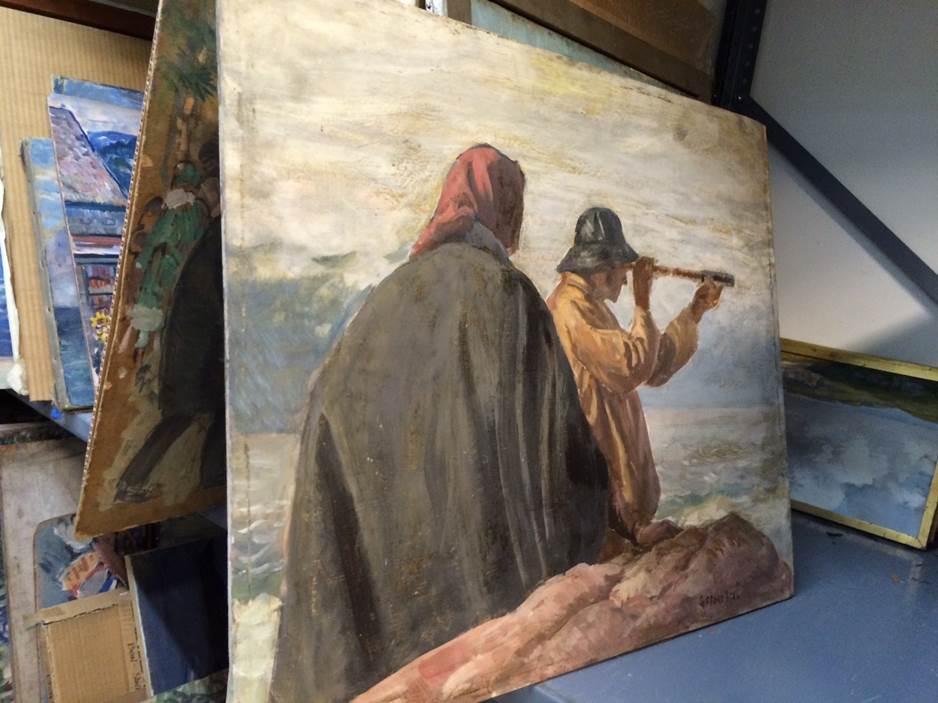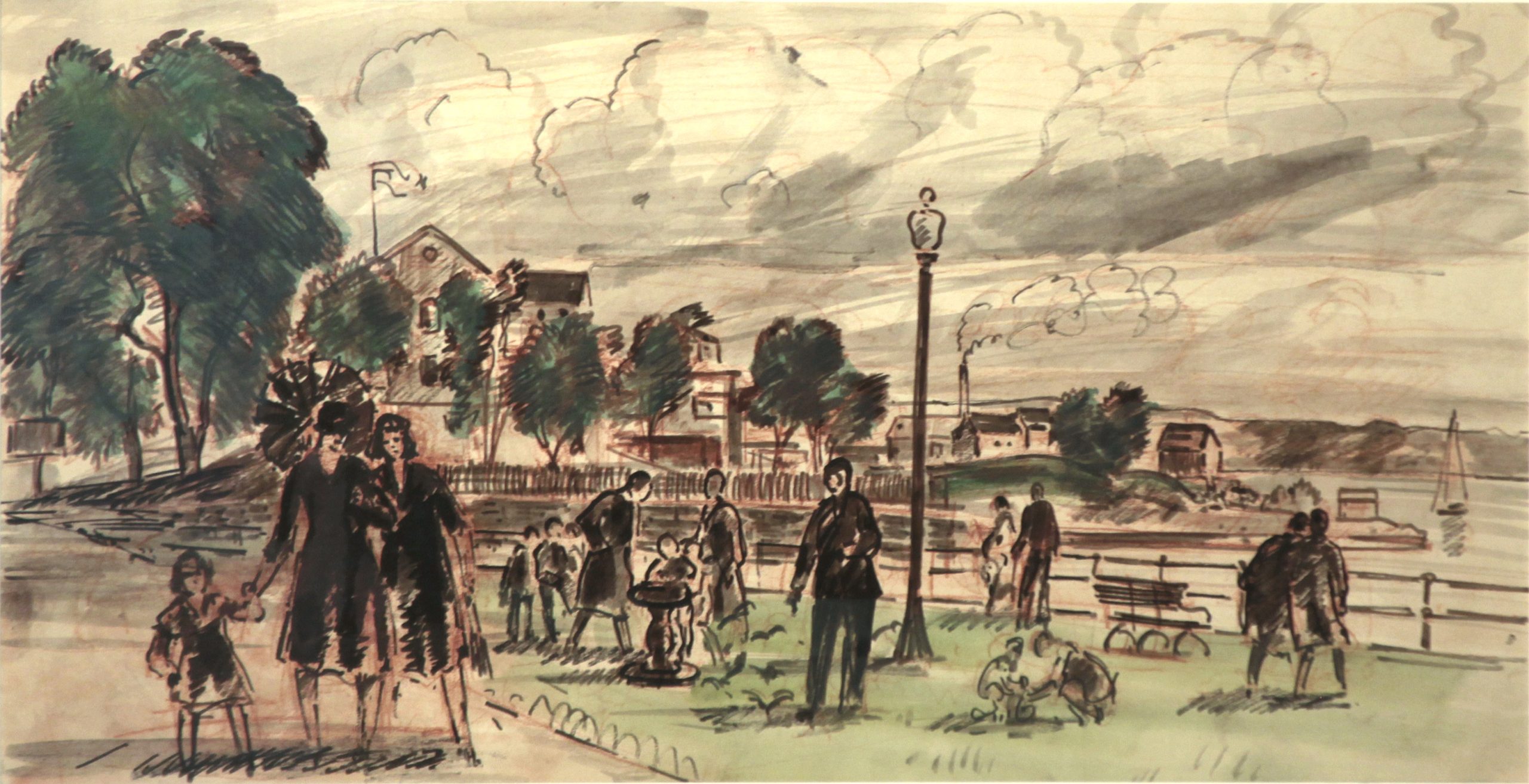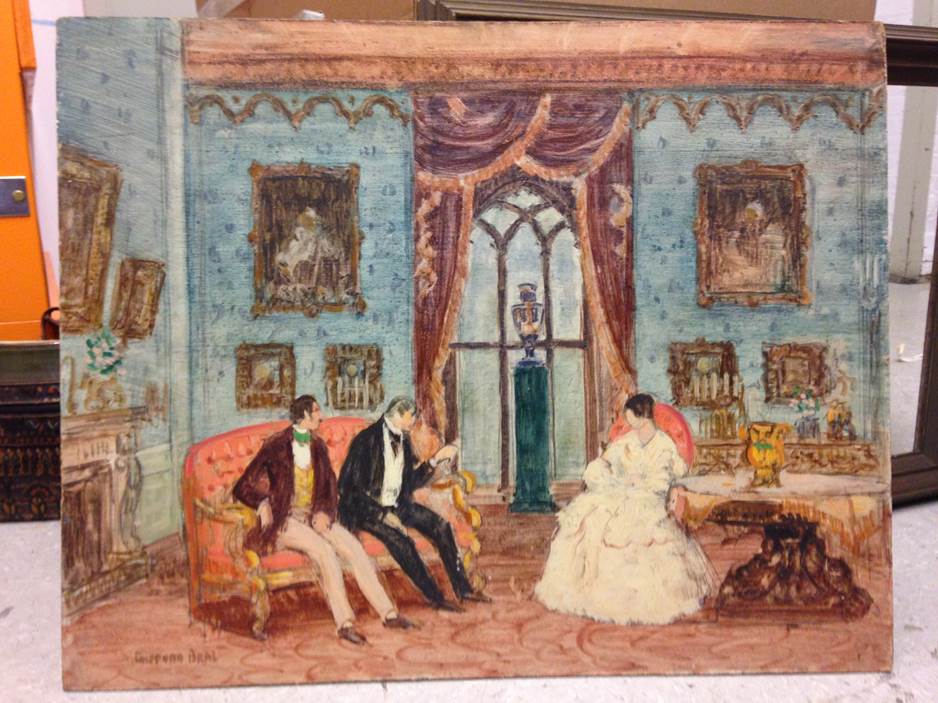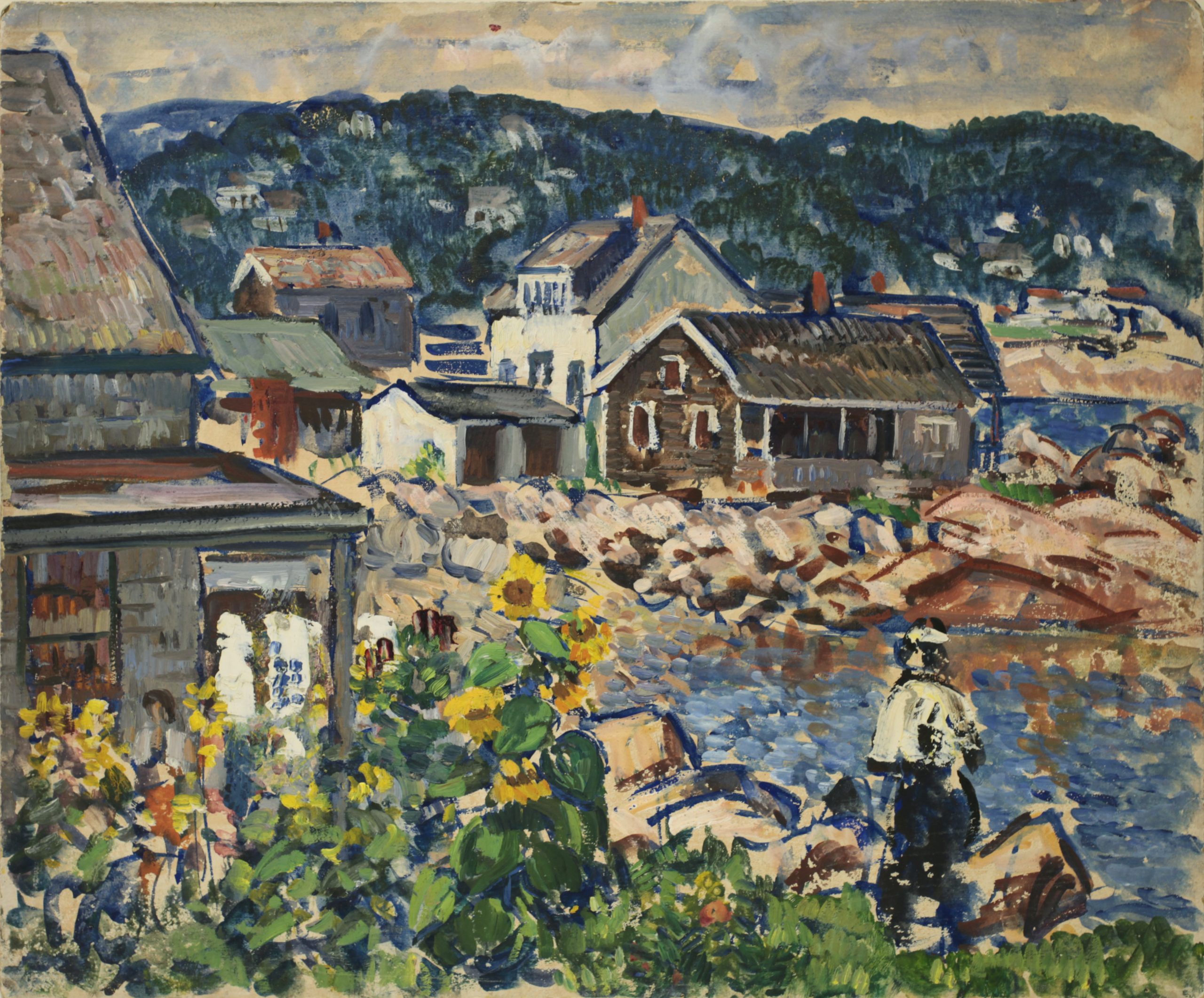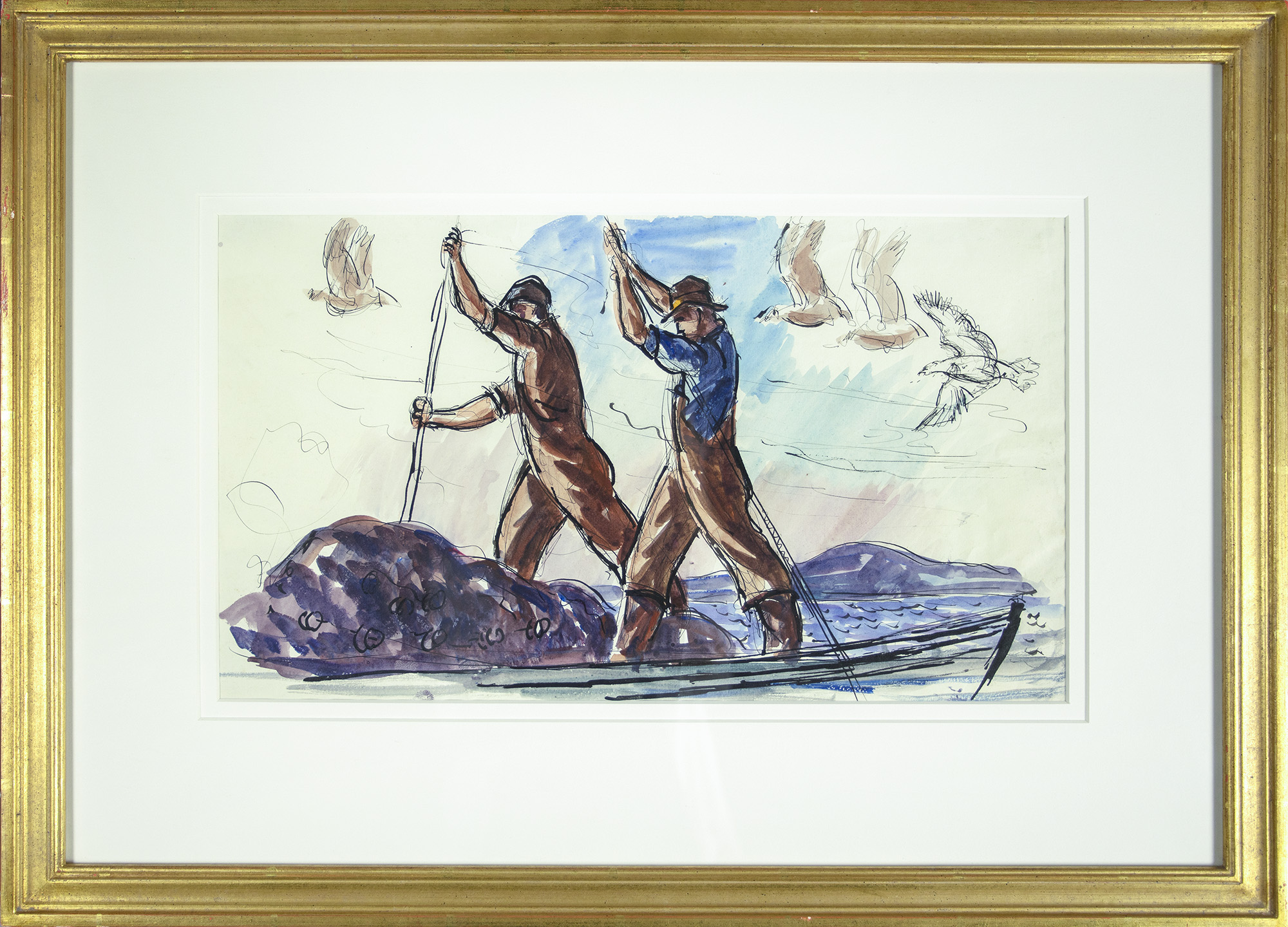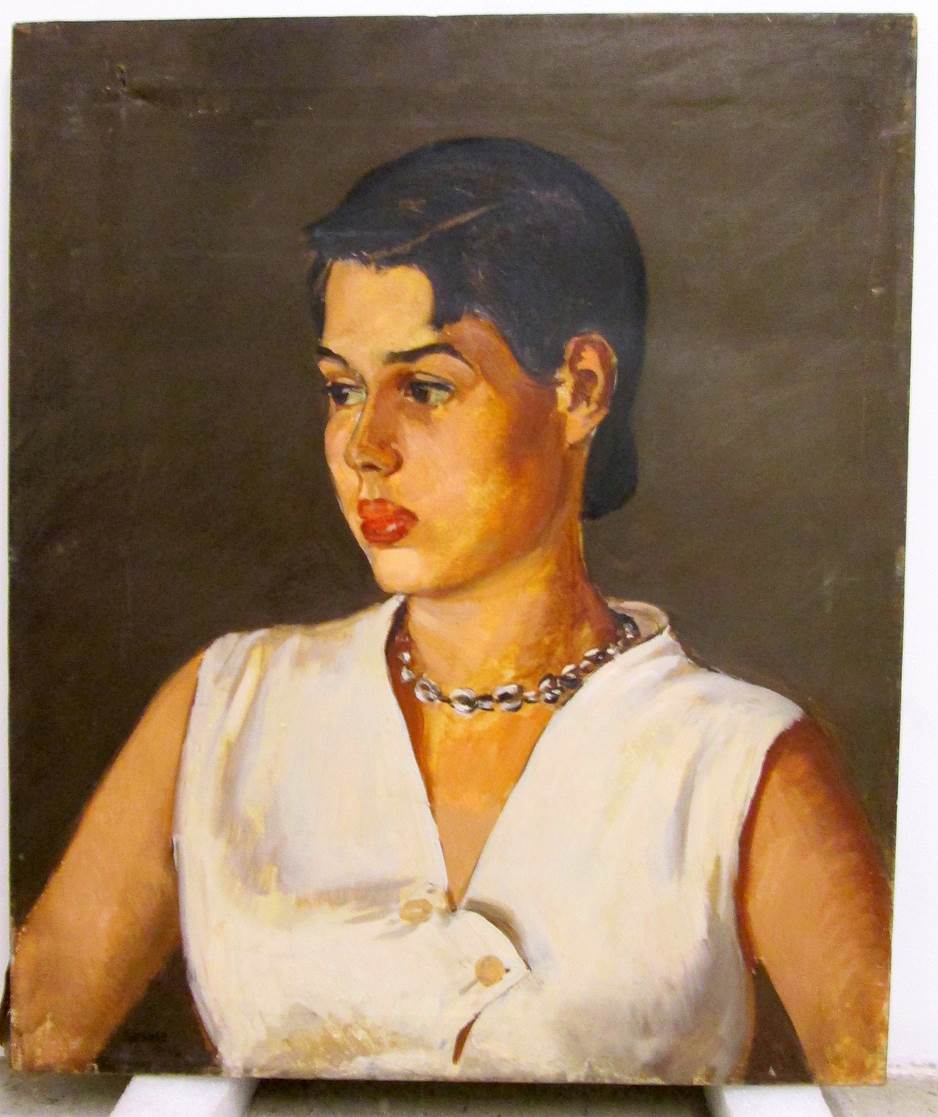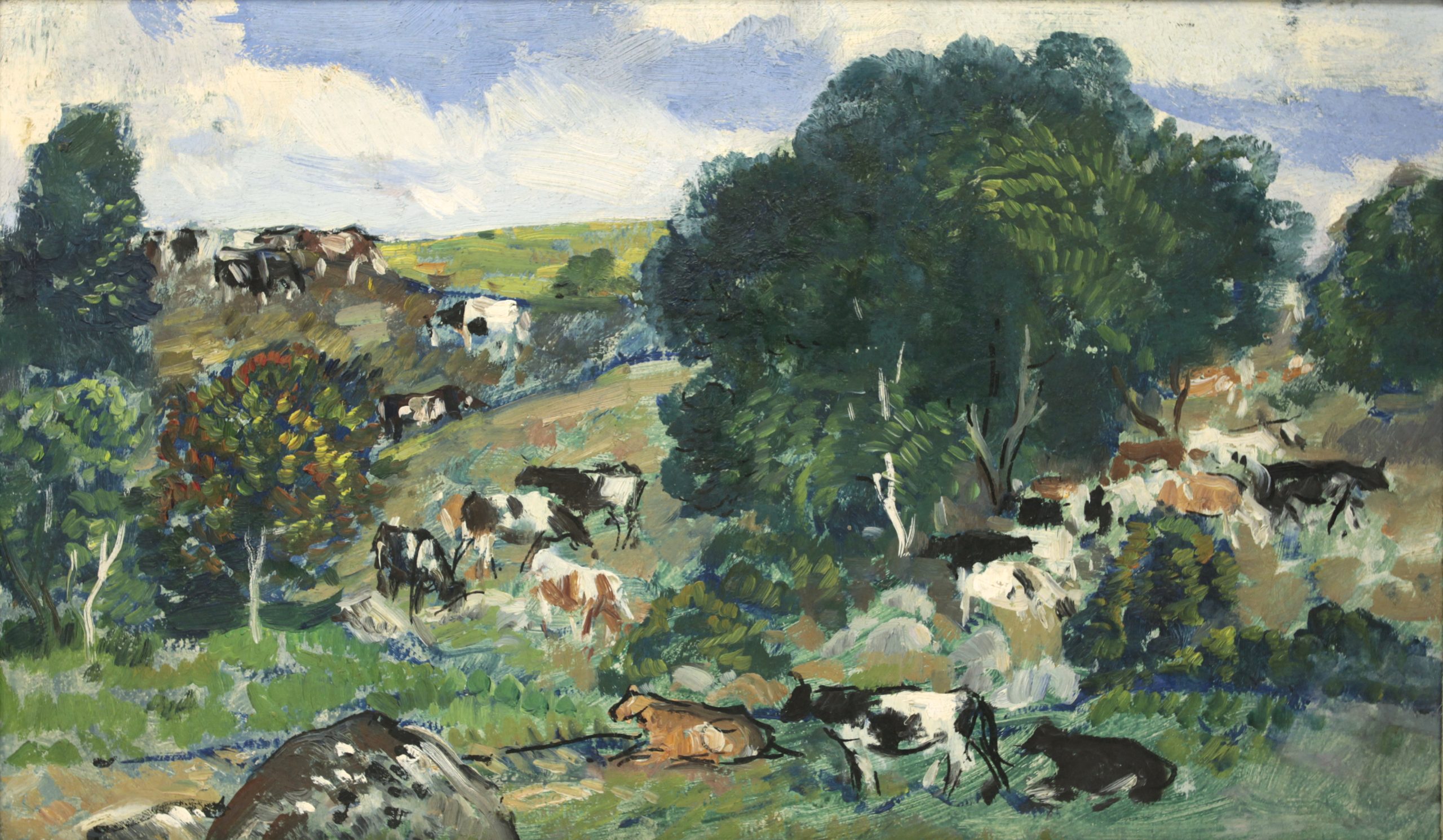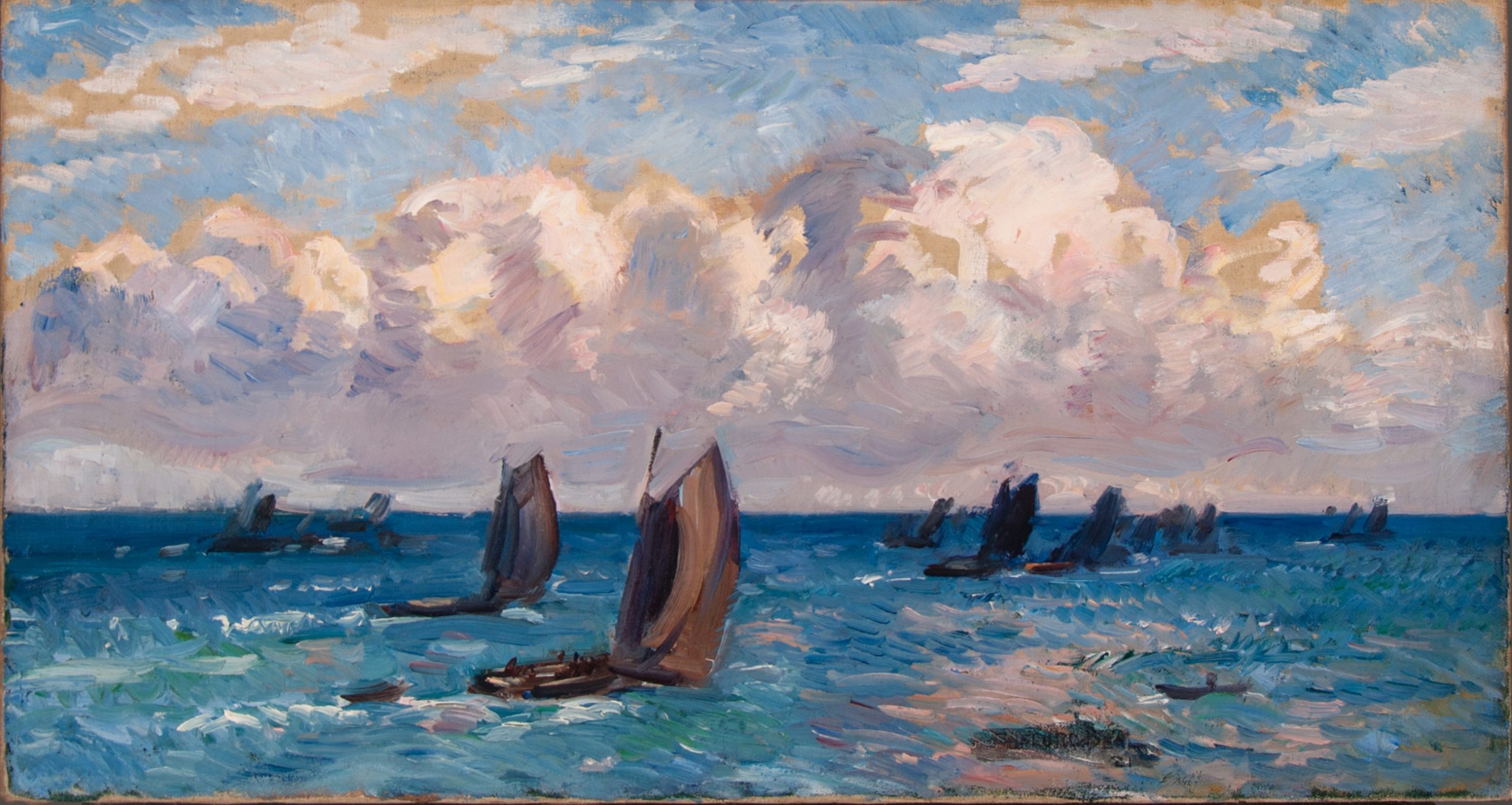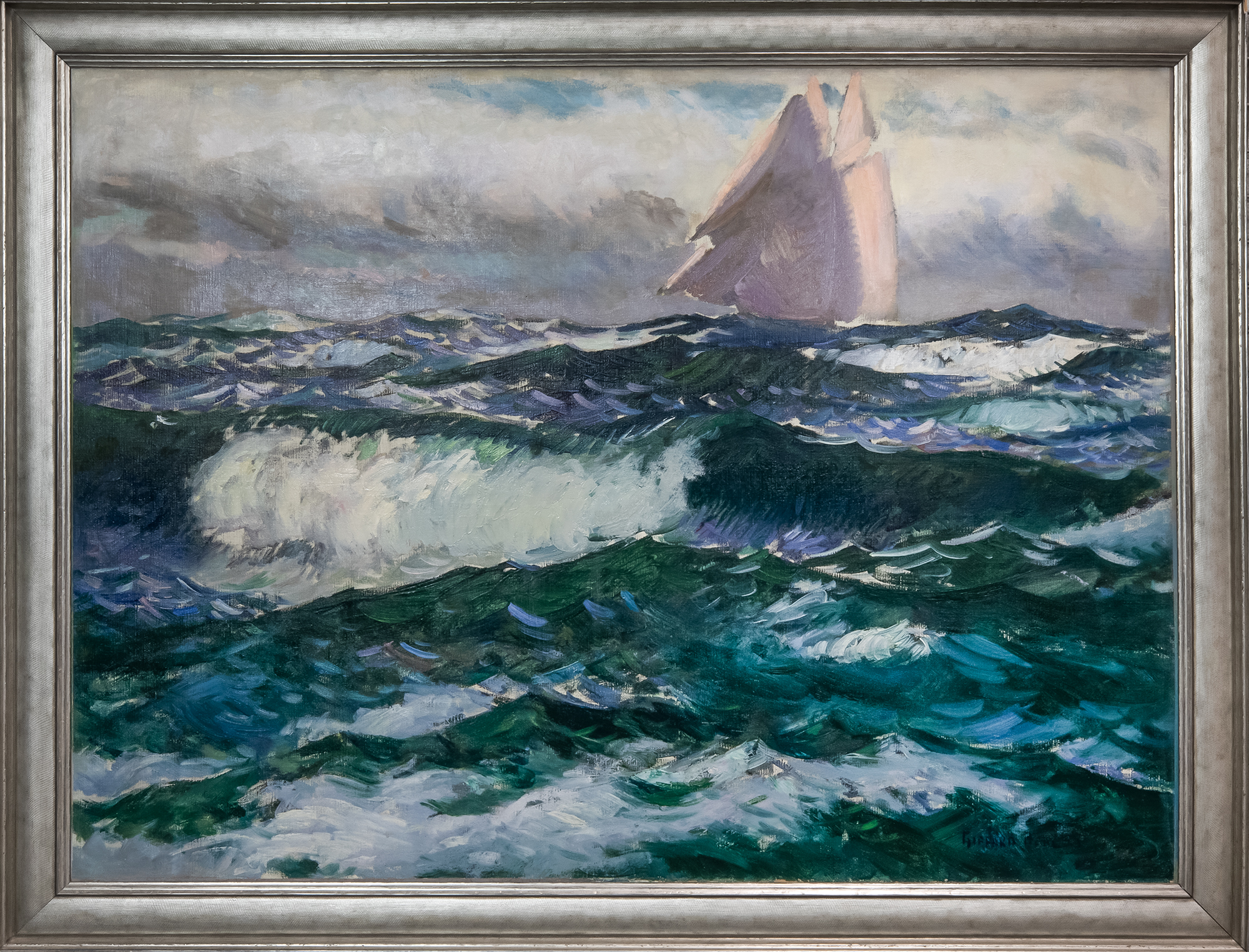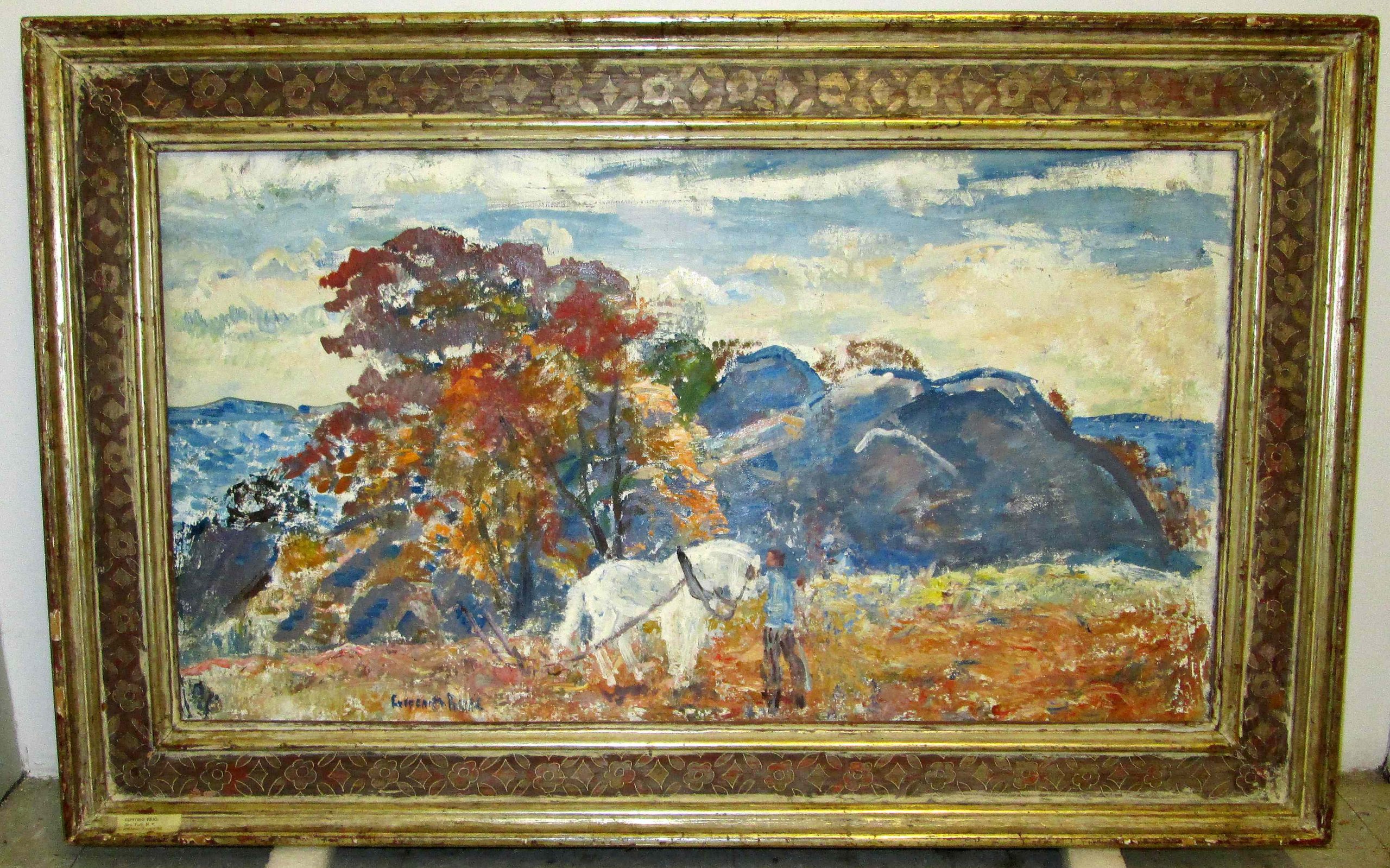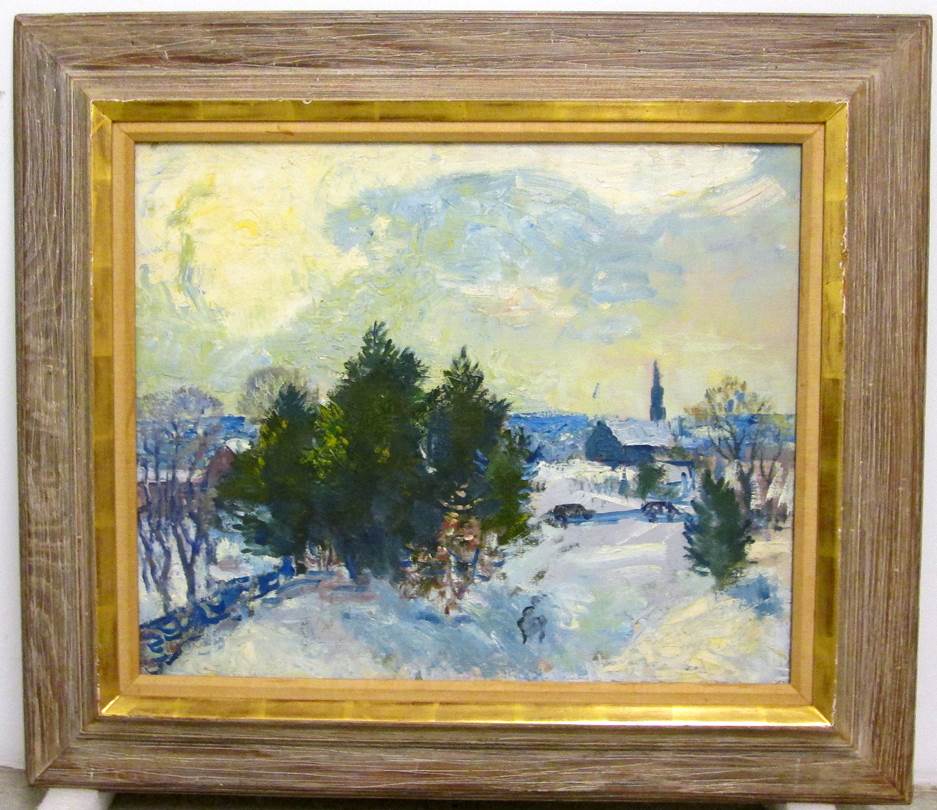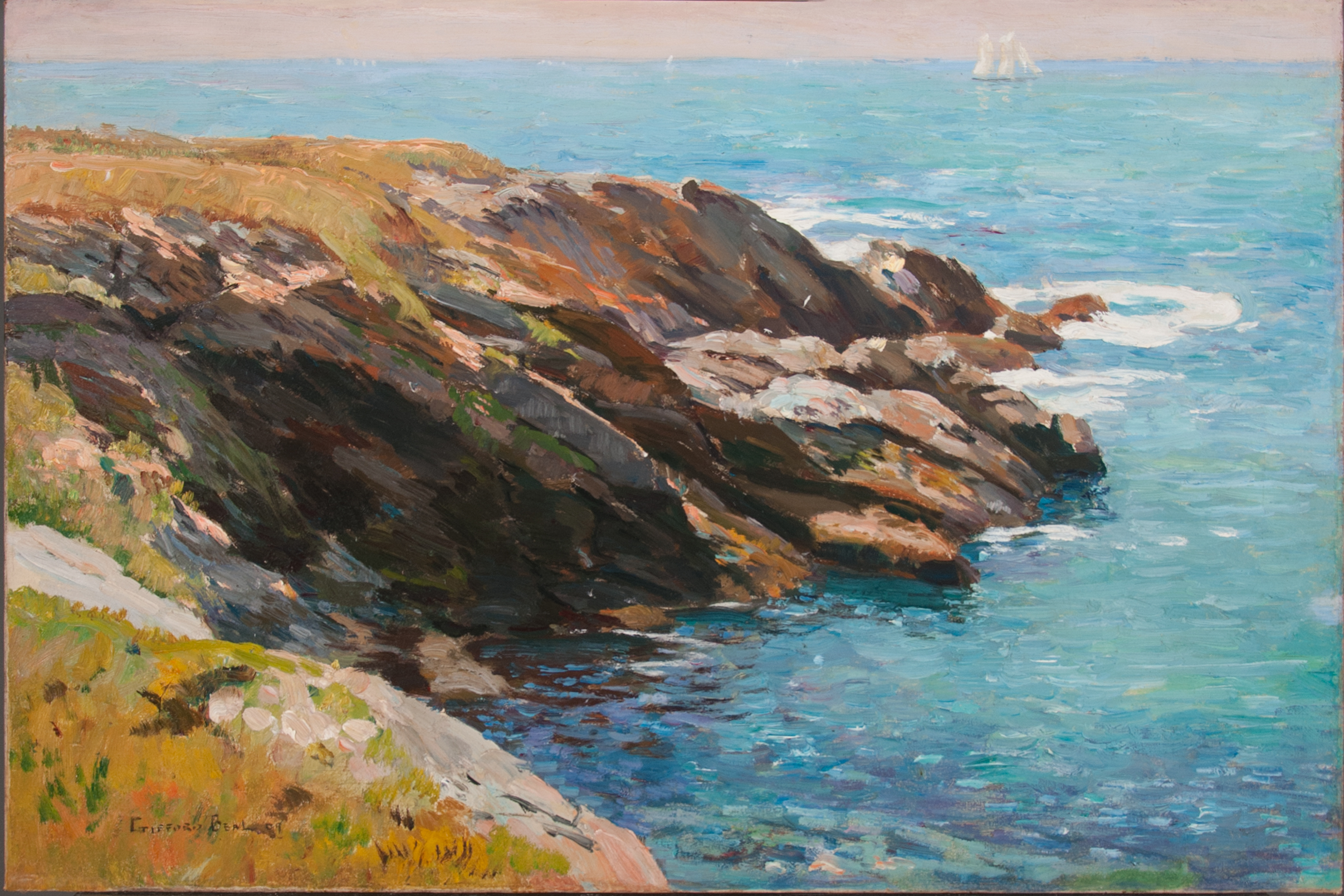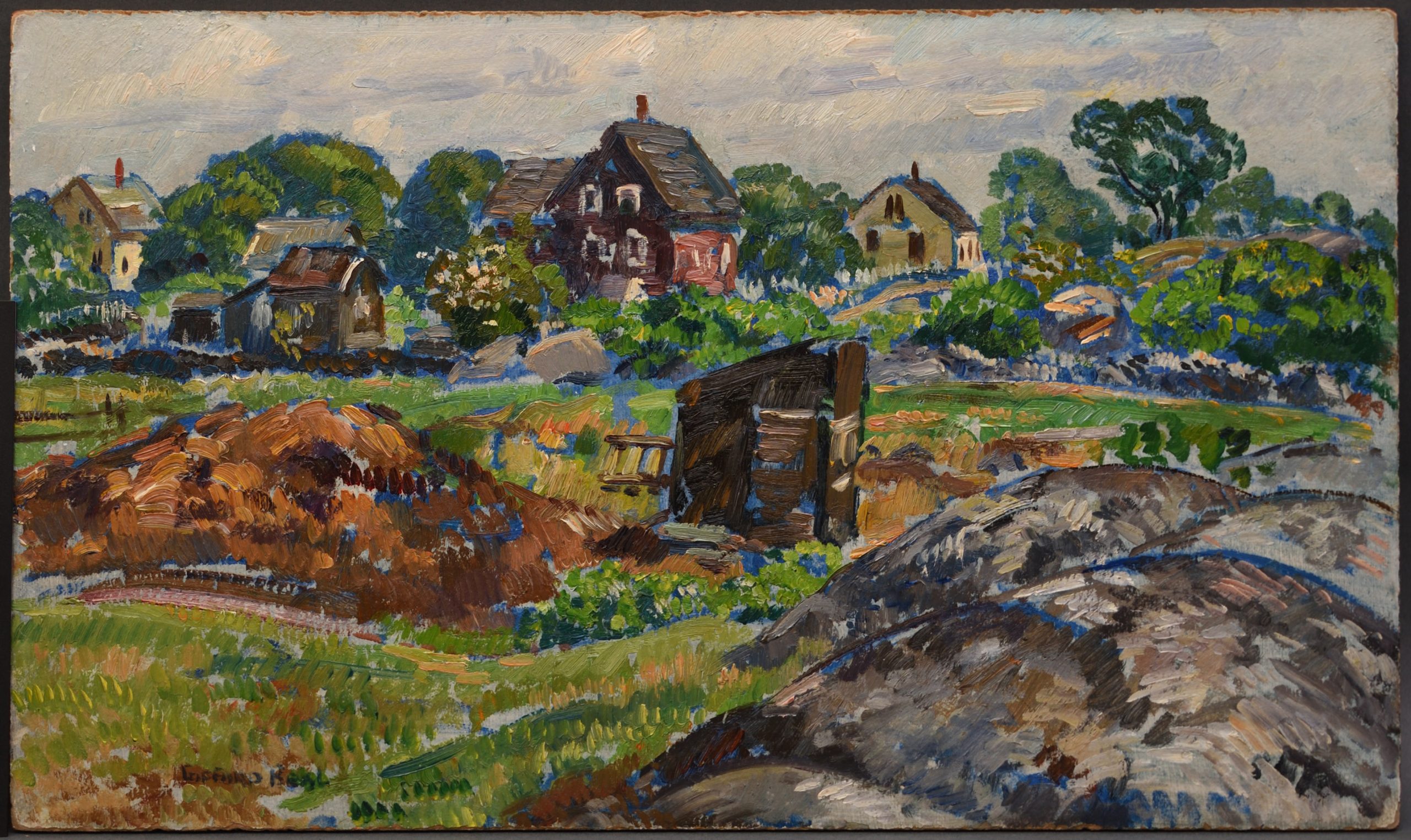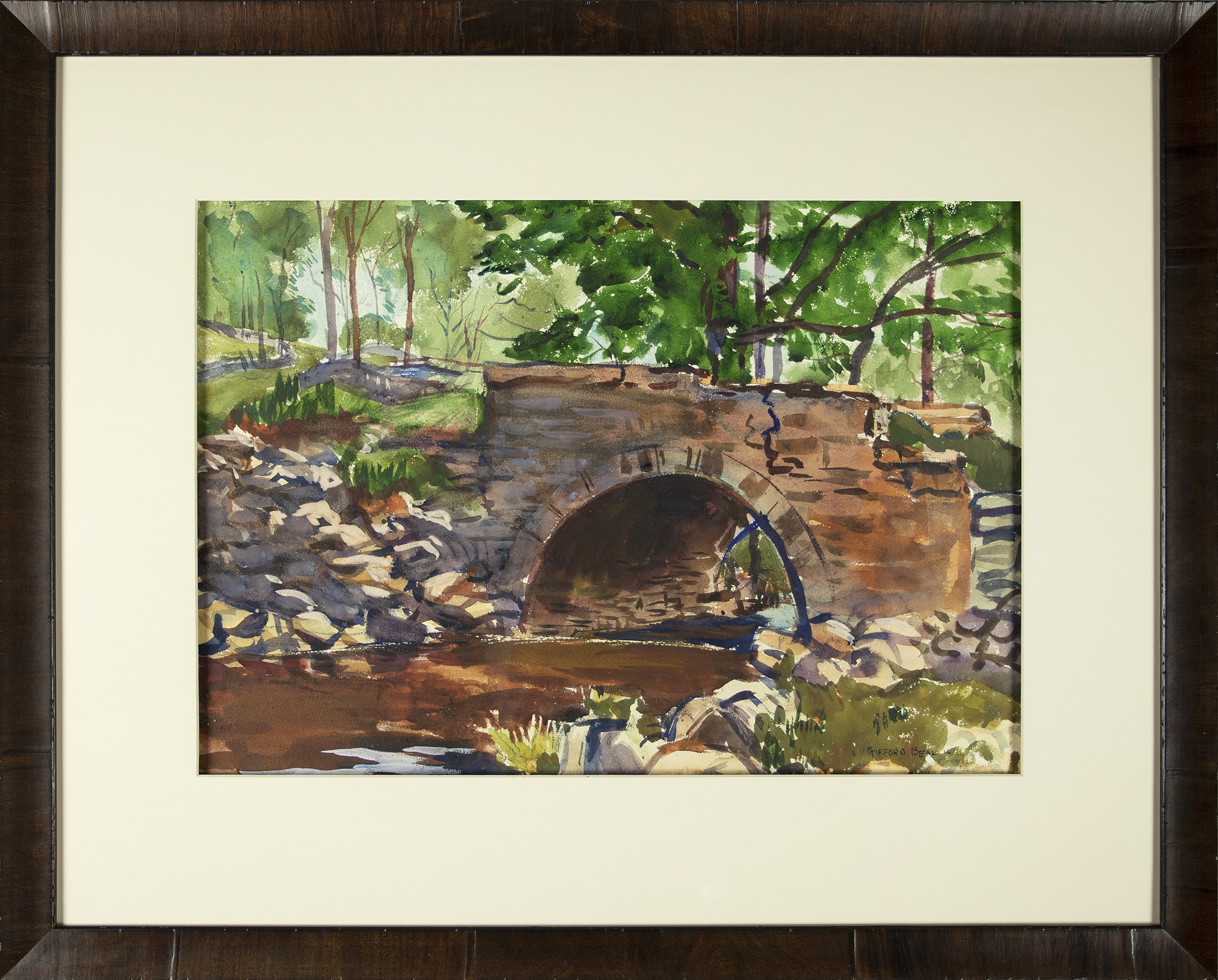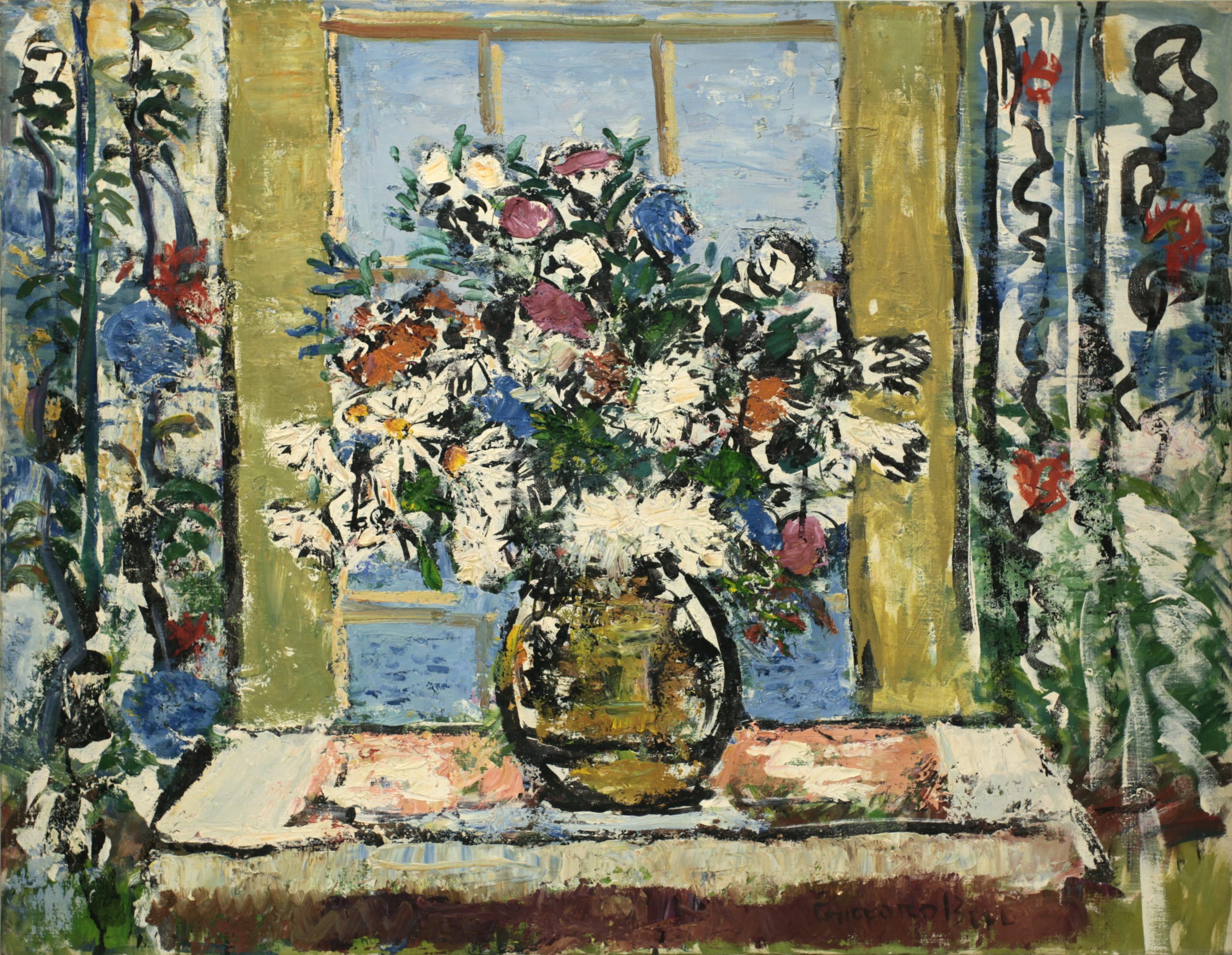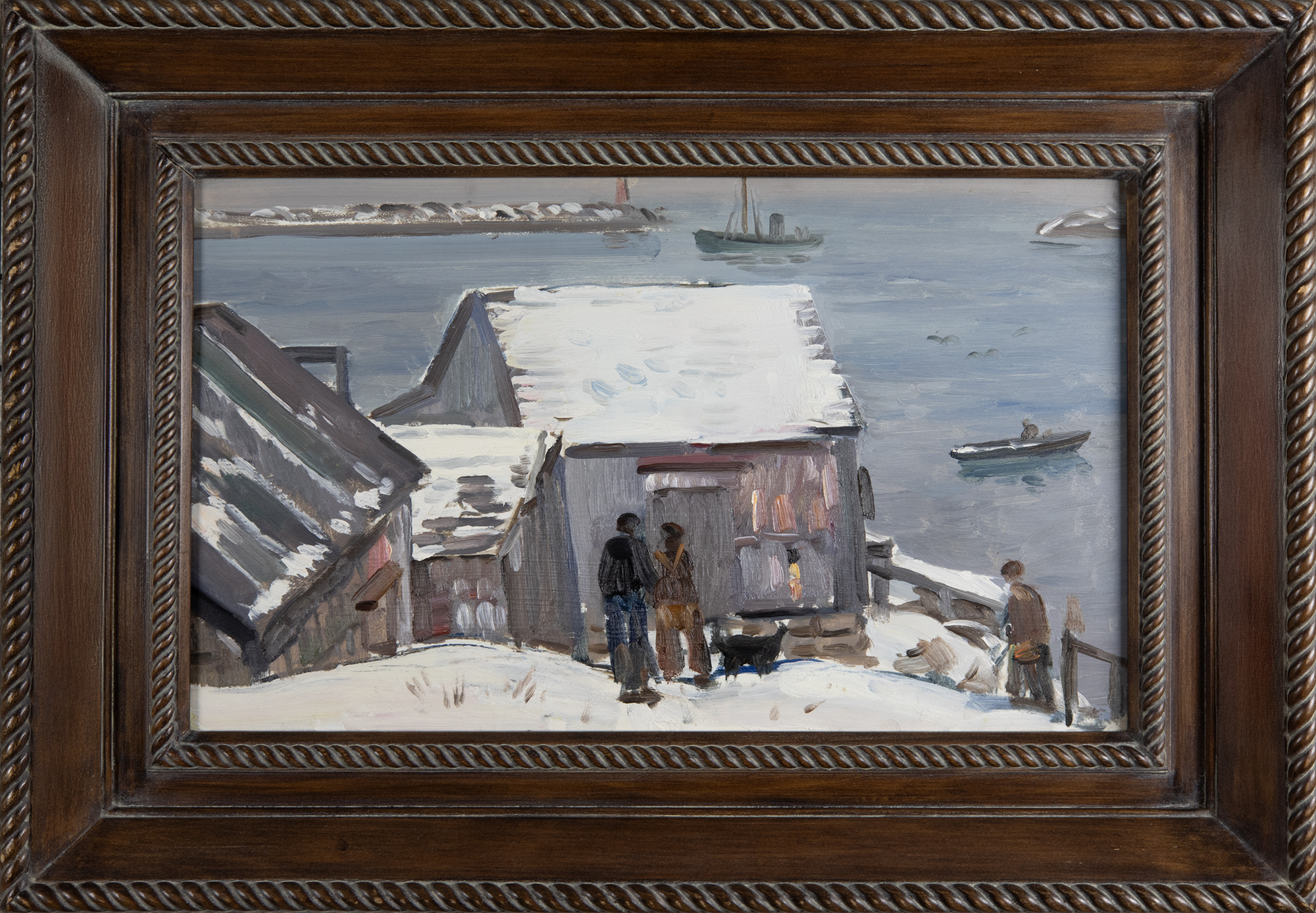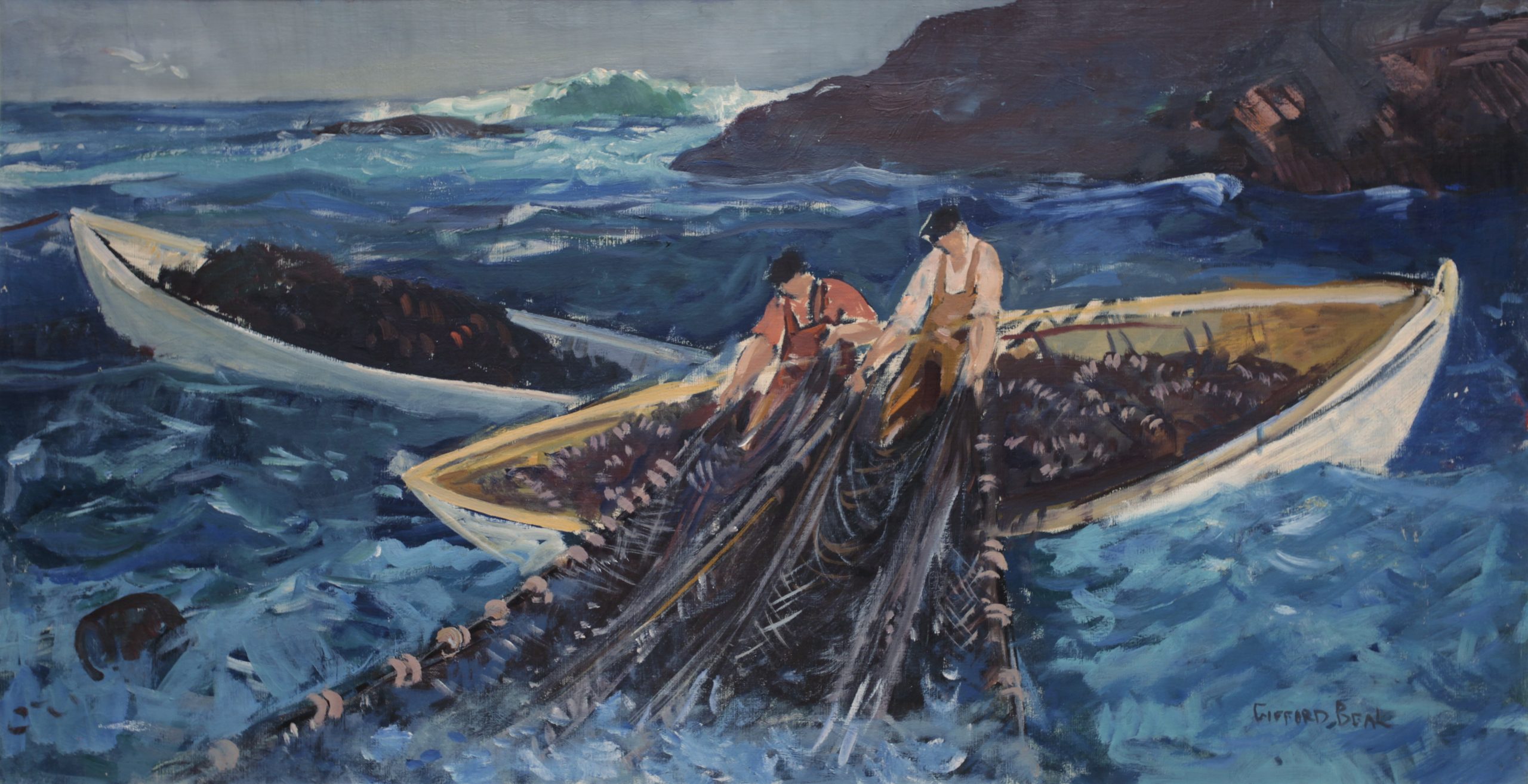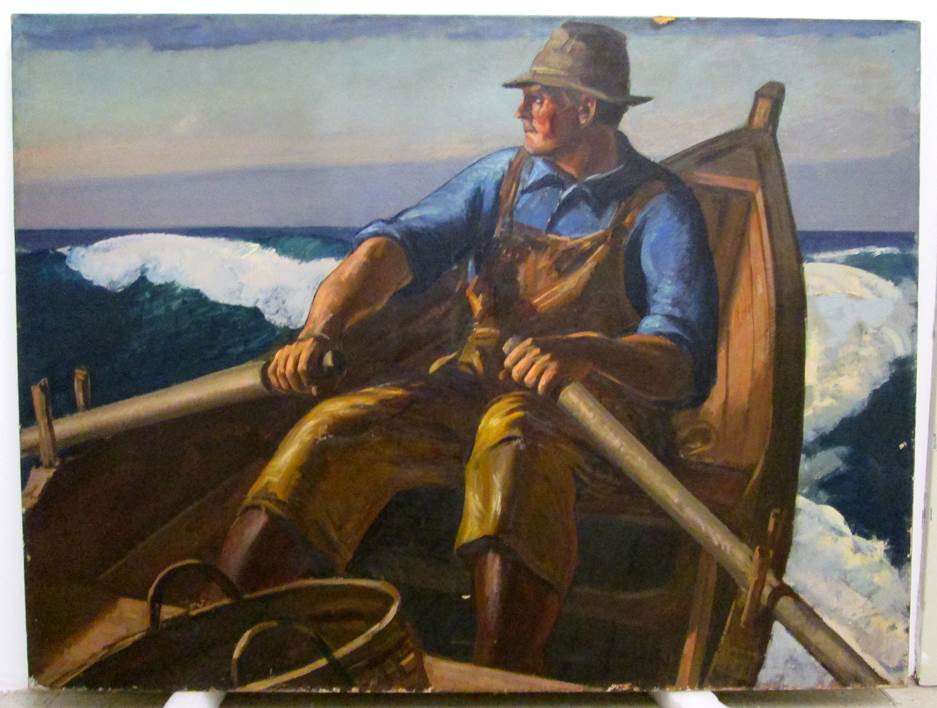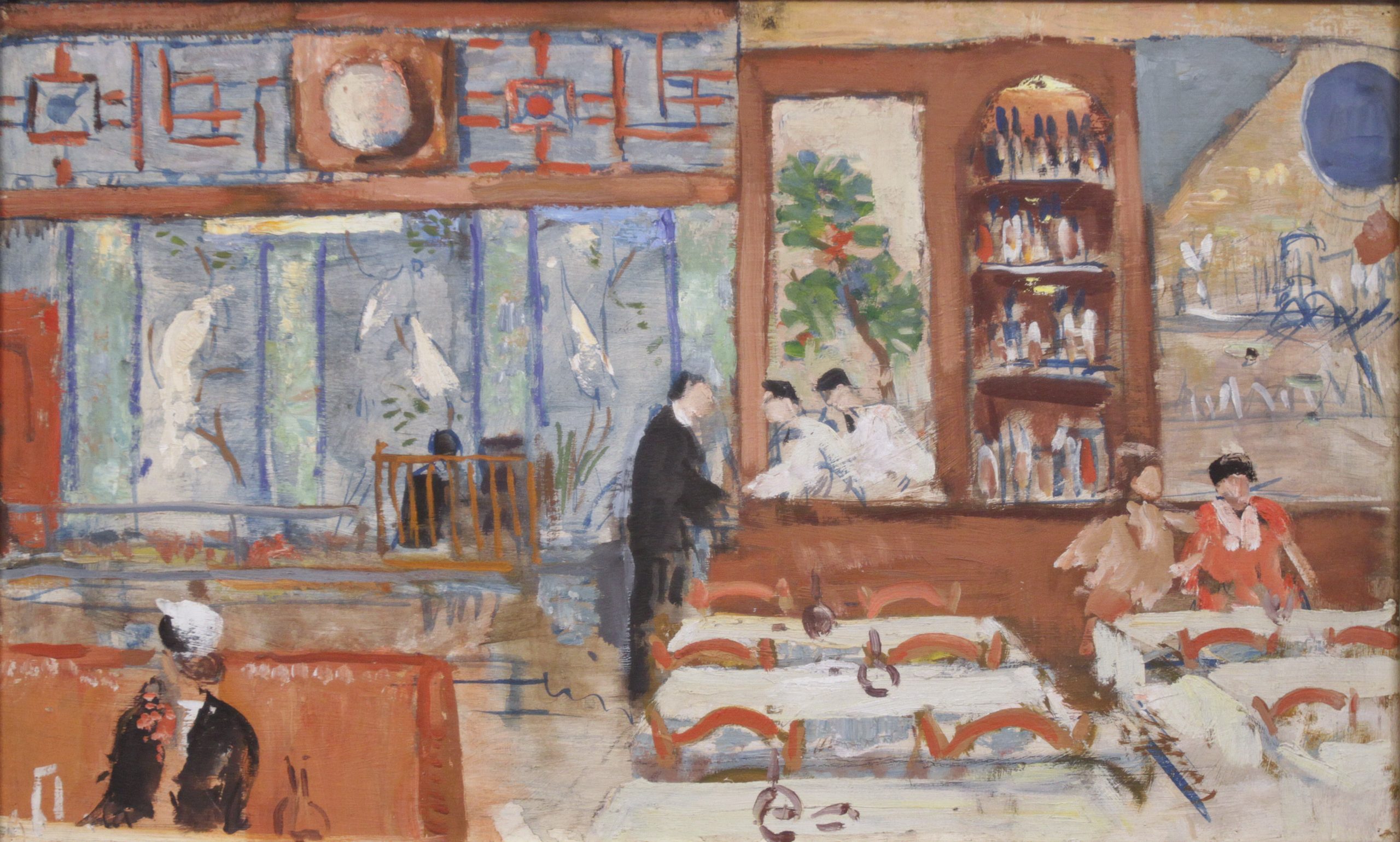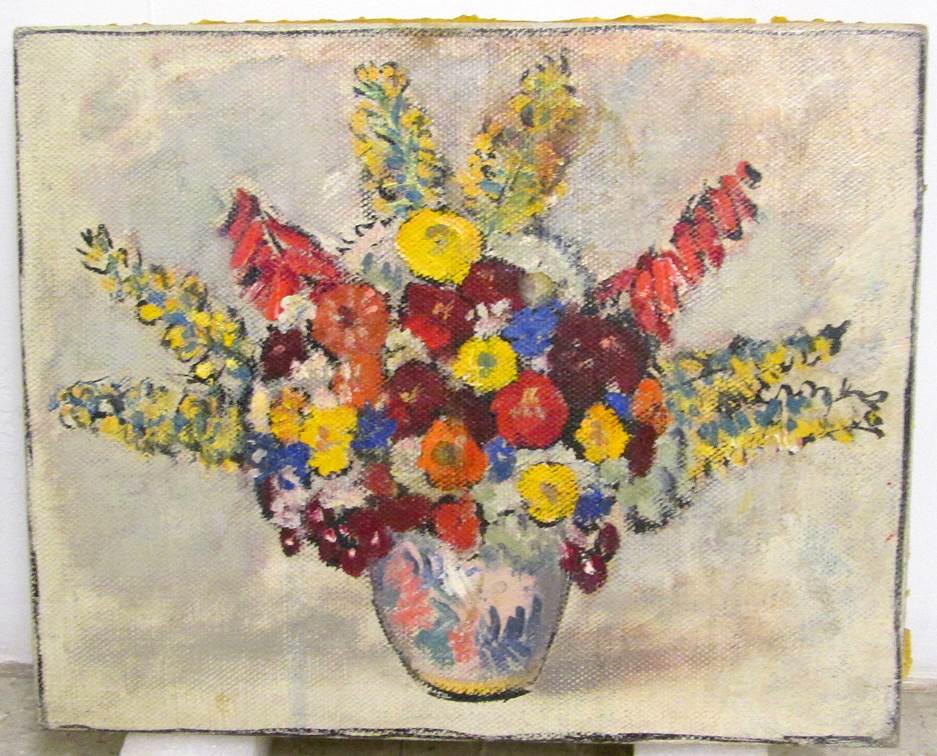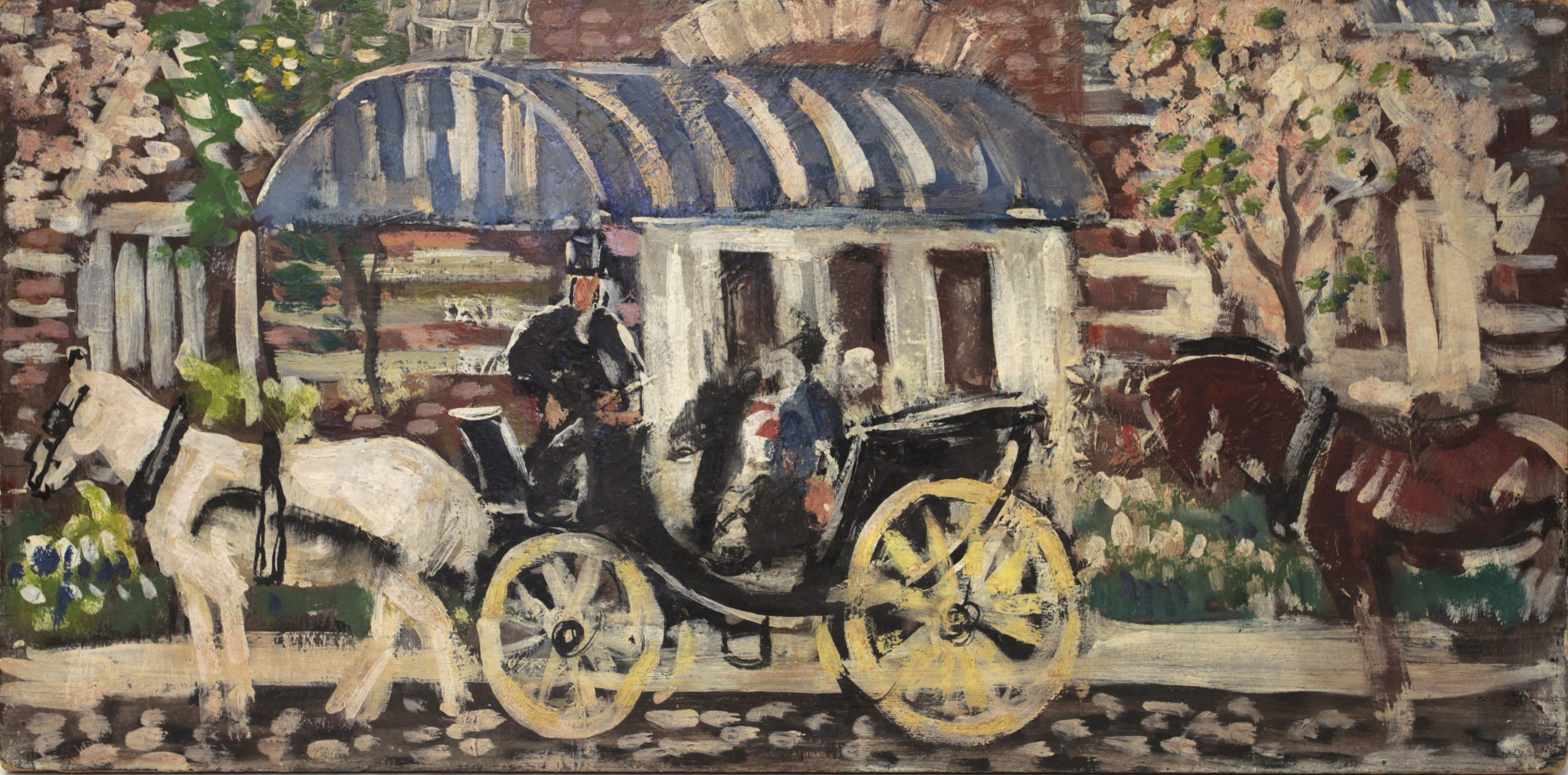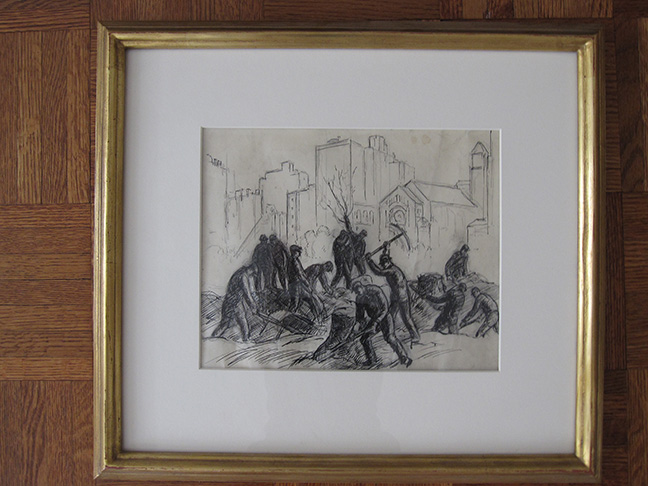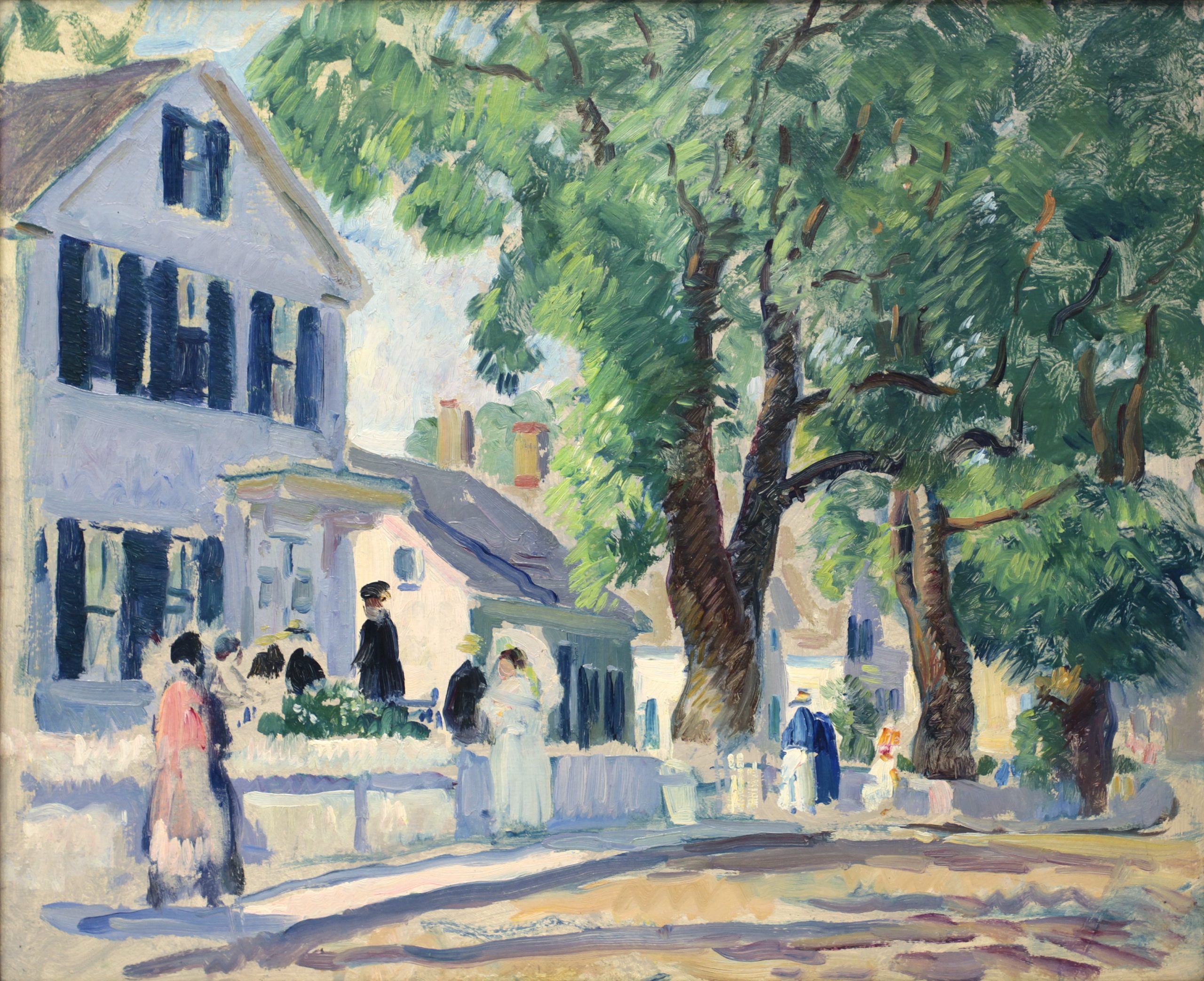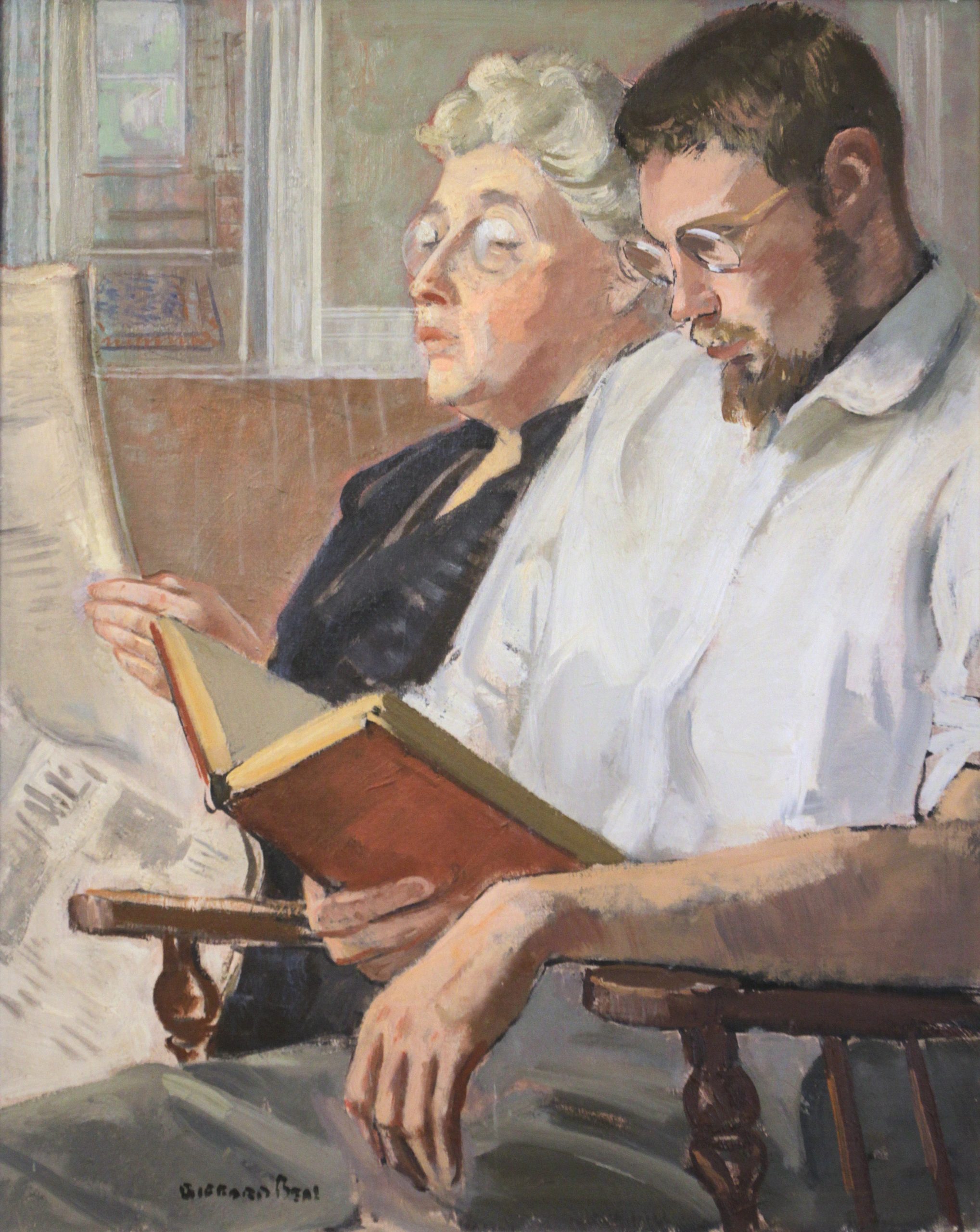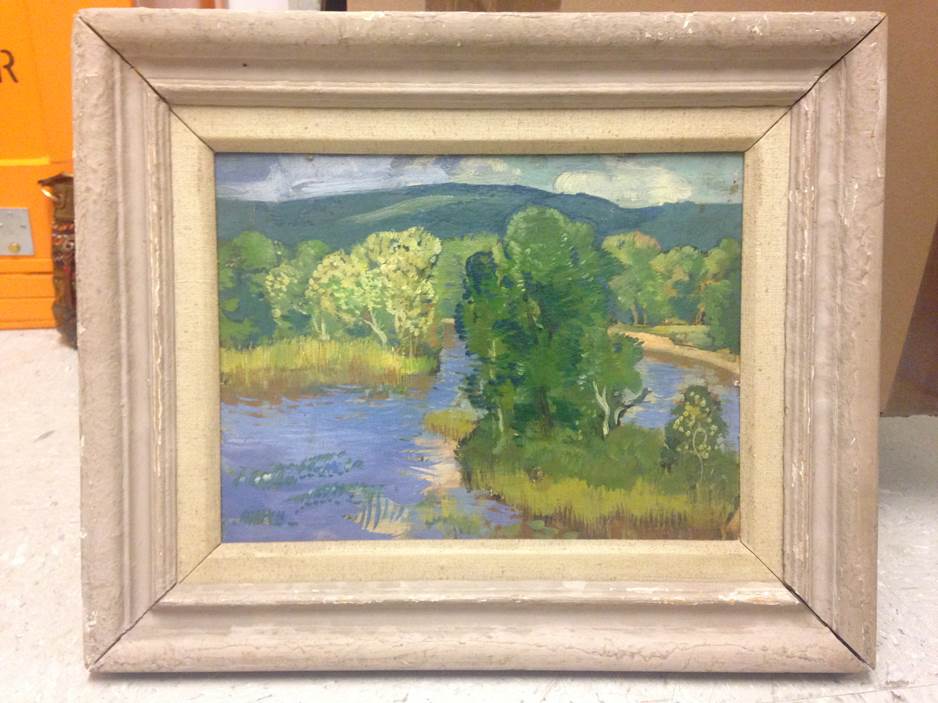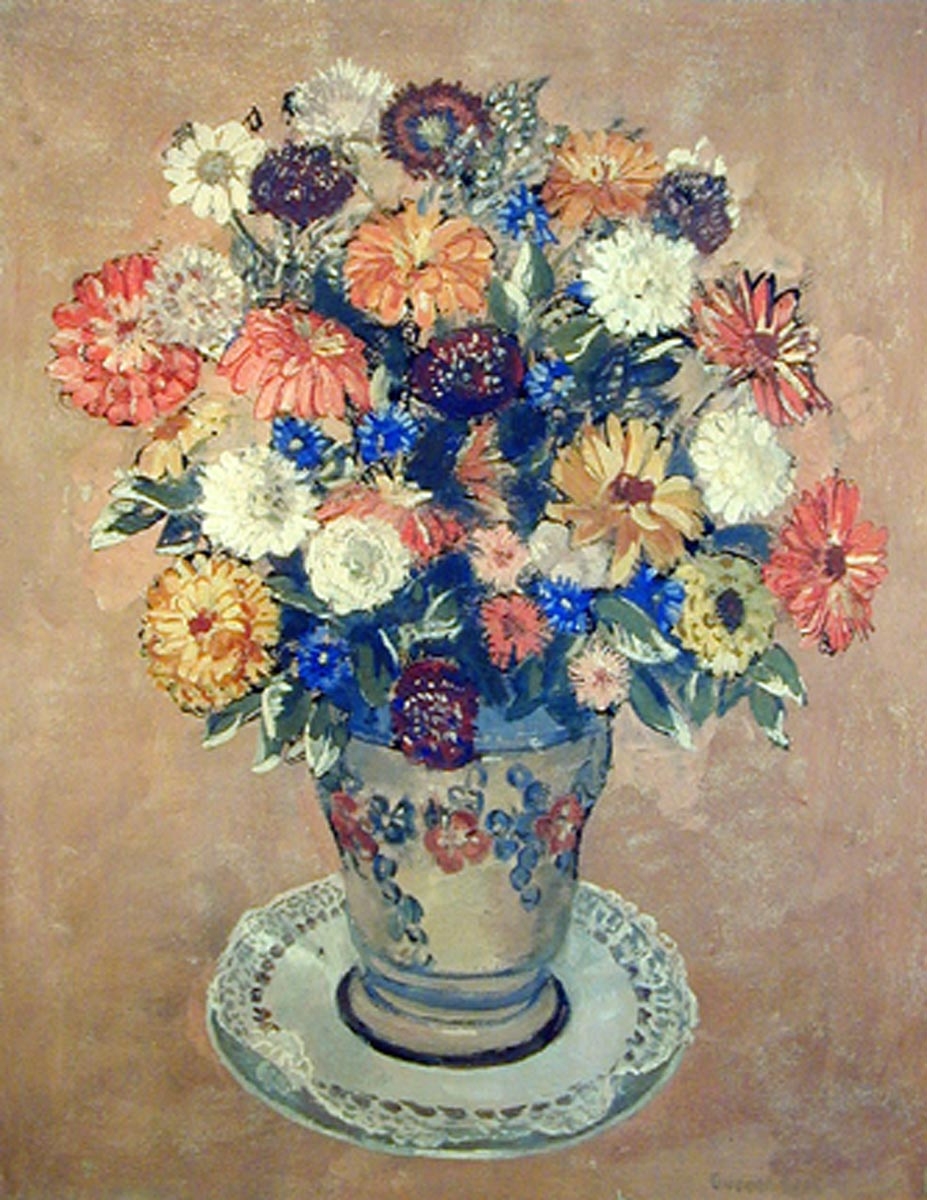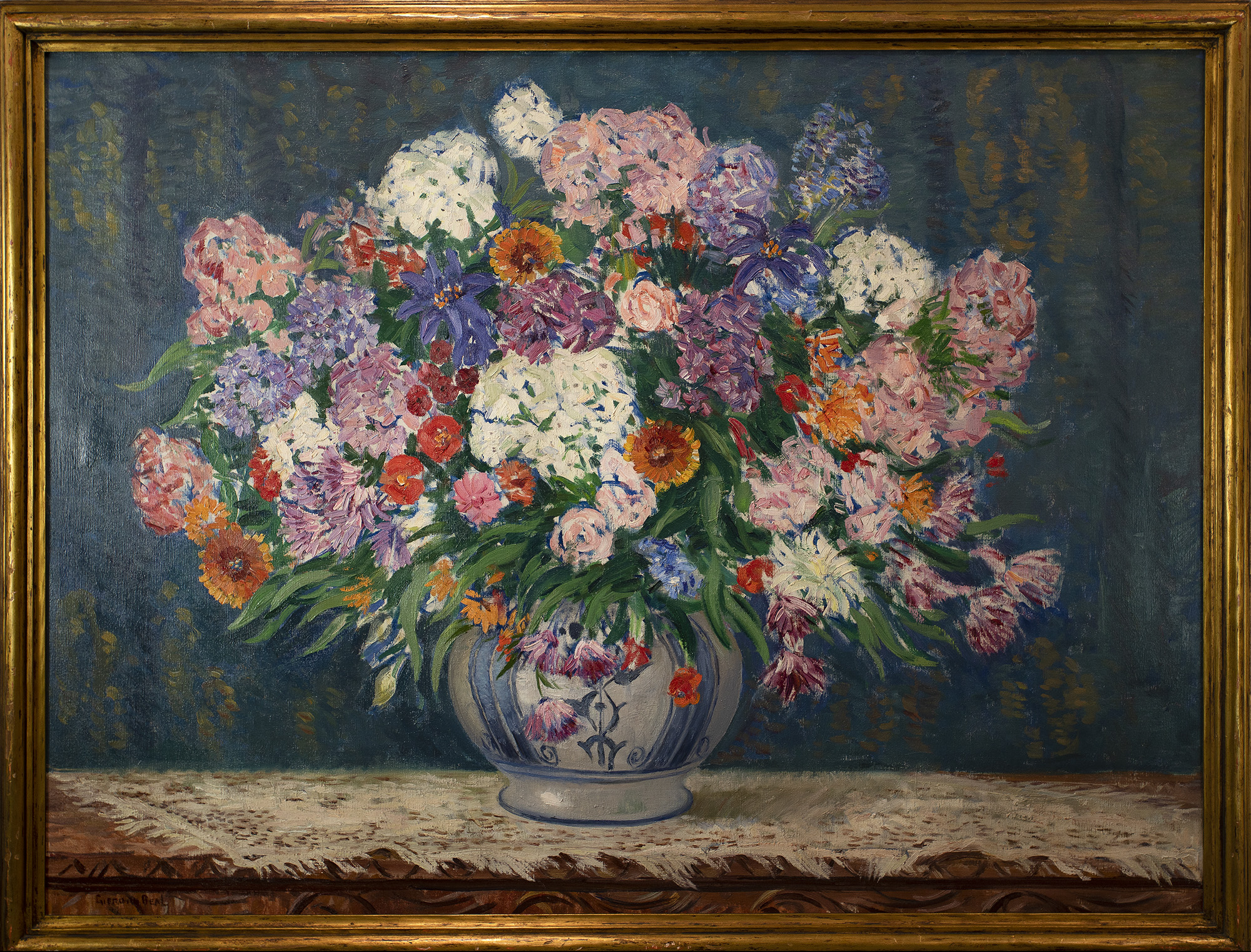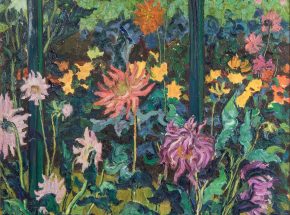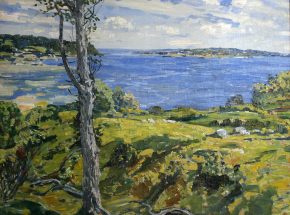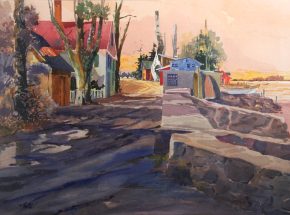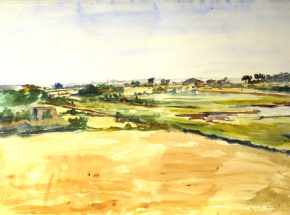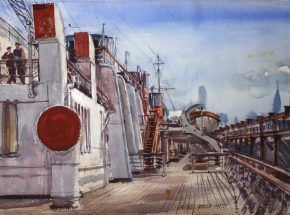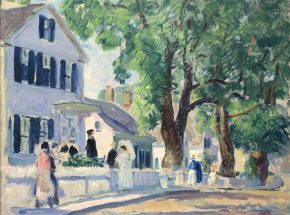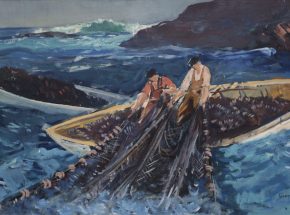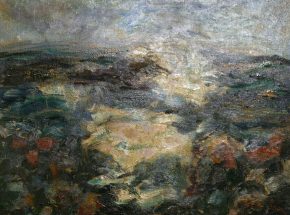




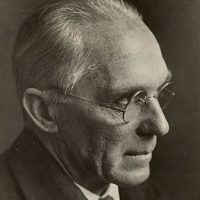
Painter and watercolorist Gifford Beal gained national recognition in the early twentieth century for his gentle, warmly lit depictions of American landscapes and urban views. Born into a prominent New York family, Beal began his artistic training as a teenager with summer courses led by American impressionist William Merritt Chase. Under Chase’s tutelage, Beal mastered the impressionist technique of documenting the transient effects of light and atmosphere, an approach that continued to shape his work as his style and subject matter evolved from austere seascapes featuring monumental figures to dynamic views of New York’s freight yards. Friend and fellow painter Barry Faulkner said Beal’s work showed, “the eternal pleasures of work and leisure, the casual enjoyable incidents which add so much to life’s richness.”
His work attracted early attention, and by age twenty-two he was exhibiting nationally. Beal’s work can be found in some of the nation’s most esteemed collections, including the Metropolitan Museum of Art, New York; the Art Institute of Chicago; and the Nelson-Atkins Museum of Art, Kansas City, Missouri.