


Welcome to Adams House, the Chief of Mission Residence in The Hague, Netherlands!
As Chris and I discussed our Art in Embassies exhibit, we decided we wanted to bring a little bit of home with us. So, we focused on artists and landscapes from our two “happy places”: Cape Cod and Texas.
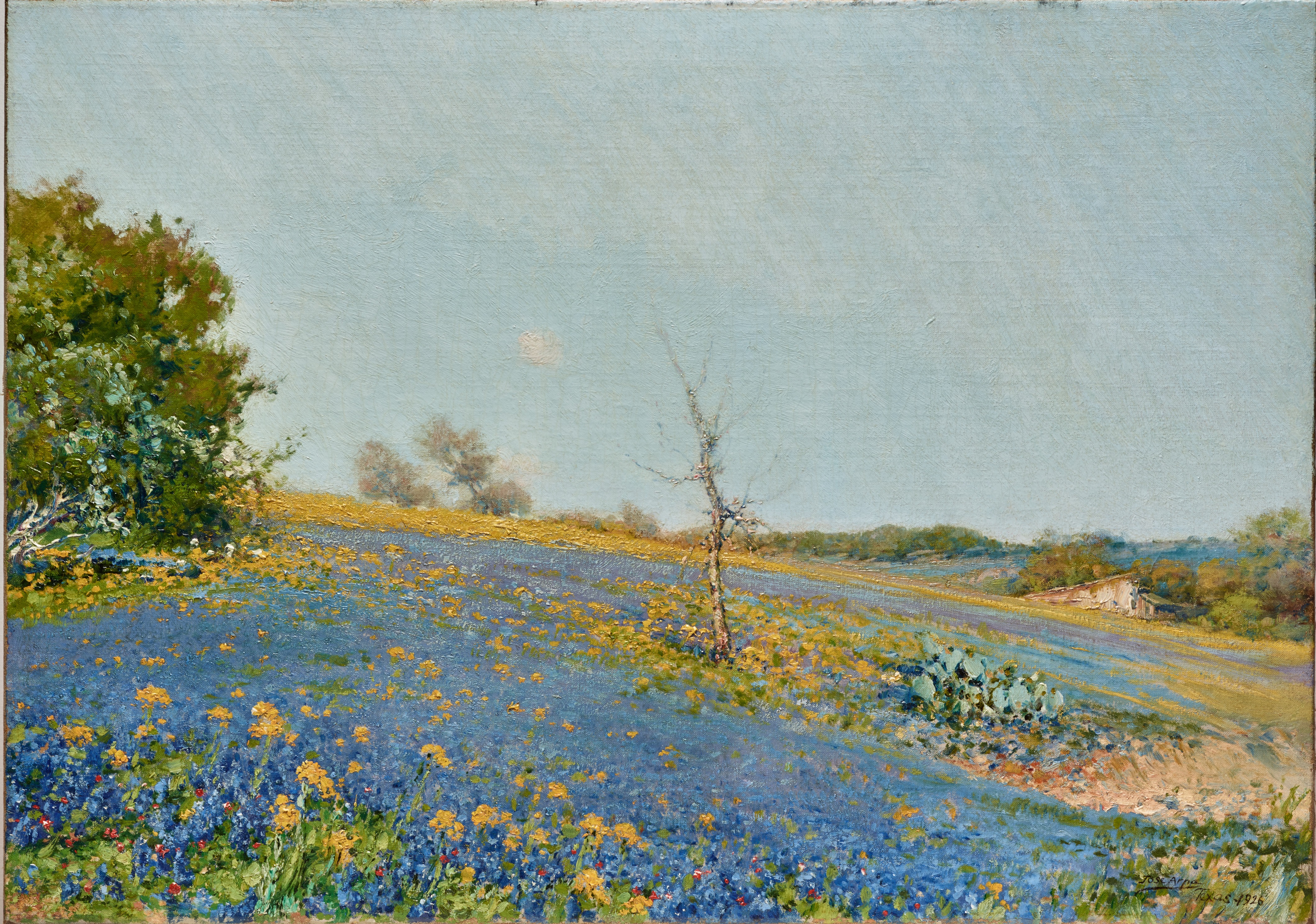
We were happy to work with the Dallas Museum of Art and the Panhandle Plains Historical Museum in West Texas to identify iconic Texas artists and landscapes to exhibit. The official Texas State Flower is the bluebonnet, and we are thrilled to show three beautiful landscapes featuring the fields of bluebonnets that bloom all over the state in the spring, two by José Arpa and one by Porfirio Salinas.
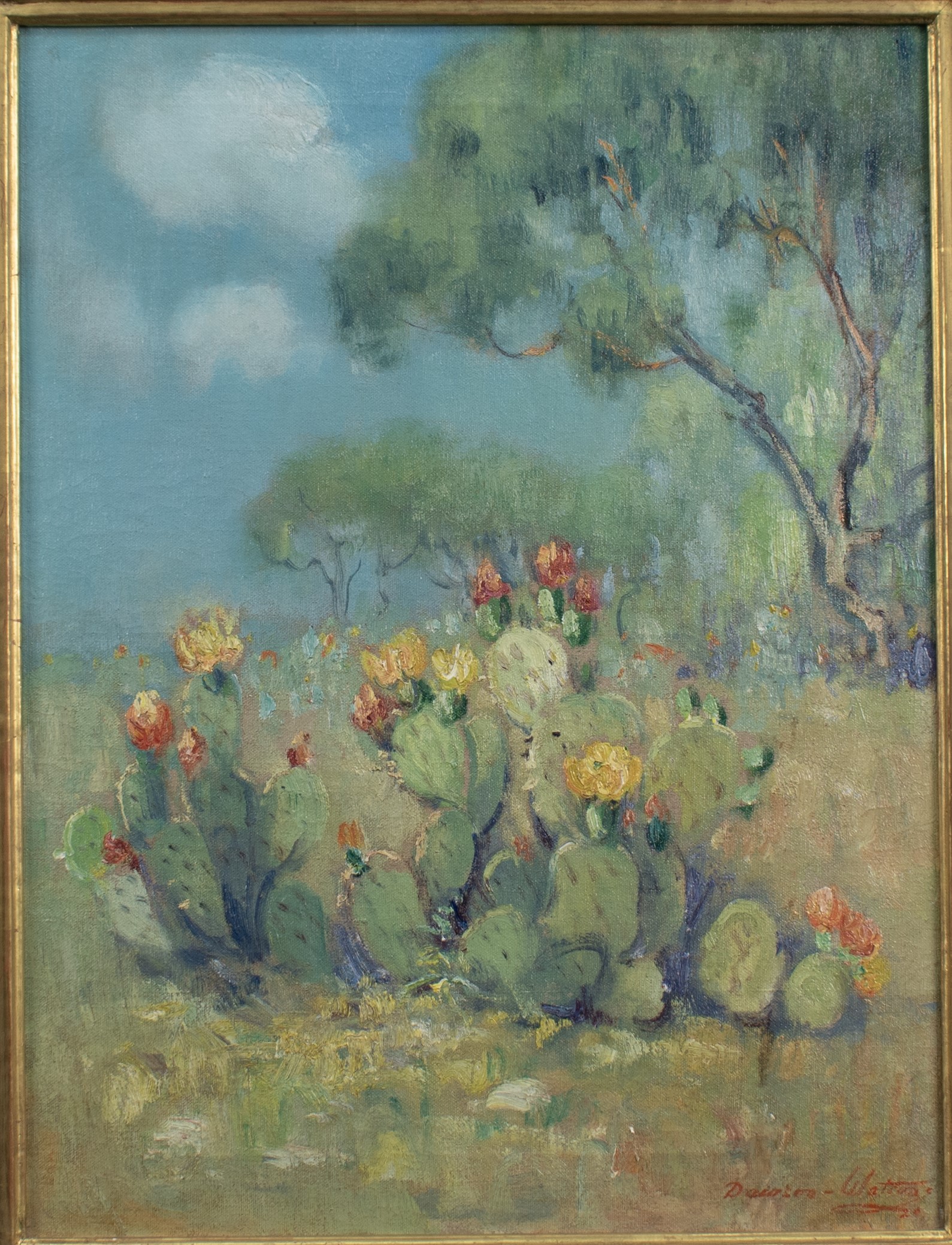
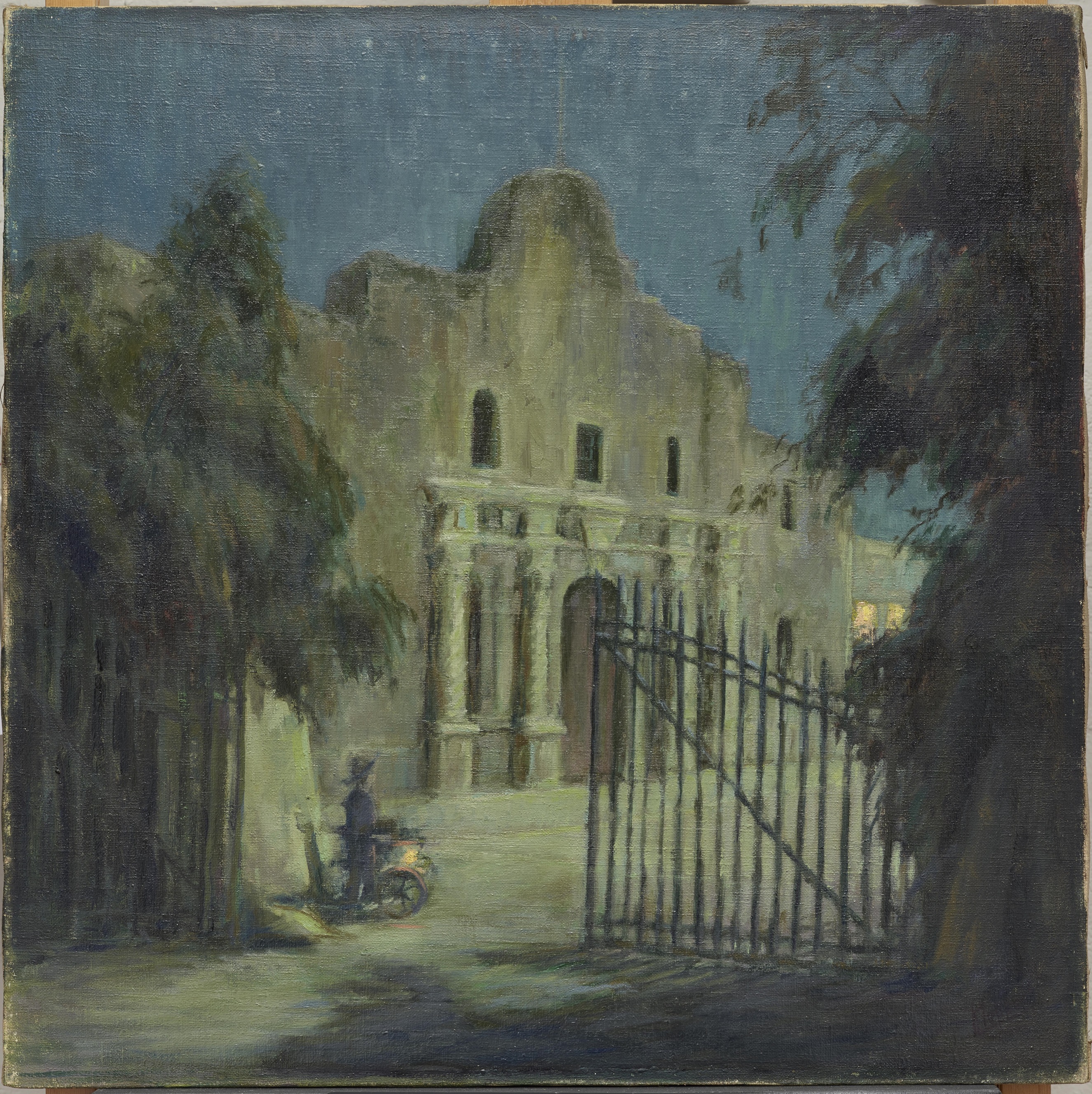
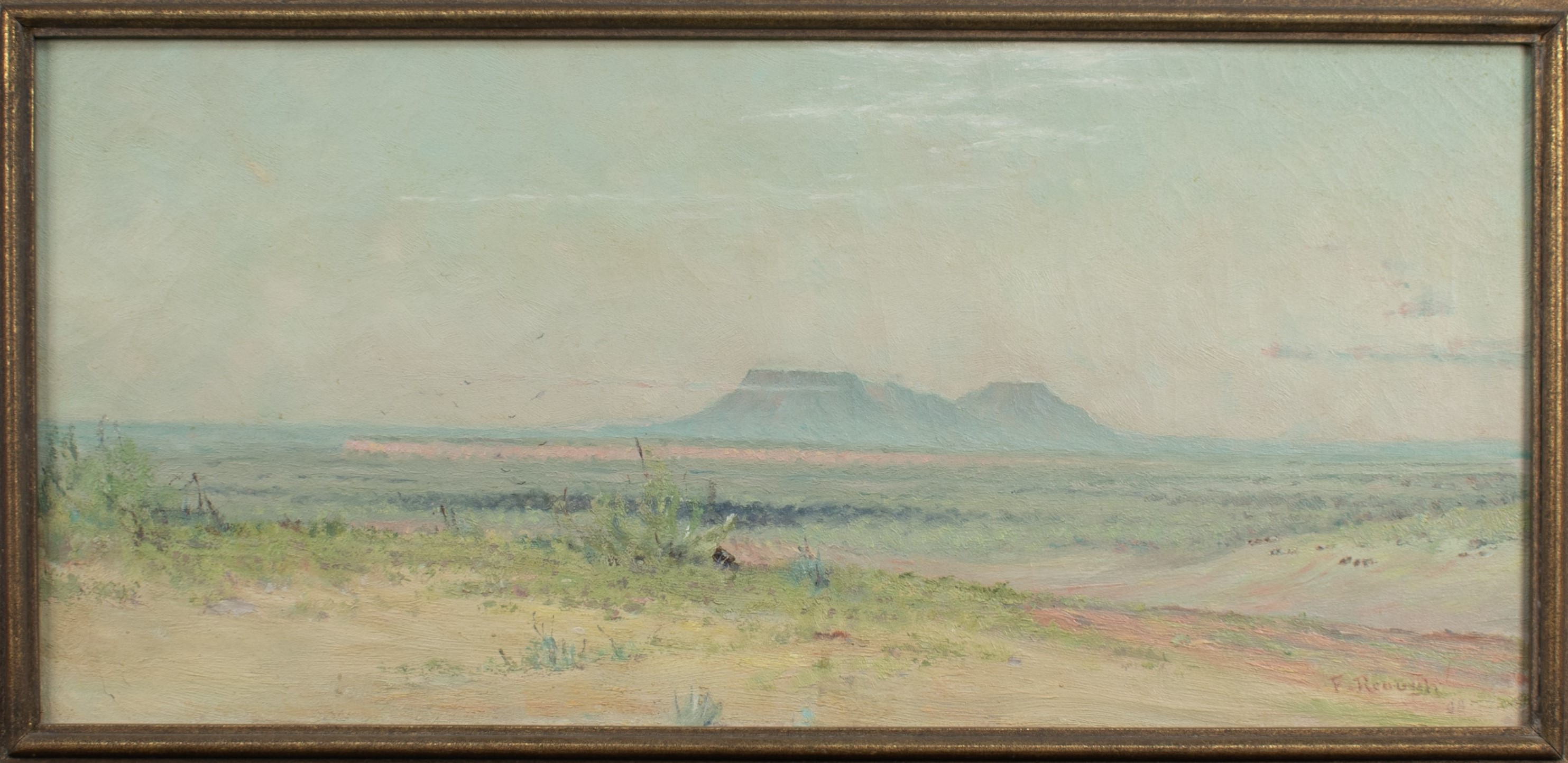
Frank Reaugh’s A Sentinel of the Plains provides a glimpse of the vastness of the Texas horizon, while Dawson Dawson-Watson’s Prickly Pear focuses on a cactus common in West Texas. Of course, one of the most famous buildings in Texas (besides SouthFork Ranch!) is the Alamo, or as Frank Klepper named it, The Texas Shrine.
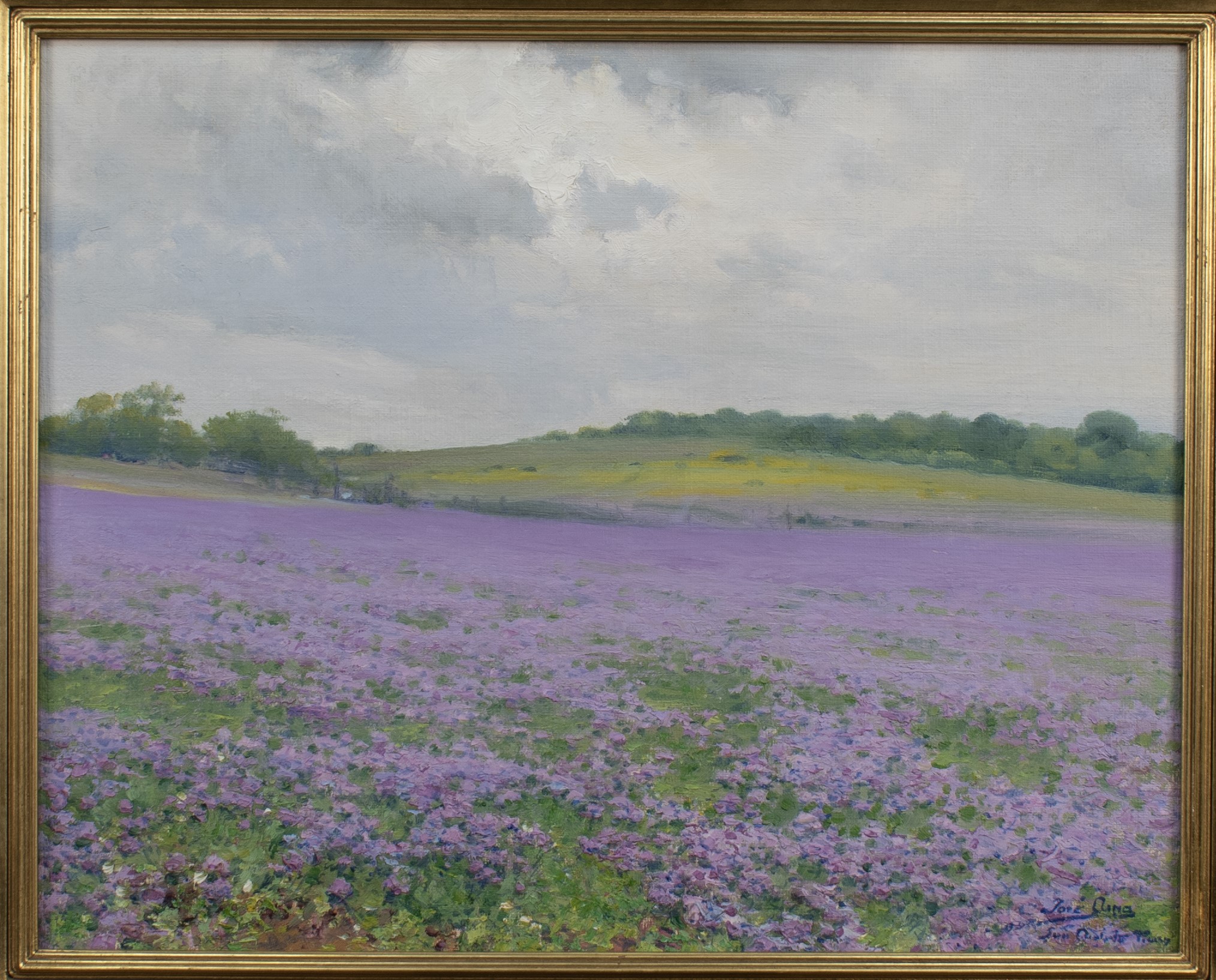
Recognized as a brilliant colorist, José Arpa is closely associated with landscape painting in Texas. His ability to capture shifting effects of sunlight earned him the nickname “Sunshine Man.” In Morning, Arpa renders the landscape with loose, fluid brushwork and a color palette that emphasizes the play of light across the terrain.
Arpa was born in Seville, Spain, where he studied at the School of Fine Arts. His work gained attention in the United States and Mexico after he exhibited in the Spanish pavilion at the 1893 Chicago World’s Fair. He later traveled to San Antonio, Texas, where he exhibited his work at the International Fair in 1900 and soon joined the local artists’ community. Arpa lived and worked in San Antonio for more than three decades, establishing a studio and an art school before returning to his native Seville in 1932.
Emma Richardson Cherry was considered a pioneer in the arts and art education. Born in Aurora, Illinois, she taught art at the University of Nebraska–Lincoln to finance her art education in New York, Chicago, and then Paris. In New York, she notably attended the Art Students League, where she studied with William Merritt Chase. Cherry was instrumental in establishing the Kansas City Art Association and School of Design, the Artists Club of Denver (eventually becoming the Denver Art Museum), and the Houston Art League (becoming the Museum of Fine Arts, Houston).
Born in London, England, Dawson Dawson-Watson was the son of successful painter and illustrator John Dawson-Watson. As a young man, he studied in England and Paris and spent five years at an artist colony in Giverny, France, before moving to the United States. He later served as director of the Hartford Art Society in Connecticut and taught at Washington University in St. Louis, Missouri, eventually settling permanently in San Antonio, Texas. In 1918, he was appointed director of the art school of the San Antonio Art Guild, where he concentrated his efforts on painting Texas landscapes and its native flora.
Dawson-Watson received acclaim for his light-filled depictions of native Texas wildflowers and cacti. The impressionist character of his work reflects his training in France and the varied landscapes he encountered across North America, from Quebec and New England to the Ozark Mountains.
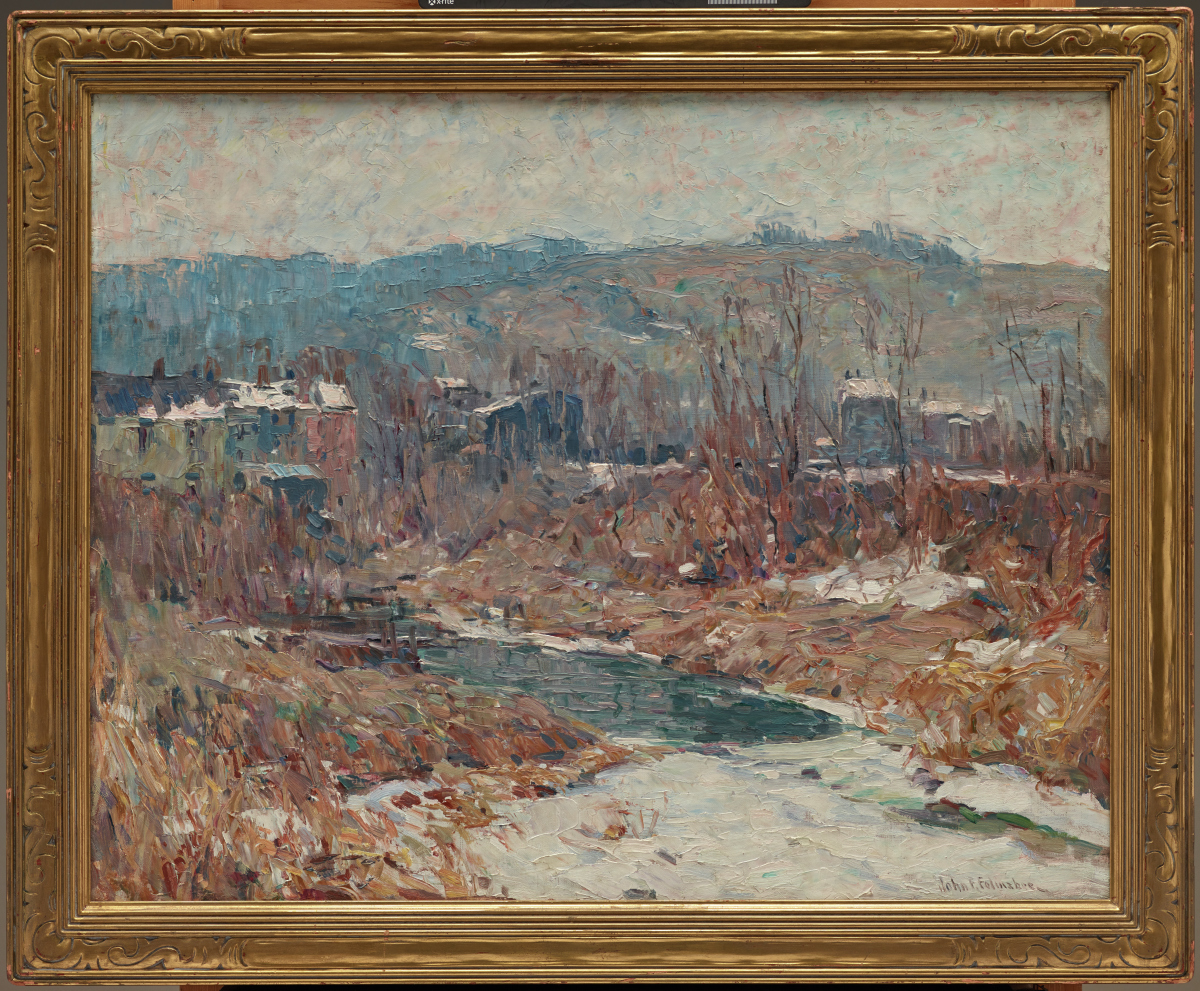
John Folinsbee is often associated with the New Hope School, also known as the Pennsylvania Impressionists, centered in the artists’ colony of New Hope, Pennsylvania, where he and his wife settled in 1916. Although French and American impressionists such as Claude Monet, Childe Hassam, and Paul Cézanne influenced his work, Folinsbee resisted being identified with a single style. Instead, he described himself as a realist, seeking to reveal the deeper truth through his work while drawing on a broad array of artistic traditions. As he encountered more artists and stylistic approaches, his painting evolved. Art historian Russell T. Lines noted that by the mid-1930s Folinsbee’s “brush became more flowing, bolder, surer, and more personal.”
Born in Buffalo, New York, Folinsbee began studying at the age of nine at the city’s Art Students’ League. He continued his art education at The Gunnery School in Washington, Connecticut, and later at the Art Students’ League in Woodstock, New York. Folinsbee’s work is held in the permanent collections of the Pennsylvania Academy of the Fine Arts, Philadelphia; the National Academy of Design, New York; and the Museum of Fine Arts, Houston, among others.
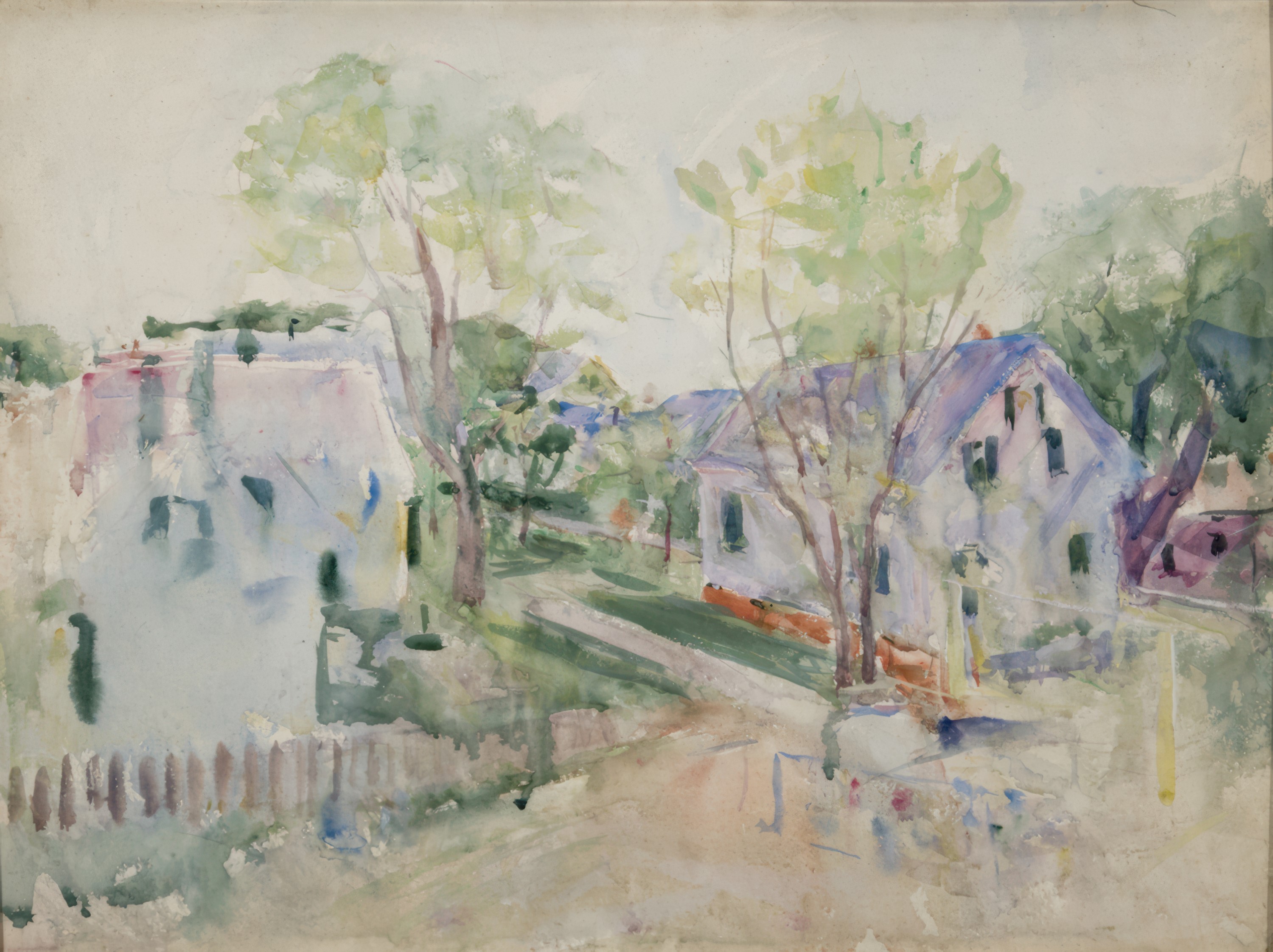
Painter Charles Webster Hawthorne played a pivotal role in shaping the Cape Cod art community in the early twentieth century. Raised in Maine, he later moved to New York to study drawing and painting at the National Academy of Design and the Art Students League, where he studied under William Merritt Chase. His early work shows the tonal influence of his teacher. Inspired by these ideas, Hawthorne moved to the small fishing town of Provincetown, Massachusetts, where he established the Cape Cod School of Art in 1899 and taught there every summer until his death.
In Provincetown, Hawthorne was equally drawn to the distinctive light of the coast. Best known as a figure painter, he explored these effects in watercolors such as Gray Day, Spring, Provincetown, using loose washes to capture a muted atmosphere, in contrast to the more structured surfaces of his works in oil. Hawthorne’s work is represented in the permanent collections of the Art Institute of Chicago, the Metropolitan Museum of Art in New York, and the Smithsonian American Art Museum.
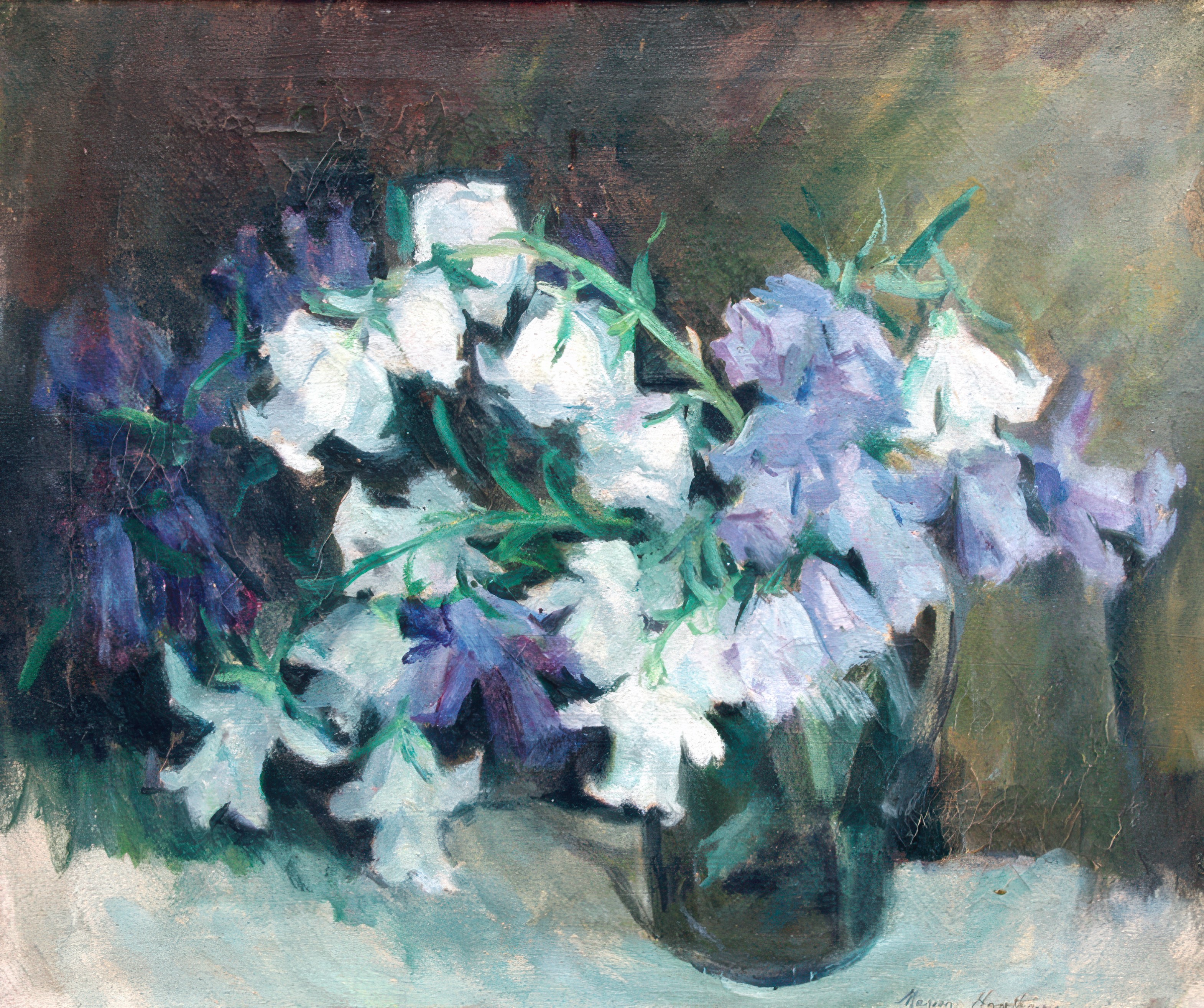
Marion Campbell Hawthorne was an accomplished artist in her own right, though she is often remembered as the wife of Charles Webster Hawthorne. She attended the Art Institute of Chicago, Illinois, and, like her husband, studied under William Merritt Chase. Hawthorne earned acclaim for her watercolor and gouache paintings, which have an impressionistic quality achieved through layered washes of translucent color. She often painted flowers—such as in her work Canterbury Bells—because she was an avid gardener. Hawthorne was a member of the Pen and Brush Club, an organization that showcased the work of women artists, and the National Association of Women Painters and Sculptors.
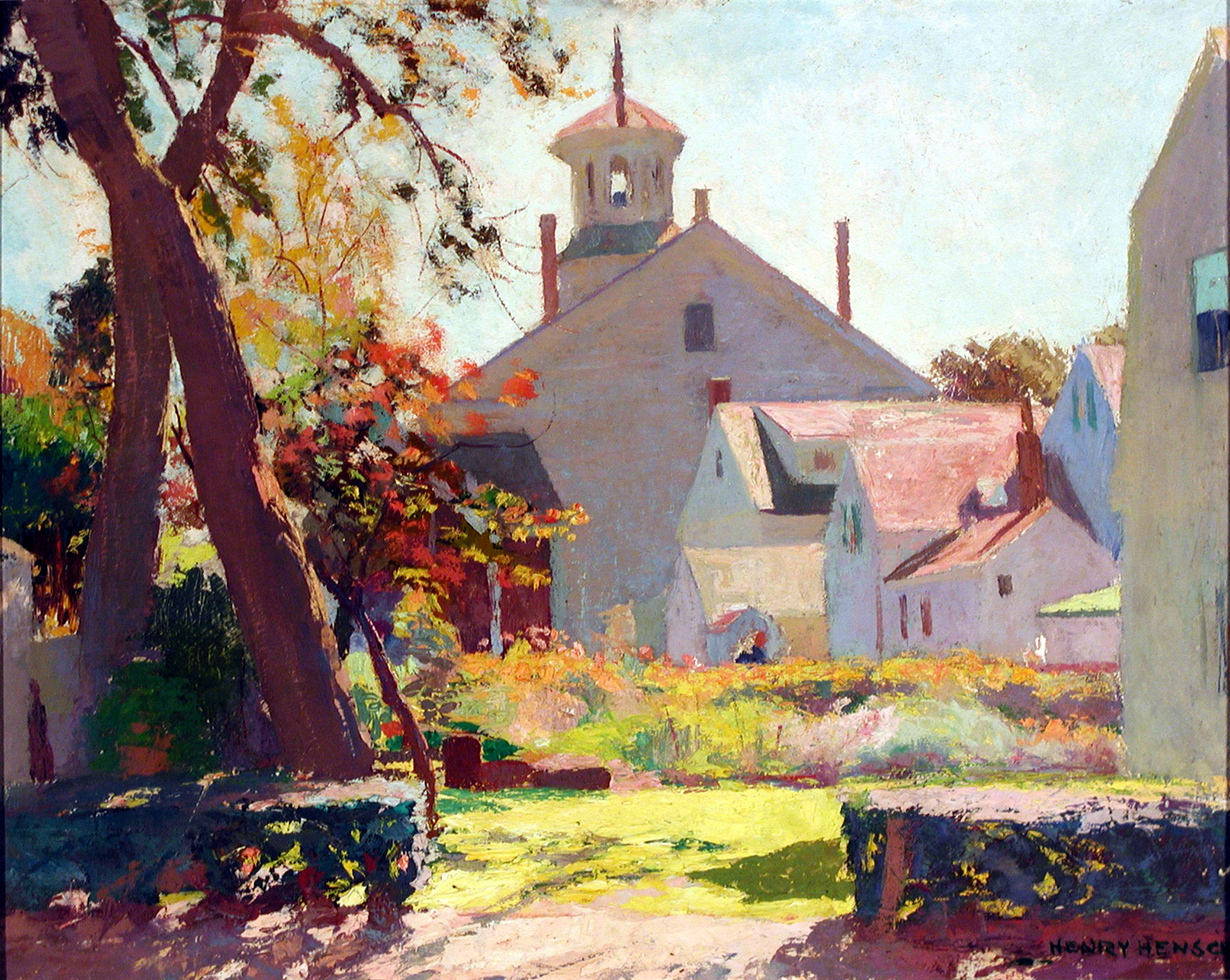
Henry Hensche passed on the teachings of Charles Webster Hawthorne to his own students, along with a profound appreciation for the effects of light and color in nature. Drawing on the example of Claude Monet, Hensche developed a painting practice in which color shifts in response to changing atmospheric conditions. Although he painted in a realistic style, Hensche was more concerned with color and shape than with specific subject matter. He is considered by many to be an unparalleled colorist.
Born in Germany, Hensche immigrated to the United States at the age of ten. He began his art education at the Art Institute of Chicago, Illinois, and later continued his training in New York, attending the National Academy School of Fine Arts, the Art Students League of New York, and the Beaux-Arts Institute of Design before studying at Charles Webster Hawthorne’s Cape Cod School of Art.
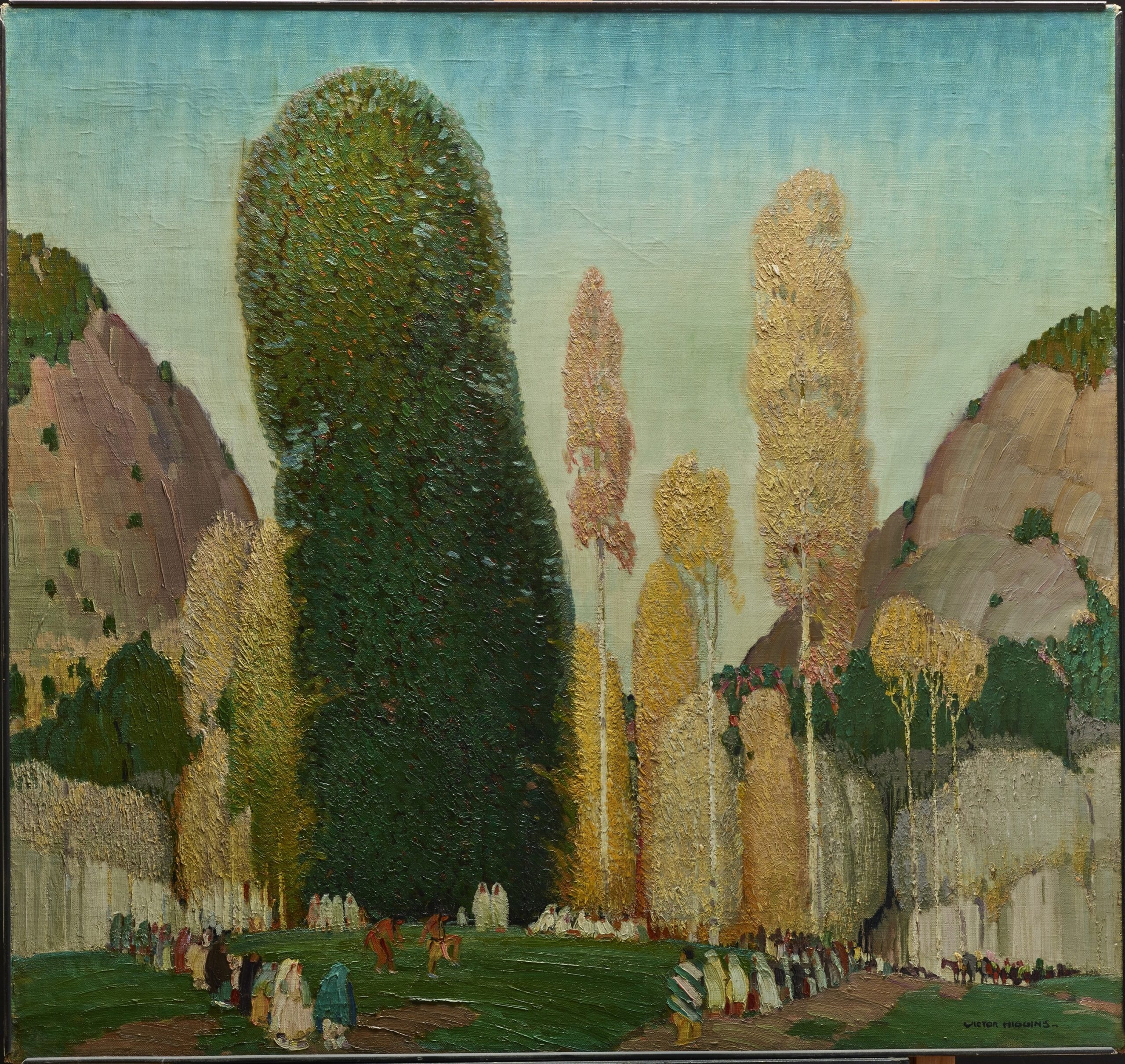
At the age of fifteen, Victor Higgins left his family’s farm in Shelbyville, Indiana, to further his studies at the Chicago Art Institute, Illinois (now the School of the Art Institute of Chicago). From Chicago, Higgins traveled to Paris and Munich, where he immersed himself in the collections of major museums in Europe. After returning to Chicago, he traveled to Taos, New Mexico, where he developed the light-filled landscape style for which he became known. The region’s strong light and vivid color, along with the presence of Indigenous communities in northern New Mexico, strongly influenced his work.
Higgins and other artists founded the Taos Society of Artists in the then-isolated village.
Drawing on his study of realism in Europe, Higgins developed a distinctive approach that introduced elements of modernism into his work. Although most recognized for his landscape paintings of the American Southwest, he also contributed to mural projects and experimented with cubism, abstraction, still lifes, and portraiture. Higgins remained active in the Chicago art scene for much of his life and received recognition for his work both in the United States and abroad, most notably at the Venice Biennale.
Celebrated for his Texas landscape paintings, Frank Klepper was also highly regarded as a teacher, graphic artist, ceramicist, and muralist. Raised in McKinney, Texas, he later left to pursue his interest in art, studying at the Art Institute of Chicago, Illinois. His training was cut short when the United States entered World War I, and he enlisted in the army. After serving overseas, he remained in France to study at the American Art Training Center in Bellevue-la-Montagne.
Upon returning to Texas, Klepper settled in Dallas, where he founded the Southwestern School of Fine Arts. Active in the city’s art community, he taught etching and ceramics at the Dallas Public Evening School for more than thirty years, served as chairman of the art department at the Dallas Woman’s Forum, and established the Klepper Sketch Club in 1930.
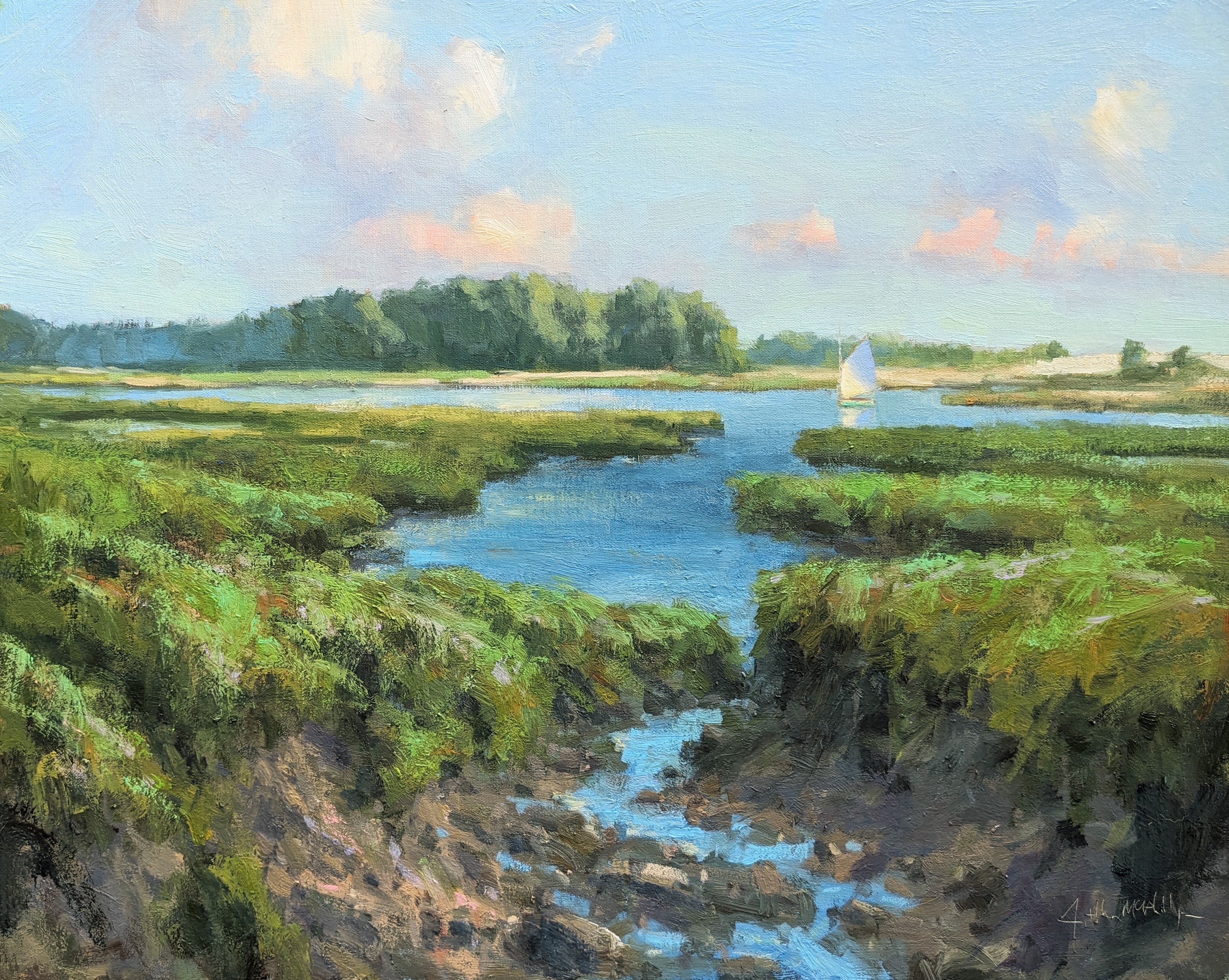
“Each painting I begin is a highly anticipated challenge to conquer—a puzzle seeking completion and a culmination of all that came before… In a world of digital focus and intensity, I hope that my artwork offers a calm place to rest, even if just for a few moments of the day.”
—Jonathan McPhillips
Jonathan McPhillips creates paintings that reflect the landscapes of New England and beyond. He earned a Bachelor of Fine Arts degree from Connecticut College in New London. Working in the studio and on location, McPhillips paints a range of subjects, from coastal shores to inland farmlands to bustling city streets. Recent honors include the Wayne Plein Air 2025 “First Place Award”, 2023 Cape Ann Plein Air “Best Seascape” Award, and the American Impressionist Society National Juried Second Place Award in 2023.
Born near Jacksonville, Illinois, Frank Reaugh moved with his family to Terrell, Texas, at the age of sixteen. He soon began sketching the open range near the family homestead and documented several cattle drives from Texas to Kansas. Reaugh studied art formally at the School of Fine Arts in St. Louis, Missouri, and later taught art classes to finance his studies at the Académie Julian in Paris.
Reaugh became known as the “Dean of Texas Painters” for the many students he taught. As part of his teaching practice, he often led plein air painting expeditions, traveling with his students across the countryside in a specially constructed Model T Ford. Through his work, Reaugh sought to record the early days of the Texas open range, capturing the nuances of weather and atmosphere. Wild longhorn cattle frequently appear in his work and later became an iconic symbol of the state.
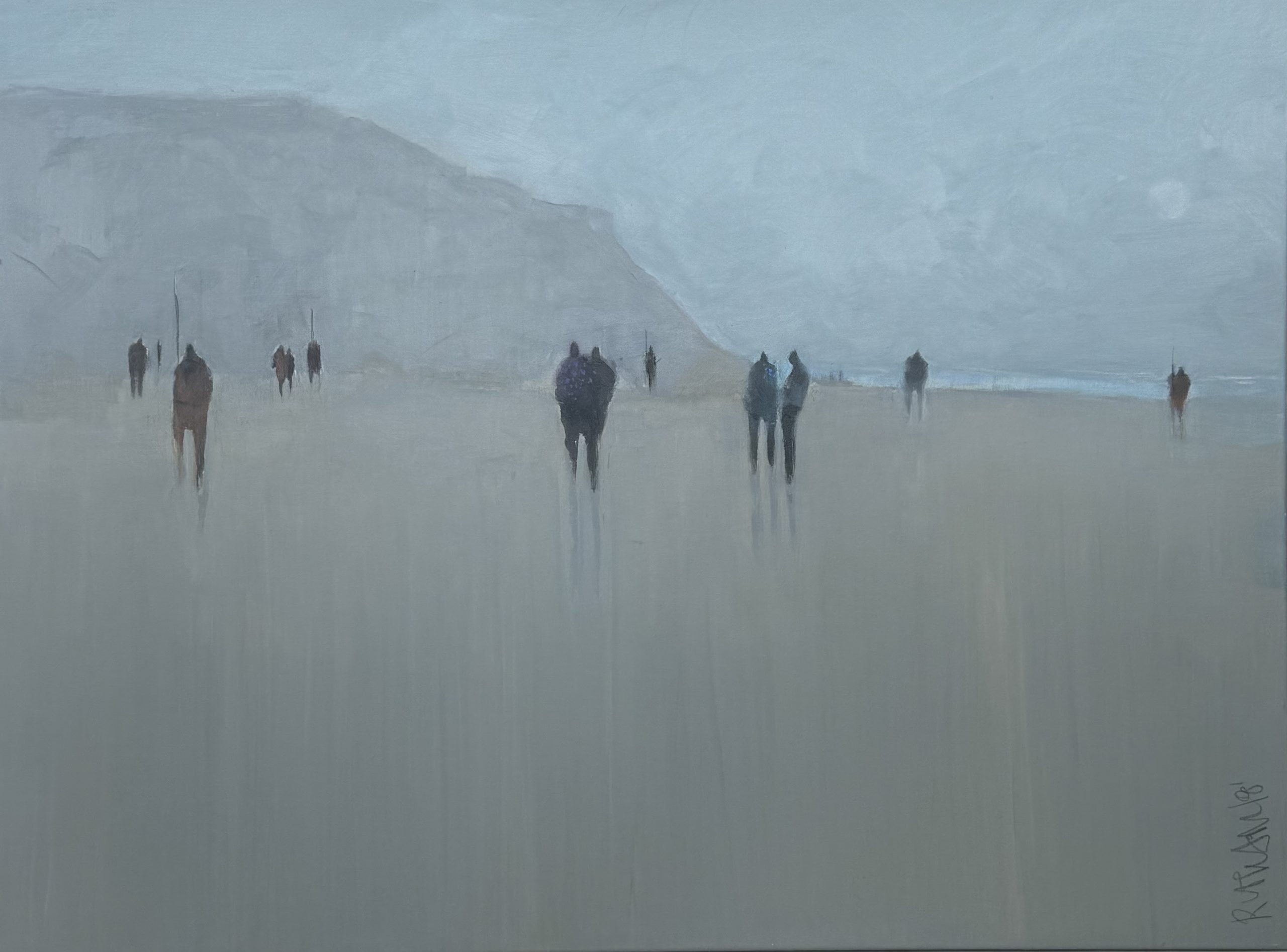
Jeff Rutchik is a professional artist whose work centers on storytelling and the way viewers discover their own narratives within his paintings. A native of Cape Cod, Rutchik recalls childhood walks along the beaches, where endless skylines stretching across the ocean helped shape his creative approach. He defines his work as “Expressive Mindscapes,” using color and the rhythm of his brushstrokes to translate imagined scenes into paint.
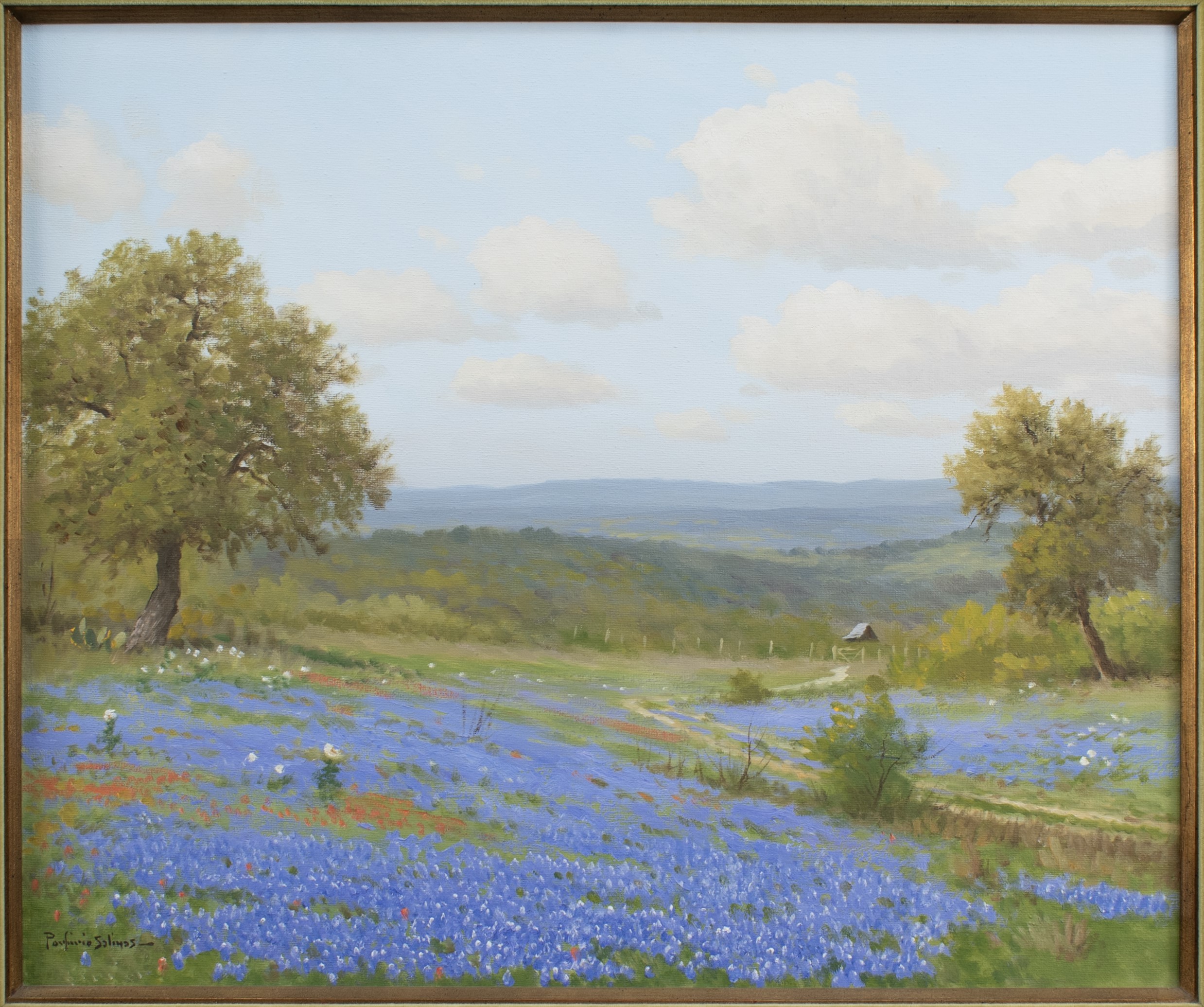
Porfirio Salinas was known for his impressionist landscapes of Central Texas, particularly the lush fields of bluebonnets, which are the Texas state flower. His work was widely admired in Texas, including by President Lyndon B. Johnson, who displayed several of Salinas’s paintings in the White House. Although Salinas did not attend a formal art school, he learned his craft from artists José Arpa and Robert William Wood and often accompanied the two artists to the hills outside the city, where they painted plein-air studies of the landscape.
Salinas was born in Bastrop, Texas, to parents who immigrated from Mexico. His work has often been noted for reflecting the cultural and geographic ties between Texas and Mexico.
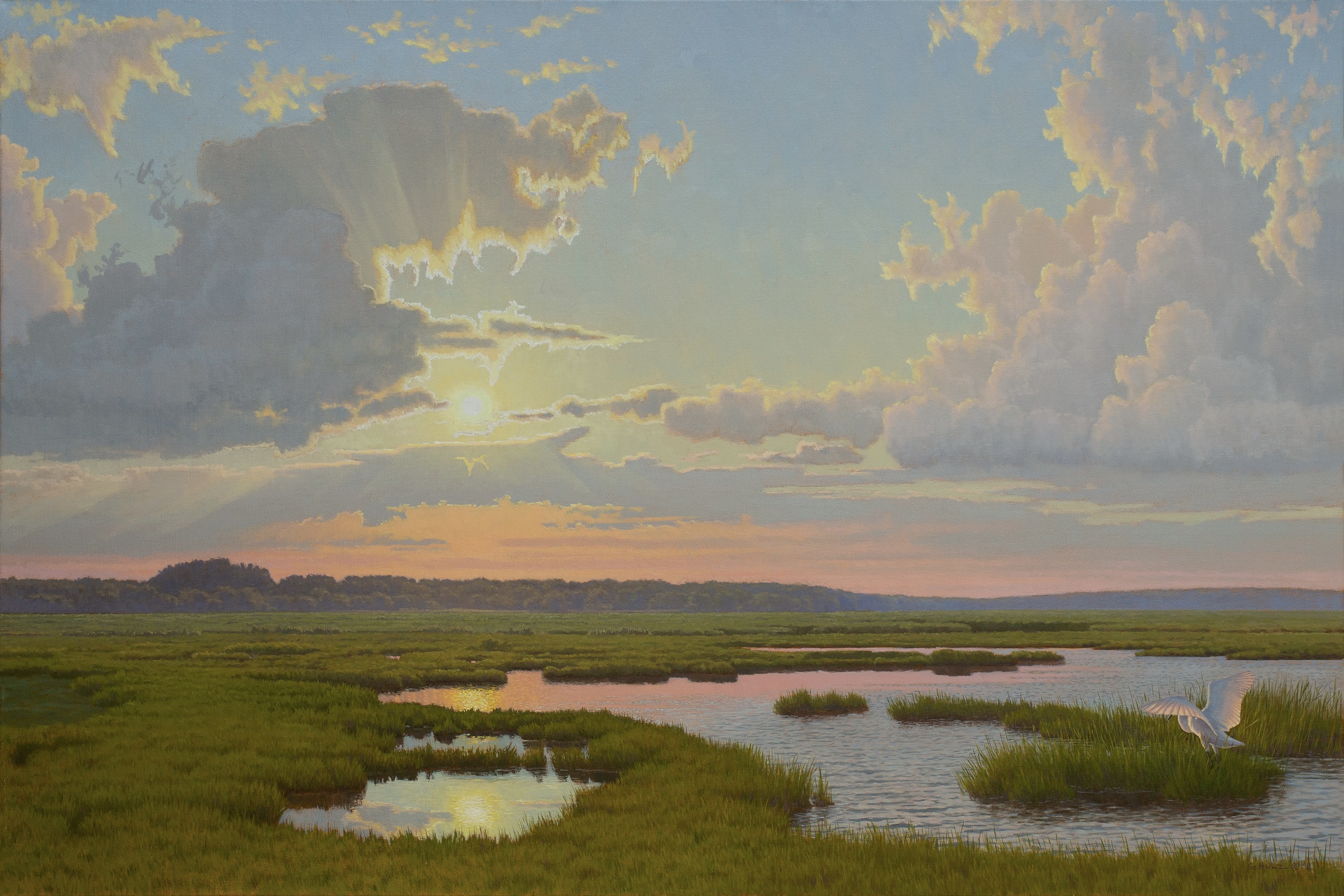
Matthew M. Schulz traces his interest in painting to early experiences exploring the salt marshes of Barnstable, Massachusetts, and the woods of Maine with his grandfather. He writes, “I was always interested in color and light, even as a child, and I believe that it was my mother who first recognized and helped me cultivate my love for both.” Schulz initially focused on wildlife before expanding his work to include nautical and sporting scenes as well as landscapes. Among the artists he has cited as influences are Winslow Homer and Andrew Wyeth.
Schulz earned a Bachelor of Arts degree in studio art from the University of New Hampshire, Durham, with concentrations in painting and printmaking. His paintings have won numerous awards, and he has been featured in American Art Collector Magazine, Cape Cod Life, and the Artists’ Magazine. Schulz is a member of the Salmagundi Club in New York and owns and operates his The Schulz Gallery in Osterville, Massachusetts.
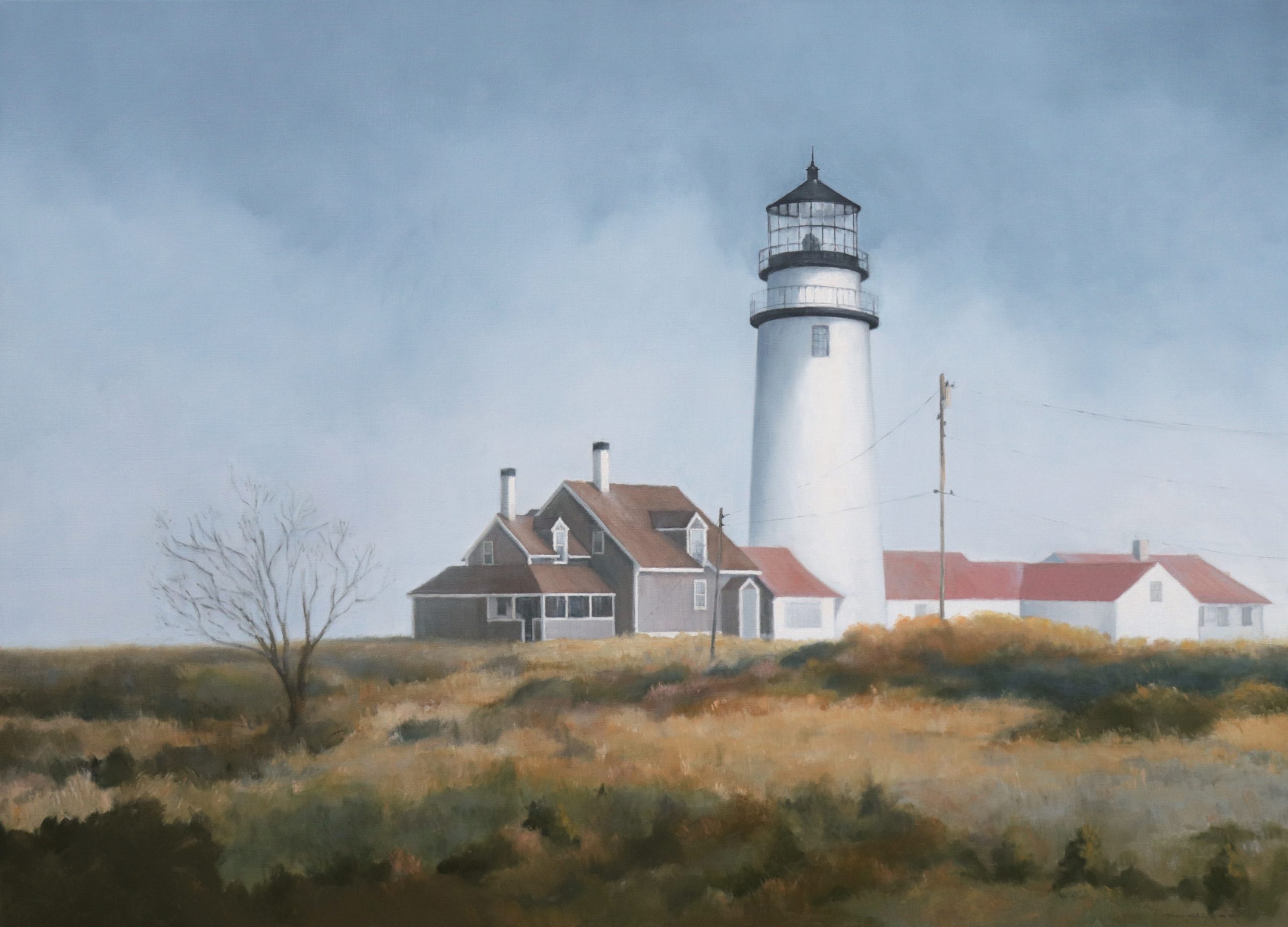
Thomas Watson is drawn to the elemental qualities of nature, an interest he credits to a lifetime spent outdoors and that shapes his focus on the landscapes where water, land, and air converge. Cape Cod Light depicts Highland Light in North Truro, Massachusetts, the oldest and tallest lighthouse on Cape Cod, originally built in 1797 to mark the dangerous sandbars and shoals along the coast. Of the work, Watson writes, “When I was a boy, I lived nearby, and the beam from this lighthouse flashed across my bedroom ceiling as the lens rotated. To me, it represents both a comforting emblem of [protection] and an ominous reminder of the dangers of the untamed Atlantic Ocean.”
Watson is a third-generation artist known for his representational oil landscapes of Cape Cod and the Adirondacks. His work is in the collection of the Cape Cod Museum of Art, in private collections worldwide, and has been published by Viking Press and David R. Godine Publishers. He is a recipient of a St. Botolph Club Foundation Visual Artist Award.